Self-guided audio tour in Nara
Start Free on iPhone
Start free on iPhone to unlock this self-guided walking tour in Nara. Hear all the stories that make it amazing, walk at your own pace, and begin whenever you want.
Your Private Tour Guide
Rising gently above the eastern edge of Nara Park, Mount Wakakusa offers some of the most breathtaking panoramic views in Japan. This self-guided walk invites you to explore a side of Nara that many visitors miss, transitioning from the quirky modern attractions of the city to the ancient, sacred forests of the ridgeline. Your walking route begins with a touch of the unexpected, exploring unique museums dedicated to exotic creatures and the artistic history of goldfish, before leading you toward the refined elegance of imperial-style gardens. As you move toward the base of the mountain, you will pass through the iconic Nara Deer Park, where the city’s famous residents roam freely among centuries-old shrines and botanical wonders. What makes this adventure special is the ascent of Mount Wakakusa itself. Unlike a standard walking tour Nara visitors often take through the flat city center, this route challenges you with a steady climb up the grassy slopes. The reward is unparalleled: a 360-degree view of Nara City, the surrounding Yamato Plain, and even the distant mountains of Kyoto on a clear day. Along the way, you will discover hidden gems like the Sunazuri-no-Fuji wisteria and the tranquil Mizuya Chaya teahouse, providing perfect spots for photography and reflection. The journey concludes deep within the Kasugayama Primeval Forest at the secluded Uguisu Waterfall, a place of profound peace and natural beauty. This neighborhood stroll is designed for those who crave a mix of cultural depth and physical activity, allowing you to discover Nara's spiritual connection to nature at your own pace. Whether you are capturing the golden hour from the summit or cooling off by the waterfall, this independent journey provides a comprehensive look at the landscape that has defined Japanese history for over a millennium.
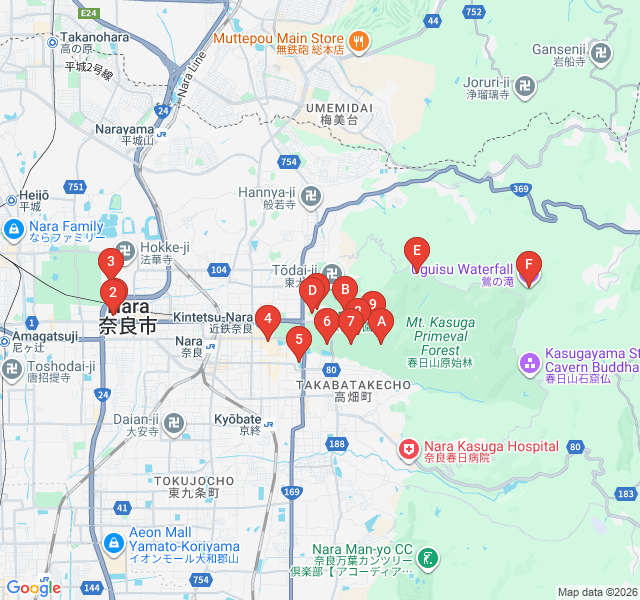
Numbers indicate the order of stops on the tour.
Start your journey at the Nara Ikimono Museum, located within the Mi-Na-Ra complex. This is not your typical natural history stop; it is an immersive experience featuring a wide array of reptiles, amphibians, and fish. The museum emphasizes the 'beauty' and 'strangeness' of living creatures, often presenting them in artistic, themed environments. It serves as a fascinating introduction to the biodiversity of the region and beyond. Take a moment to appreciate the intricate patterns of the residents here before we head toward the more traditional aspects of Nara's culture.
Located in the same building, the Kingyo Museum is one of Japan's largest goldfish-themed attractions. Goldfish (kingyo) were introduced to Japan in the 1500s and became a symbol of prosperity and summer festivals. This museum blends traditional Japanese motifs with modern digital art, light installations, and projection mapping. It’s a photographer's dream, showcasing dozens of goldfish varieties in stunning, neon-lit tanks. The artistic presentation here highlights how deeply a single creature can be woven into the cultural and aesthetic fabric of a nation.
This garden is a meticulously reconstructed piece of the Heijo Palace, Nara's ancient imperial seat. Dating back to the 8th century, the To-in Teien, or East Palace Garden, was used by the Imperial family for banquets and ceremonies. The curved pond and carefully placed rocks are based on extensive archaeological excavations. Standing here, you can imagine the Nara-period aristocrats reciting poetry by the water. It represents the 'Chisen-shuyu' style, designed for viewing from a boat or the surrounding pavilions, marking the early evolution of Japanese landscape gardening.
As you move toward the park area, you'll find this modern, quirky stop. Animal cafes are a staple of contemporary Japanese urban culture. The Samoyed Cafe offers a brief, joyful pause where you can interact with these fluffy, white 'smiling' dogs. While Nara is famous for its wild deer, this stop highlights the local love for companion animals. It's a lighthearted contrast to the ancient history you’re about to encounter as we head deeper into the foothills of the mountain.
This garden was once part of one of Nara's most powerful temples, Daijyo-in. Designed by the famous landscape architect Zen-ami in the 15th century, it is a 'stroll garden' that utilizes the natural topography. Though the temple buildings are gone, the large pond and the 'islands' within it remain. It is a quiet, contemplative space that feels worlds away from the busier tourist paths nearby. The way the water reflects the surrounding greenery is a testament to the Muromachi-period aesthetic of finding beauty in simplicity and space.
You are now entering the southern reaches of Nara Park. Kataoka Bairin is a plum grove that comes alive in late February and early March. While cherry blossoms get most of the fame, the plum blossom (ume) is celebrated for its resilience and sweet fragrance, often blooming while the air is still crisp. Even outside of blooming season, the grove is a peaceful meadow where you’ll likely spot your first few Nara deer resting under the trees. It’s a perfect transition point from the structured gardens to the wilder parkland.
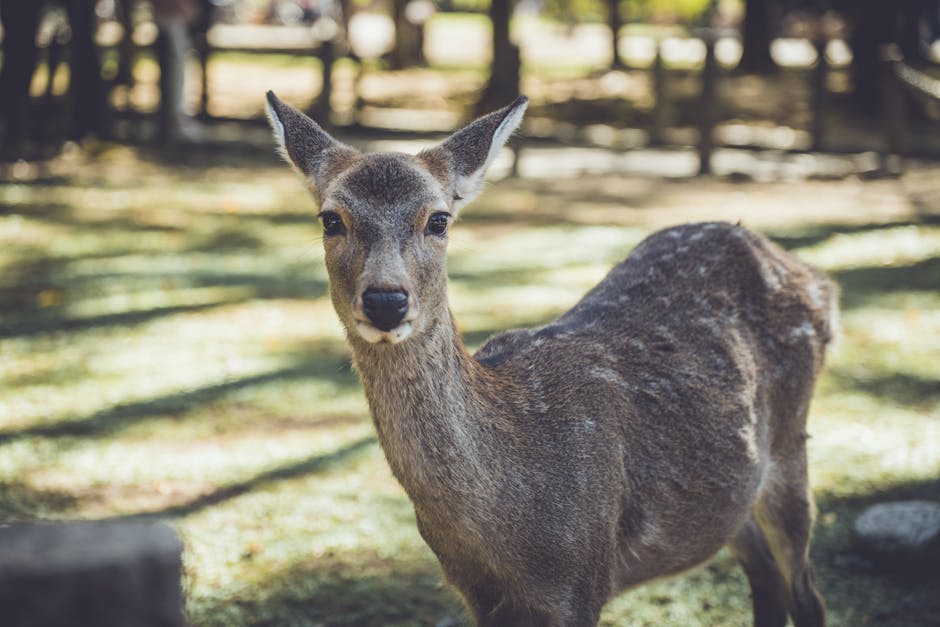
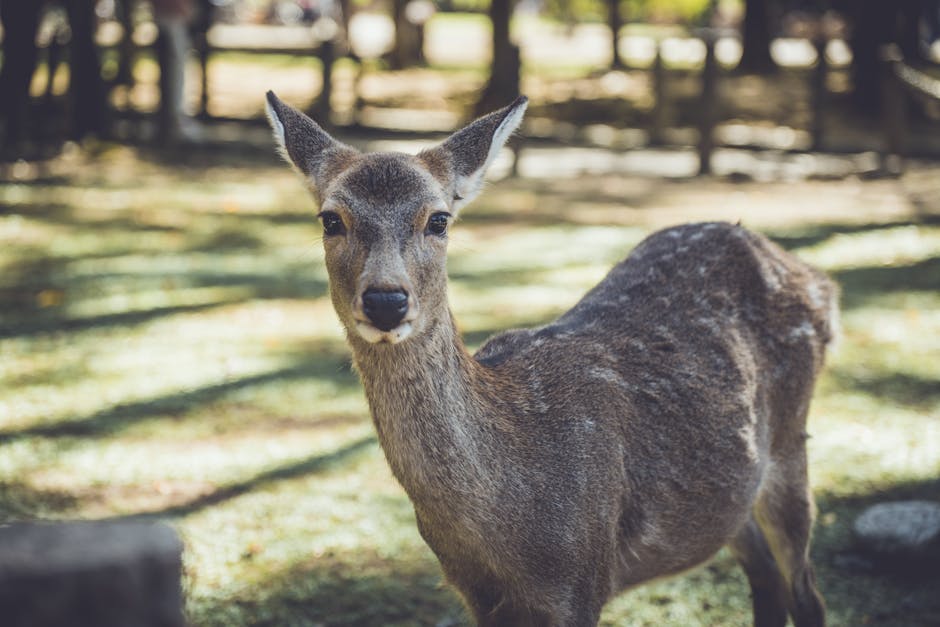
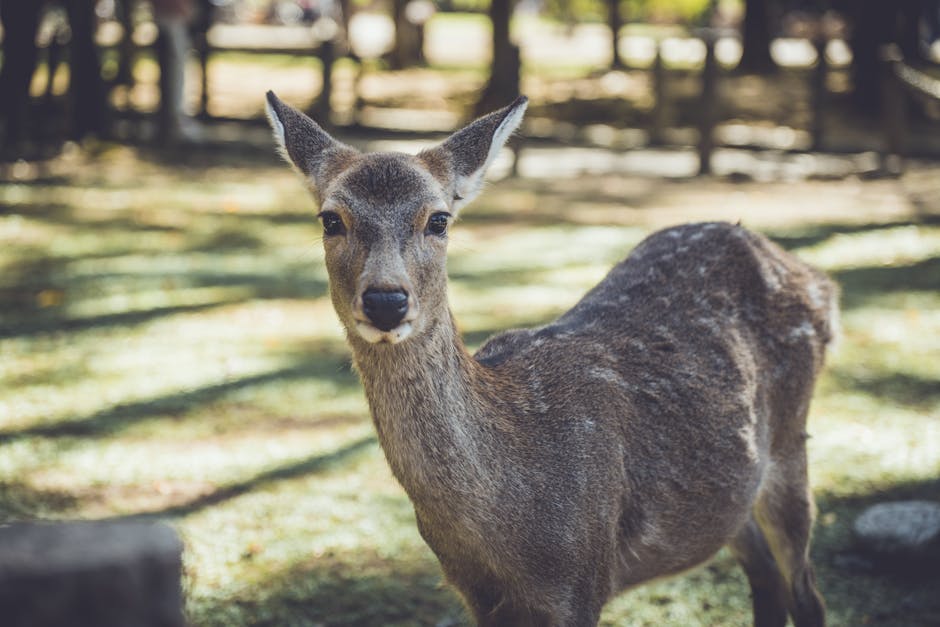
Nara Park is home to over 1,000 free-roaming Sika deer. In Shinto belief, these deer are considered messengers of the gods, specifically the deity of Kasuga Taisha. They are surprisingly bold and have learned to bow to visitors in exchange for 'shika senbei' (deer crackers). While they are generally friendly, remember they are wild animals. This vast green space has been the heart of Nara since 1880, and the sight of deer wandering among ancient stone lanterns is one of the most iconic images of Japan.
Named after the 'Manyoshu,' Japan's oldest poetry anthology, this garden contains over 250 species of plants mentioned in those ancient verses. The garden is divided into sections like the Manyo Garden, the Grain Garden, and the Wisteria Garden. It is a living library of Japanese botany. If you visit in late April, the wisteria here is spectacular, but the garden’s focus on seasonal poetry makes it relevant year-round. It’s a place where literature and nature are physically intertwined, reflecting the deep appreciation for the seasons in Japanese culture.
Nestled near the entrance to the forest path, Mizuya Chaya is a traditional teahouse with a thatched roof that looks like it belongs in a fairy tale. It sits beside a small stream and is surrounded by vibrant maples. It’s a popular spot for hikers to grab a quick bowl of udon or a matcha tea before beginning their ascent. The atmosphere here captures the 'wabi-sabi' aesthetic—finding beauty in the rustic, weathered, and natural. It marks the boundary between the park’s manicured lawns and the wild mountain trail.
Located near the Kasuga Taisha shrine, this 'Sand-Dusting Wisteria' is over 800 years old. Its name comes from the way its long purple clusters of flowers are said to grow so long they touch the sand on the ground. Wisteria is the crest of the Fujiwara clan, the powerful family that established Kasuga Taisha. This specific tree is a living monument to Nara’s aristocratic past. Even when not in bloom, the gnarled, ancient trunk and the massive trellis structure are an impressive sight of horticultural dedication.
This wide-open grassy field offers one of the best perspectives of Mount Wakakusa before you climb it. From here, you can see the three distinct levels of the mountain. This area is often used for local festivals and is a favorite spot for deer to congregate in the afternoon sun. It provides a sense of the scale of the landscape and the way the city of Nara is nestled directly against the sacred mountainside. Take a deep breath here; the air begins to feel noticeably cooler as you approach the forest edge.
Isuien is a prime example of 'borrowed scenery' (shakkai). The garden is designed so that the roof of Todai-ji Temple and the slopes of Mount Wakakusa appear to be part of the garden itself. It is divided into two parts: a 17th-century front garden and a more expansive Meiji-era rear garden. The Neiraku Museum on-site houses a collection of ancient Chinese and Korean ceramics. The garden’s ponds are fed by the Yoshikigawa river, creating a lush, watery sanctuary that feels incredibly private despite its proximity to Nara’s major landmarks.
Right next to Isuien is the equally beautiful but often quieter Yoshikien. This garden is famous for its moss garden, which thrives in the humid shade of the mountain foothills. It also features a tea ceremony house and a pond garden. Yoshikien was built on the former site of the high priest's residence of Kofuku-ji Temple. The contrast between the soft, velvety moss and the sharp lines of the traditional architecture provides a masterclass in Japanese garden design. It’s a final moment of quiet refinement before the physical challenge of the hike.
Standing at 342 meters, Mount Wakakusa is the centerpiece of this walk. The mountain is covered entirely in grass rather than trees, a result of the annual 'Yamayaki' festival where the dead grass is burned in a massive bonfire. The climb is steep but manageable, divided into three plateaus. As you ascend, the city of Nara unfolds below you. From the summit, you can see the Great Buddha Hall of Todai-ji, the five-story pagoda of Kofuku-ji, and the entirety of the Nara basin. It is a place of legend, said to be the site of ancient burial mounds (kofun) and a spiritual guardian of the city.
Follow the trail from the summit down into the Kasugayama Primeval Forest to find Uguisu Waterfall. This forest has been protected for over 1,000 years as a sacred grove, meaning the trees have grown undisturbed by logging. The waterfall, named after the Japanese Bush Warbler (Uguisu), is a hidden oasis. The sound of falling water and the dense canopy of ancient giant cedars create a spiritual atmosphere. It is the perfect place to conclude your journey, surrounded by the raw, untouched nature that has been revered by Nara’s residents since the time of the first emperors.
Start Free on iPhone
Explore “Ridgeline Vistas: The Mount Wakakusa Hike” with your very own Private Tour Guide with Zigway. Start free on iPhone, skip the large group and the fixed routes, and hear the city come alive as you go.
Your Private Tour Guide
Don't miss the good stuff
Explore Freely
 Moderate
Nara, Japan
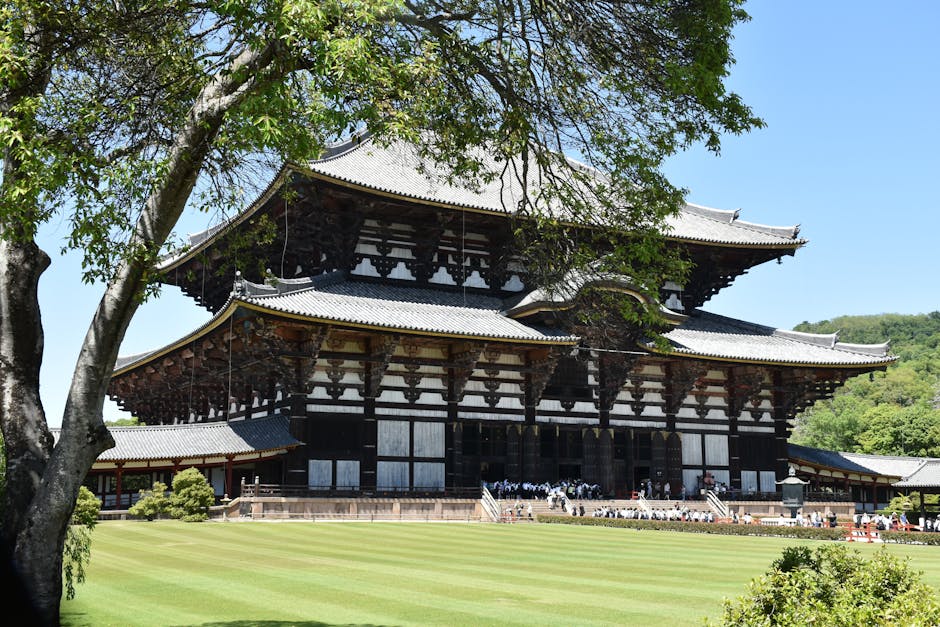
Discover a mystical path through Nara's ancient forest, lined with 3,000 lanterns and sacred deer on this serene self-guided walk.
 Challenging
Nara, Japan
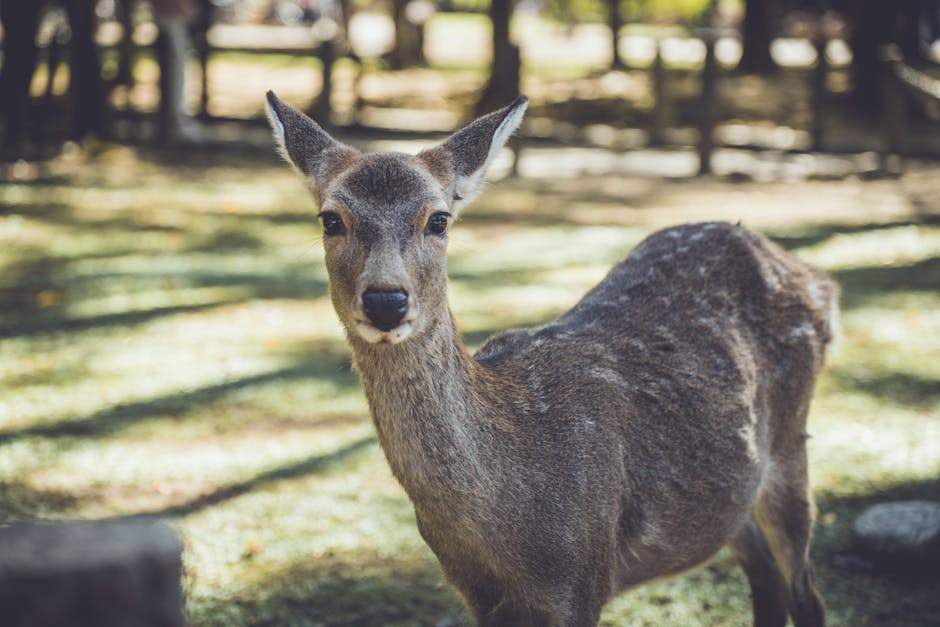
Journey from Nara's imperial ruins and refined gardens into the ancient, sacred silence of the UNESCO-protected Mount Kasuga Primeval Forest.
 Moderate
Nara, Japan
Discover Nara’s literary soul on this self-guided walk through historic Takabatake’s temples, writer residences, and poetic gardens.
 Easy
EasyNara, Japan
Explore Nara's evening charm on this self-guided walk through illuminated pagodas, historic shopping streets, and world-class hidden bars.
 Moderate
Krakow, Poland
Discover Krakow’s stunning skyline and riverside charm on this self-guided audio walk through scenic viewpoints and historic mounds.
 Easy
EasyWarsaw, Poland
Explore Warsaw's scenic riverfront, rooftop gardens, and industrial-chic architecture on this self-guided stroll through the Powiśle district.
 Easy
EasyWarsaw, Poland
Discover Warsaw's intellectual heart through historic campuses, peaceful parks, and the stunning rooftop gardens of the University Library.
 Moderate
Nairobi, Kenya
Discover Nairobi's lush side on this self-guided walk through botanical gardens, historic memorials, and vibrant local markets.
 Moderate
Tokyo, Japan
Discover Tokyo's premier creative district on this self-guided walk through Roppongi’s world-class museums and striking modern architecture.
 Easy
EasyTokyo, Japan
Discover the 'Old Tokyo' charm of Yanaka on this self-guided walk through historic temples, artisan alleys, and a stunning torii gate shrine.
 Easy
EasyTokyo, Japan
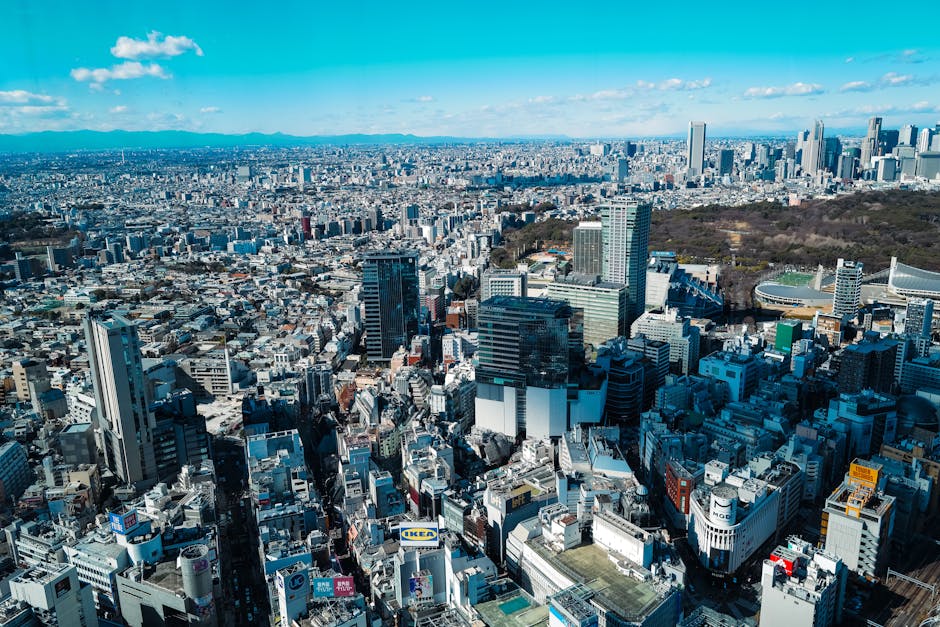
Experience Shibuya's electric energy on this self-guided walk from the iconic Scramble Crossing to the panoramic views of Shibuya Sky.
 Easy
EasyTokyo, Japan
Explore Tokyo's indie heart. From vintage fashion in Shimokitazawa to world-class art in Shinjuku, discover the city's creative soul independently.