Self-guided audio tour in Bern
Start Free on iPhone
Start free on iPhone to unlock this self-guided walking tour in Bern. Hear all the stories that make it amazing, walk at your own pace, and begin whenever you want.
Your Private Tour Guide
Step into the 'Annus Mirabilis' of 1905, the year a young patent clerk in Bern fundamentally reshaped our understanding of the universe. This self-guided walk invites you to explore the cobblestone streets of Bern’s Old Town, a UNESCO World Heritage site that served as the backdrop for Albert Einstein’s most revolutionary discoveries. As you wander through the medieval arcades, you are following the very footsteps Einstein took between his humble apartment, the federal patent office, and the local cafes where he debated physics with his closest friends. This neighborhood stroll captures the atmosphere of early 20th-century Switzerland, blending high-level science with the charming, slow-paced life of the Aare River peninsula. The route highlights the intellectual and personal life of the physicist during his seven-year stay in the city. You will see the famous Zytglogge clock tower, which many historians believe sparked his thoughts on time dilation and simultaneity as he watched the city's synchronized clocks. The walking route also takes you to the Einstein House on Kramgasse, where he lived while developing the Special Theory of Relativity. Beyond the science, this journey explores the architectural grandeur of Bern, from the vaulted ceilings of the Kornhauskeller to the academic halls of the University of Bern. Whether you are a science enthusiast or a history buff, this experience offers a unique lens through which to view the Swiss capital. Explore independently and at your own pace, discovering how a quiet civil servant became a global icon of genius. Along the way, you'll encounter the sites where he worked, studied, and socialized, providing a comprehensive look at the man behind the E=mc² equation. This walking tour Bern provides a deep dive into the historical context of the Swiss capital during its golden age of intellectual pursuit.
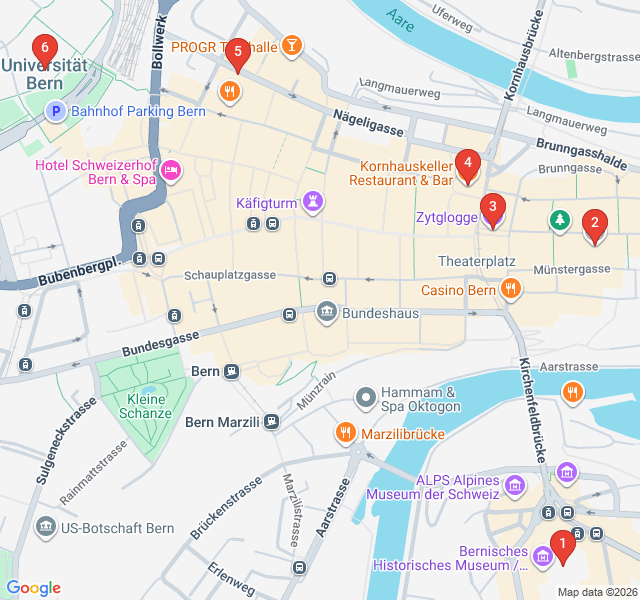
Numbers indicate the order of stops on the tour.
Start exploring with Zigway at the Bernisches Historisches Museum, which houses the world's most extensive permanent exhibition dedicated to Albert Einstein. While the museum itself is a neo-historical castle, the Einstein wing uses cutting-edge displays to explain both his complex theories and his personal life. Einstein arrived in Bern in 1902, struggling to find work before securing a position at the patent office. It was during his time in this city that he published four groundbreaking papers in 1905, changing physics forever. Take a moment to appreciate the view of the Old Town across the Kirchenfeld Bridge before you begin your walk into the heart of the city where these ideas were formed.
Located at Kramgasse 49, this second-floor apartment is where Einstein lived from 1903 to 1905 with his wife, Mileva Marić, and their son, Hans Albert. It was in this very space, amidst the mundane realities of family life, that he formulated the Special Theory of Relativity. The apartment has been restored with period furniture, offering a glimpse into the modest lifestyle of the man who would become the world's most famous scientist. Notice the long arcades outside; Bern has miles of these sheltered walkways, which Einstein would have used daily, regardless of the weather, as he walked to work or met with his 'Olympia Academy' discussion group.
The Zytglogge is more than just a beautiful medieval clock tower; it is a central character in the story of relativity. As a patent clerk, Einstein was responsible for examining applications for the synchronization of clocks, a major industrial challenge of the time. Legend suggests that as he traveled on the city's electric trams and looked back at this tower, he wondered what would happen to his watch if the tram moved away from the clock at the speed of light. This thought experiment led to the realization that time is not absolute. Watch the mechanical figures perform their hourly dance, a spectacle that has occurred since 1530, long before Einstein pondered the nature of time itself.
This grand underground space, once a granary, represents the social heart of Bern. While Einstein was a man of intense focus, he was also known to enjoy the city's vibrant atmosphere. The Kornhauskeller, with its high vaulted ceilings and ornate frescoes, dates back to the early 18th century. In Einstein's era, the city was a hub of intellectual exchange, filled with students and thinkers from across Europe. Even if you don't stop for a meal, the architecture here illustrates the wealth and stability of the city that provided Einstein with the 'secular cloister' he needed to focus on his work without the distractions of the high-pressure academic world.
This building formerly housed the Swiss Federal Intellectual Property Office, where Einstein worked as a 'Technical Expert Class III.' He famously referred to the patent office as his 'worldly cloister,' where he could earn a stable living while using his remaining mental energy to probe the mysteries of the universe. He worked here eight hours a day, six days a week, often tucking his scientific notes into his desk drawer when his supervisor approached. It was here that he processed patents for everything from gravel sorters to weather stations, a practical grounding that many believe helped him visualize his abstract physics thought experiments.
Your self-guided adventure concludes at the University of Bern. After the success of his 1905 papers, Einstein sought to enter the world of academia. In 1908, he became a 'Privatdozent' or part-time lecturer here. Interestingly, his initial application was rejected because he hadn't submitted a habilitation thesis—even though he had already published the theory of relativity! Eventually, he began teaching theoretical physics classes in the evenings. The university stands as a symbol of his transition from an obscure clerk to a respected professor, a journey that began in the narrow streets you just traversed. From here, you are perfectly positioned to explore the modern campus or head back to the main train station.
Start Free on iPhone
Explore “Einstein’s Relativity Route” with your very own Private Tour Guide with Zigway. Start free on iPhone, skip the large group and the fixed routes, and hear the city come alive as you go.
Your Private Tour Guide
Don't miss the good stuff
Explore Freely
 Moderate
Bern, Switzerland
Explore Bern's historic lower city, a riverside district of secret dialects, industrial heritage, and alternative culture on this self-guided walk.
 Easy
EasyBern, Switzerland
Discover Bern's cultural heart in Kirchenfeld. Explore world-class museums and stunning views on this self-guided walk.
 Easy
EasyBern, Switzerland
Explore Bern's iconic 16th-century Renaissance fountains and uncover the legends behind the city's most famous statues on this self-guided walk.
 Easy
EasyBern, Switzerland
Discover Bern's creative heart. A self-guided walk through the street art, alternative culture, and local hangouts of the Lorraine neighborhood.
 Easy
EasyKrakow, Poland
Explore the prestigious Jagiellonian University district, featuring Neo-Gothic architecture, Baroque churches, and Krakow's hidden scholarly gems.
 Easy
EasyNairobi, Kenya
Discover Nairobi’s literary soul on this self-guided walk through historic libraries, iconic bookshops, and cultural centers in the heart of the CBD.
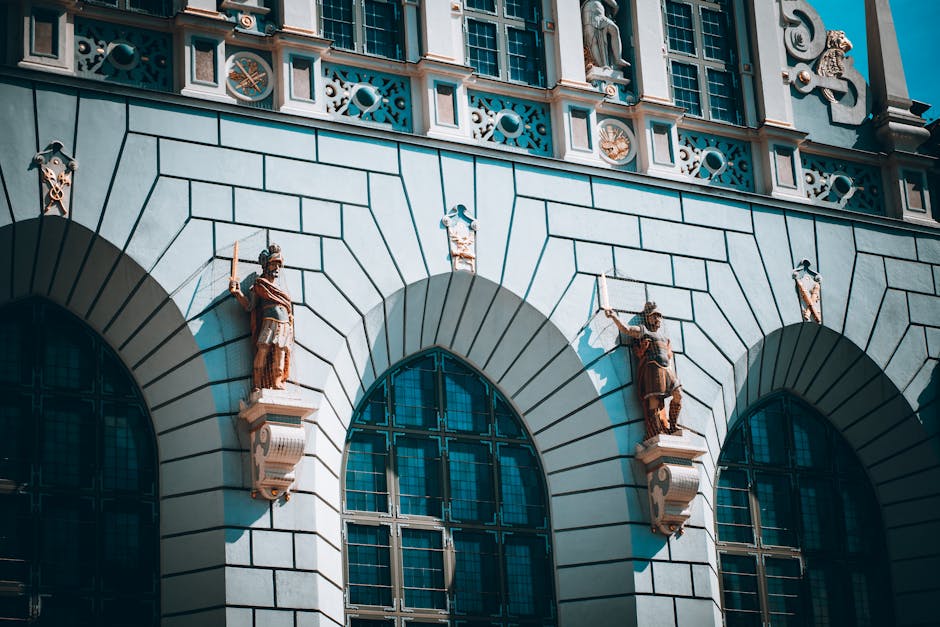 Moderate
Gdansk, Poland
Discover the origins of WWII in Gdansk on this self-guided walk through heroic last stands, massive museums, and strategic hilltop fortifications.
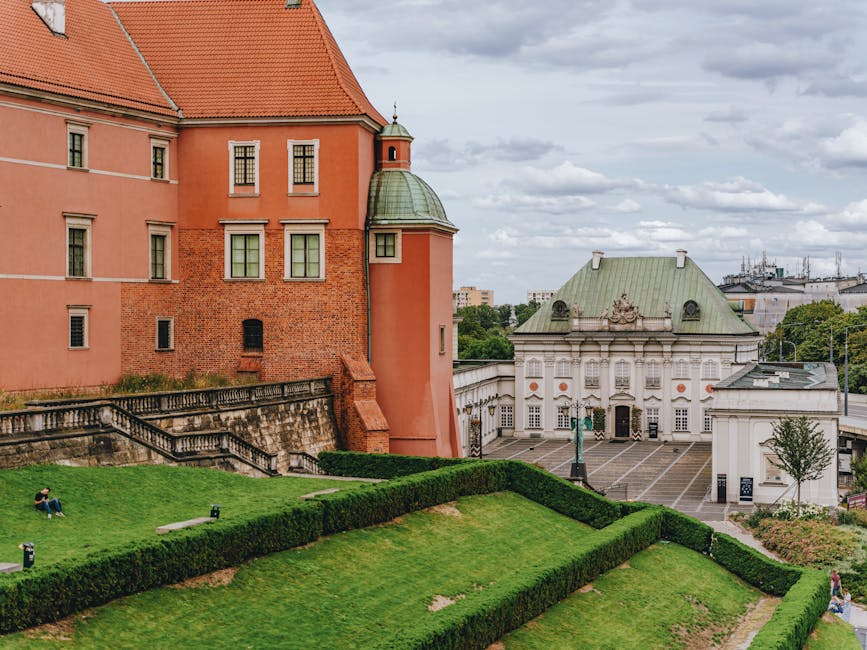 Easy
EasyWarsaw, Poland
Follow the life of Fryderyk Chopin through Warsaw’s historic center. See where he lived, studied, and where his heart remains today.
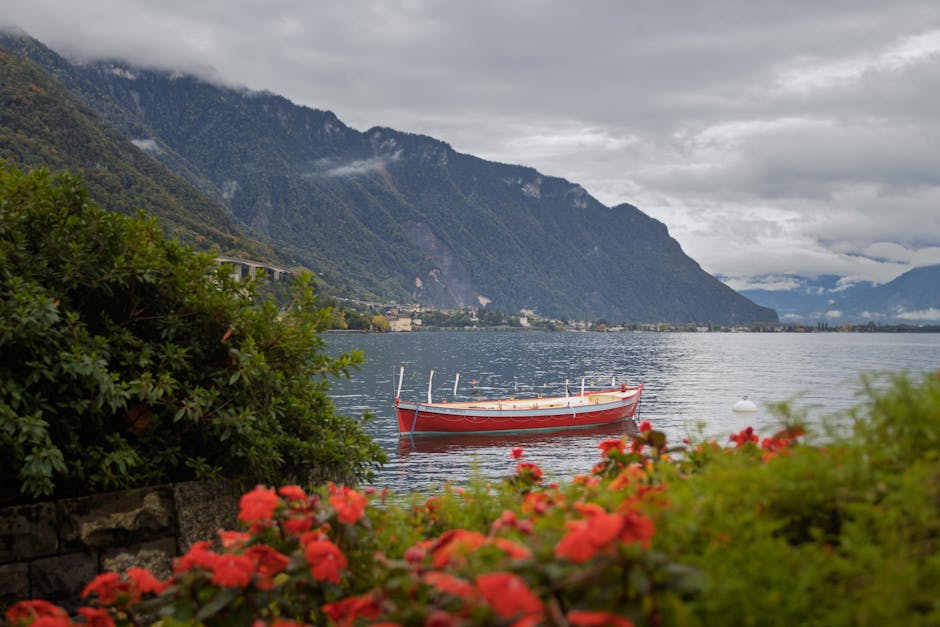 Easy
EasyGeneva, Switzerland
Explore Geneva's bohemian heart on this self-guided walk through flea markets, contemporary art galleries, and literary landmarks.
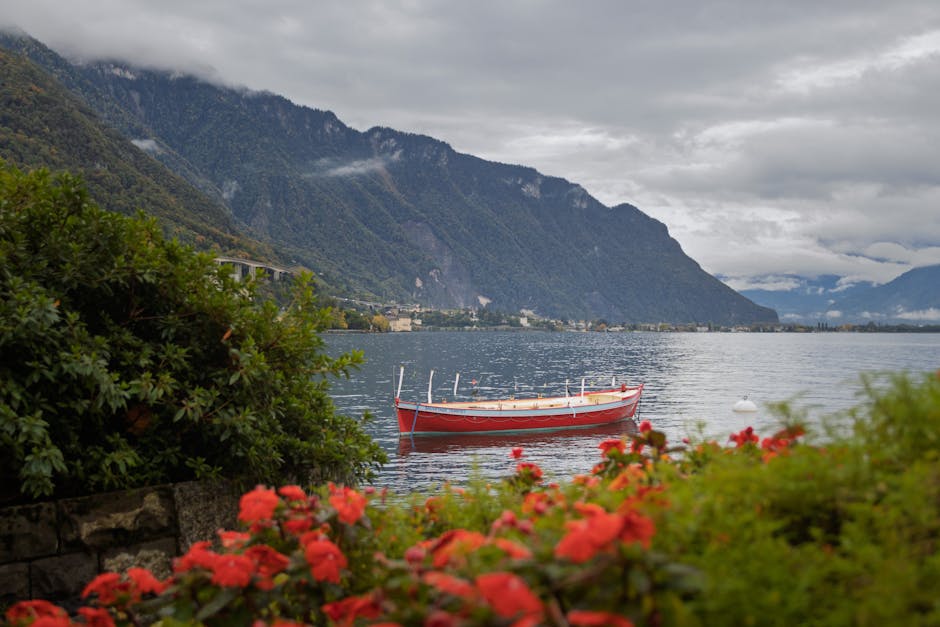 Easy
EasyGeneva, Switzerland
Discover the lives of Rousseau and Voltaire on this self-guided literary walking route through the historic heart of Enlightenment-era Geneva.
 Moderate
Geneva, Switzerland
Uncover Geneva’s secrets on this self-guided walk through the Old Town’s historic streets, from the Reformation Wall to medieval cathedrals.
 Easy
EasyGeneva, Switzerland
Discover the Mediterranean soul of Geneva. Explore Carouge’s Sardinian architecture, artisan workshops, and hidden gardens on this self-guided walk.