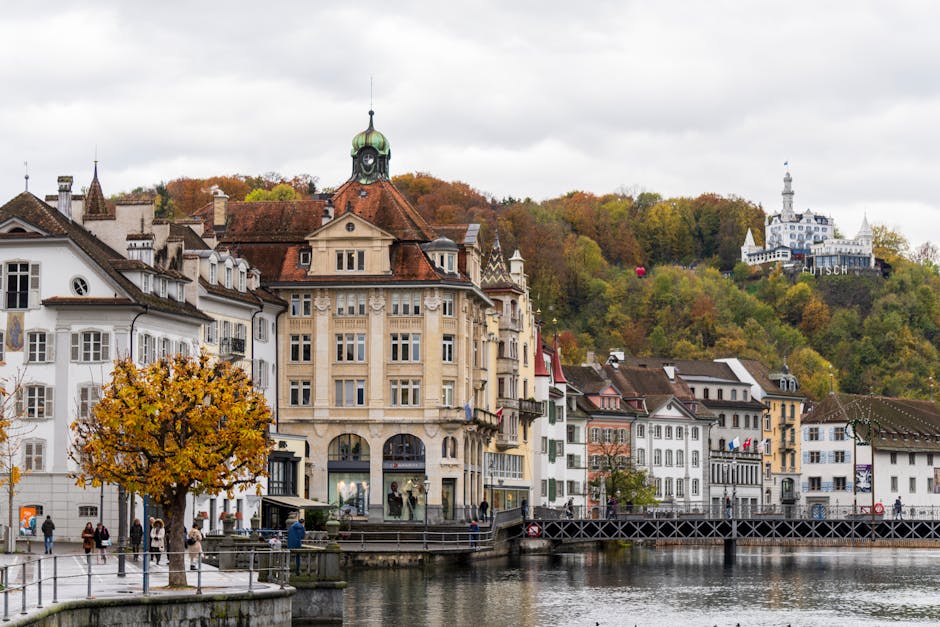
Self-guided audio tour in Lucerne
Start Free on iPhone
Start free on iPhone to unlock this self-guided walking tour in Lucerne. Hear all the stories that make it amazing, walk at your own pace, and begin whenever you want.
Your Private Tour Guide
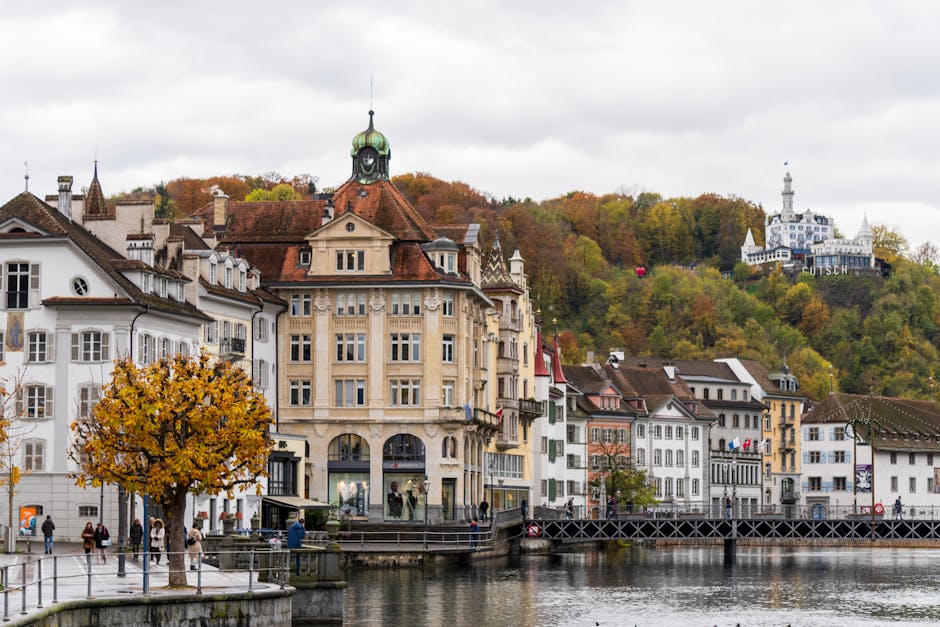
The Reuss River is the lifeblood of Lucerne, a shimmering artery that separates the medieval Old Town from the 19th-century New Town. On this self-guided walk, you will trace the water’s edge to discover the engineering marvels and artistic treasures that have defined this city for centuries. This walking route focuses on the world-famous timber bridges, which are not merely crossings but elevated galleries housing some of the most significant triangular panel paintings in Europe. As you explore independently, you will see how Lucerne successfully blended defensive fortification with civic pride. The journey begins at the iconic Water Tower, a structure that predates the bridge it now anchors. From there, you will traverse the Kapellbrücke, or Chapel Bridge, the oldest covered wooden bridge in Europe. While many visitors simply admire the exterior, this audio walk encourages you to look upward at the 17th-century paintings depicting Lucerne’s history and its patron saints. The route then leads you past the ornate Jesuit Church, a masterpiece of Baroque architecture, toward the innovative Needle Dam. This manually operated system is a rare surviving example of 19th-century hydraulic engineering that still controls the level of Lake Lucerne today. Finally, the stroll concludes at the Spreuerbrücke. Often overshadowed by its more famous sibling, this bridge offers a more somber and evocative experience with its 'Dance of Death' painting cycle. This neighborhood stroll is perfect for those who want to understand the soul of Lucerne without following a rigid schedule. Whether you are a fan of medieval history, Baroque art, or simply looking for the most photogenic spots in the city, this walking tour Lucerne provides a comprehensive look at the landmarks that make the city a global destination. By following this walking route, you can immerse yourself in the timber-framed history of the Reuss at your own pace, ensuring you don't miss the subtle details that a standard walking tour Lucerne might overlook.
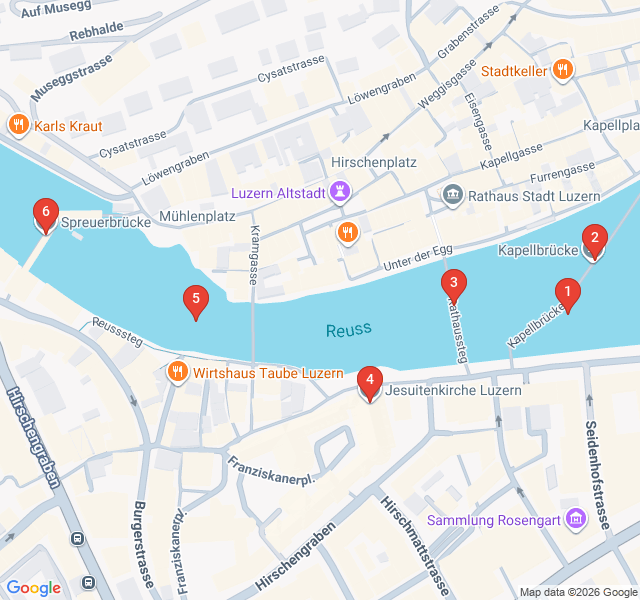
Numbers indicate the order of stops on the tour.
Standing 34 meters tall, this octagonal tower is perhaps the most photographed monument in Switzerland. Interestingly, it wasn't built for water; the name 'Wasserturm' simply refers to its position in the river. Constructed around 1300, it is actually older than the wooden bridge it stands beside. Over the centuries, this versatile structure has served as a defensive watchtower, a city treasury, a municipal archive, and even a prison and torture chamber. Today, it remains closed to the general public, serving as the headquarters for the Lucerne Artillery Association. Look closely at the masonry; the thick walls were designed to withstand both invaders and the constant pressure of the Reuss current.
Step onto the Kapellbrücke, or Chapel Bridge, which dates back to 1333. As you walk, look up into the rafters. You are seeing a unique feature of Lucerne’s bridges: triangular wooden panels painted in the 17th century. These works illustrate scenes from Swiss history and the lives of the city’s patron saints, Leodegar and Maurice. In 1993, a devastating fire nearly destroyed the entire structure. While much of the bridge was meticulously reconstructed, you can still see some charred remains of original paintings that were preserved as a memorial to the event. This bridge was a key part of the city’s medieval fortifications, connecting the Old Town on the north bank to the New Town on the south.
This modern iron footbridge offers one of the best vantage points in the city. To your right, you can see the Old Town Hall (Rathaus), a Renaissance building inspired by Italian styles, which reflects Lucerne's historical wealth. Looking back toward the Kapellbrücke, you get a perfect view of how the bridge angles across the river to use the Water Tower as a defensive anchor. This is a great spot to observe the flow of the Reuss. The river here is quite fast; it drains Lake Lucerne and eventually joins the Aare. The bridge serves as a vital artery for locals commuting between the bustling market squares and the train station.
The Jesuit Church, consecrated in 1677, stands as a bold statement of the Counter-Reformation. It was the first large-scale Baroque church built in Switzerland north of the Alps. Its twin onion-domed towers were actually a later addition, completed in 1893, but they have become an inseparable part of the skyline. Step inside to witness the transition from the somber medieval bridges to the light-filled, ornate world of the Baroque. The interior is a riot of white marble, pink stucco, and grand ceiling frescoes. Pay special attention to the high altar and the side chapel dedicated to Brother Klaus, Switzerland’s patron saint. The acoustics here are legendary, often hosting organ concerts that take advantage of the cavernous space.
This is a rare piece of living industrial history. Built between 1859 and 1861, the Needle Dam (Nadelwehr) is still operated by hand today. It consists of several hundred timber 'needles'—long, thin slats of spruce wood. When the lake level is too high, workers manually pull the needles out of the water to increase the flow; when it is too low, they hammer them back in. This low-tech solution remains more effective and adjustable than many modern automated systems. It is a fascinating sight to see the water rushing through the gaps, a constant reminder of the human effort required to manage the natural elements in a lakeside city.
Our final stop is the Spreuerbrücke, completed in 1408. Its name comes from 'Spreu,' meaning chaff, as this was the only bridge from which bakers were allowed to dump wheat husks into the river. While smaller than the Chapel Bridge, it is equally significant for its art. Between 1626 and 1635, artist Caspar Meglinger created 67 paintings known as the 'Danse Macabre' or Dance of Death. Each panel depicts people from all walks of life—from kings to beggars—being led away by a skeleton. It served as a grim reminder that death is the ultimate equalizer. This bridge survived the 19th-century modernization of the city, preserving a somber and authentic medieval atmosphere.
Start Free on iPhone
Explore “Bridging the Reuss: A Timber Tale” with your very own Private Tour Guide with Zigway. Start free on iPhone, skip the large group and the fixed routes, and hear the city come alive as you go.
Your Private Tour Guide
Don't miss the good stuff
Explore Freely
 Easy
EasyLucerne, Switzerland
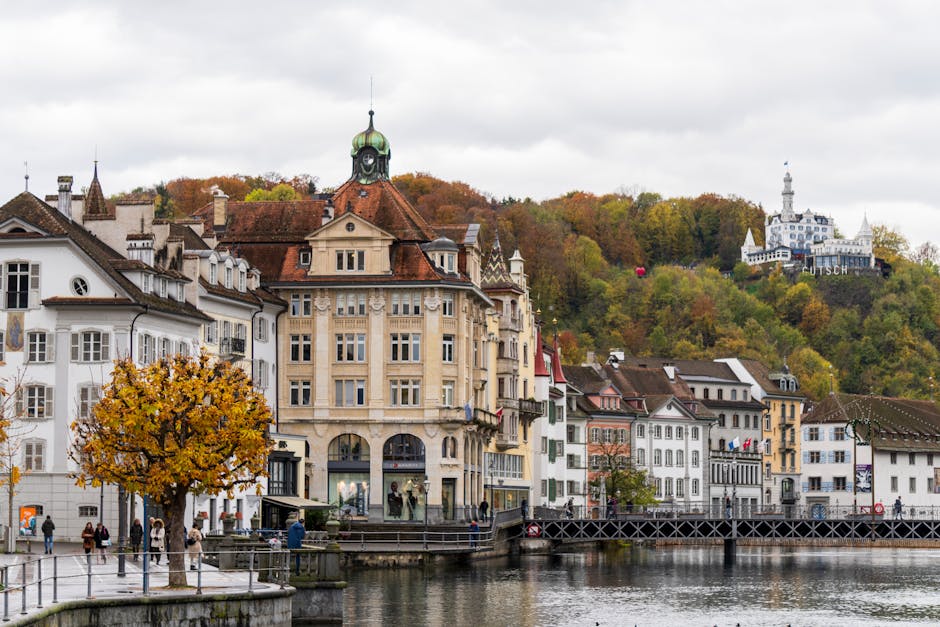
Discover Lucerne's creative soul. Explore the trendy Neustadt district featuring repurposed cultural hubs, indie boutiques, and local nightlife.
 Easy
EasyLucerne, Switzerland
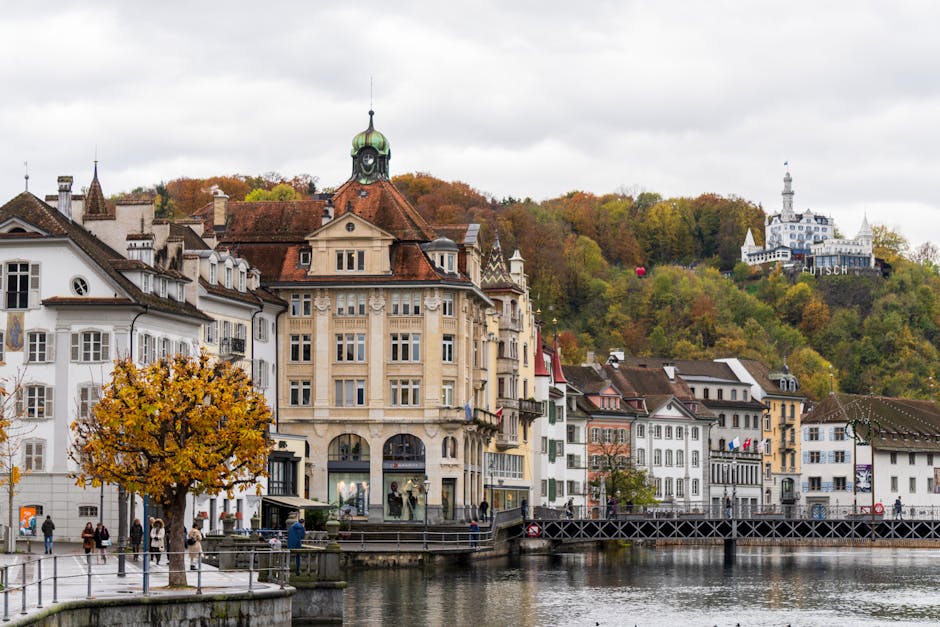
Uncover the emotional history and ancient wonders of Lucerne on this self-guided walk through the Lion Monument and the prehistoric Glacier Garden.
 Easy
EasyLucerne, Switzerland
Explore Lucerne's sacred history on this self-guided audio walk through stunning cathedrals and historic chapels.
 Easy
EasyLucerne, Switzerland
Discover Lucerne's nocturnal side on this self-guided walk from historic riverside breweries to panoramic rooftop bars and hidden underground clubs.
 Easy
EasyNairobi, Kenya
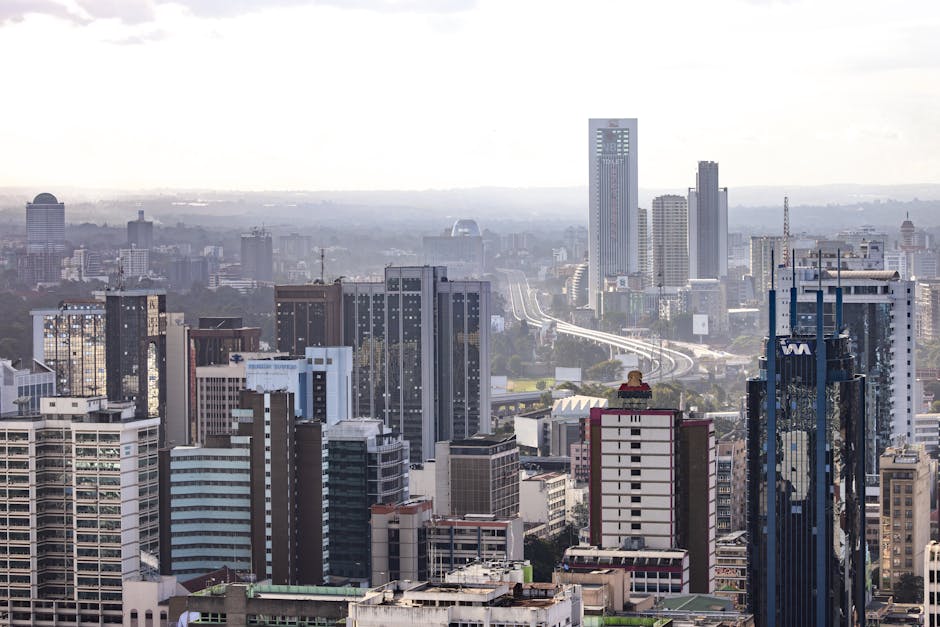
Discover Nairobi's iconic skyline on this self-guided architecture walk through the CBD’s most famous modernist and Brutalist landmarks.
 Easy
EasyGdansk, Poland
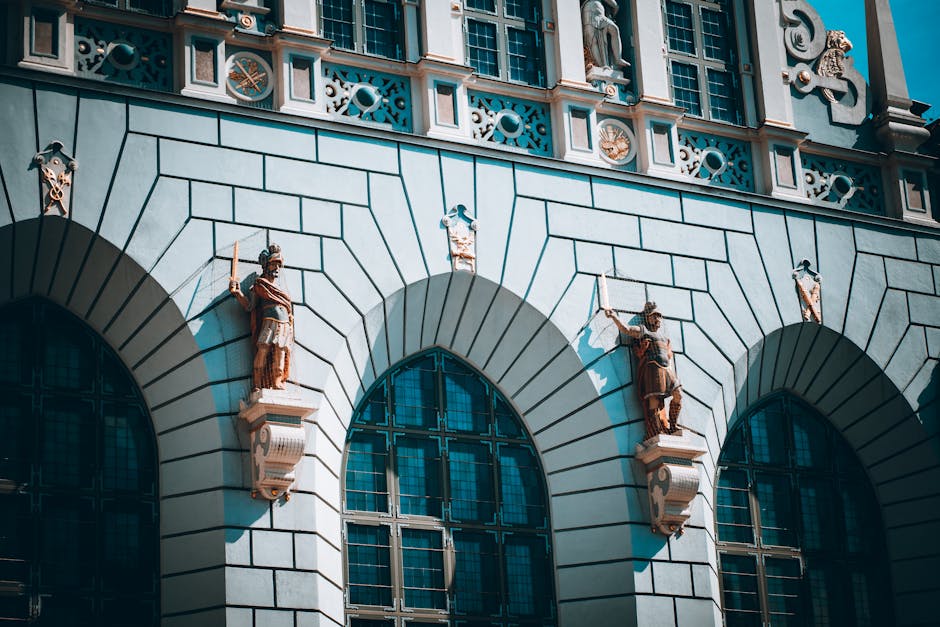
Discover the opulent Royal Way of Gdansk at your own pace. Explore Hanseatic history, gilded architecture, and the iconic Neptune's Fountain.
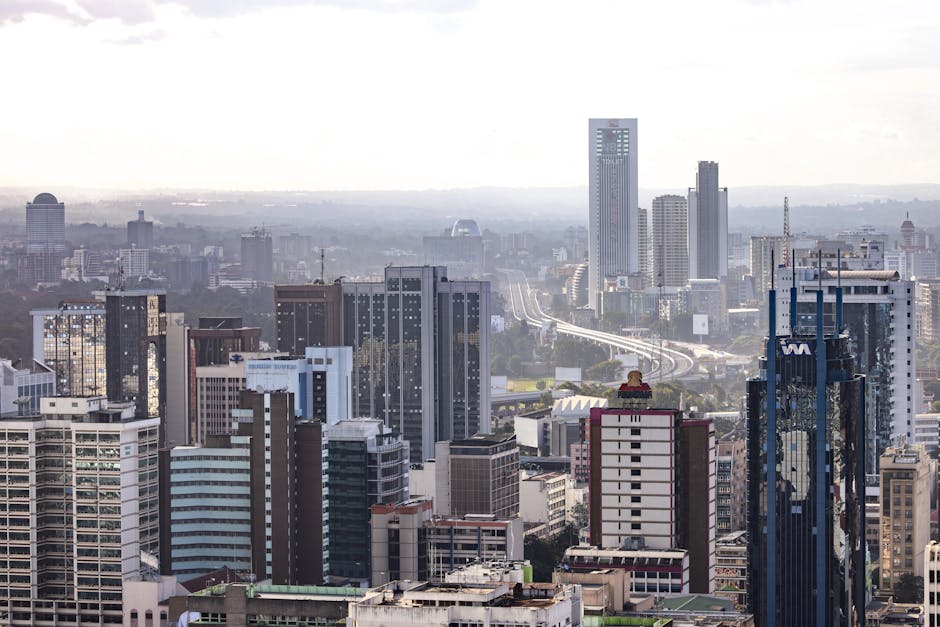 Easy
EasyNairobi, Kenya
Explore Nairobi's architectural evolution from colonial-era landmarks to iconic Brutalist skyscrapers on this historic self-guided walking route.
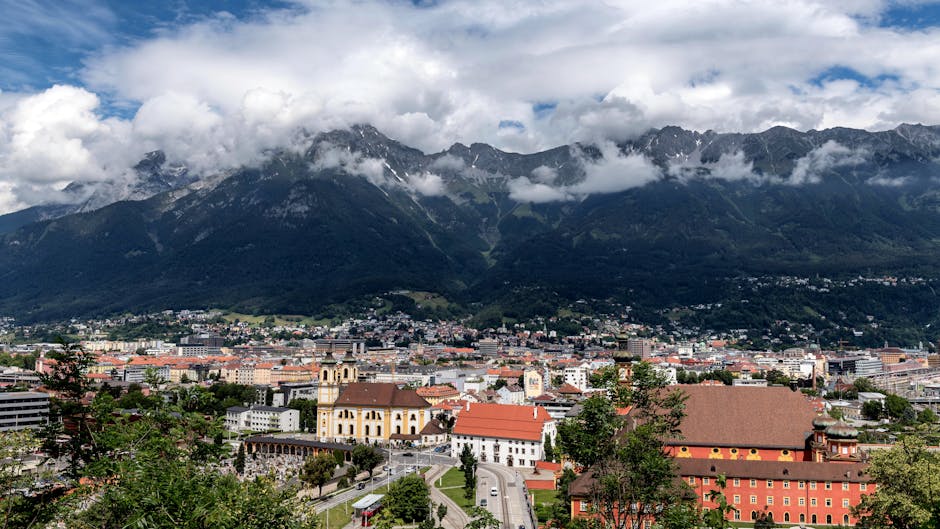 Easy
EasyInnsbruck, Austria
Uncover the myths and legends of Innsbruck on this self-guided walk through the historic Altstadt and beyond.
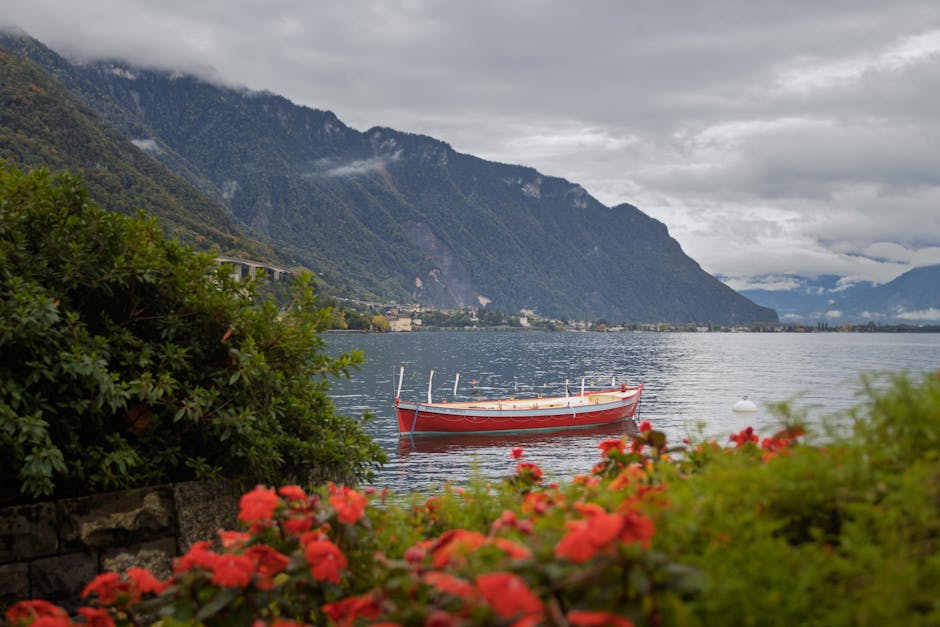 Easy
EasyGeneva, Switzerland
Explore Geneva's bohemian heart on this self-guided walk through flea markets, contemporary art galleries, and literary landmarks.
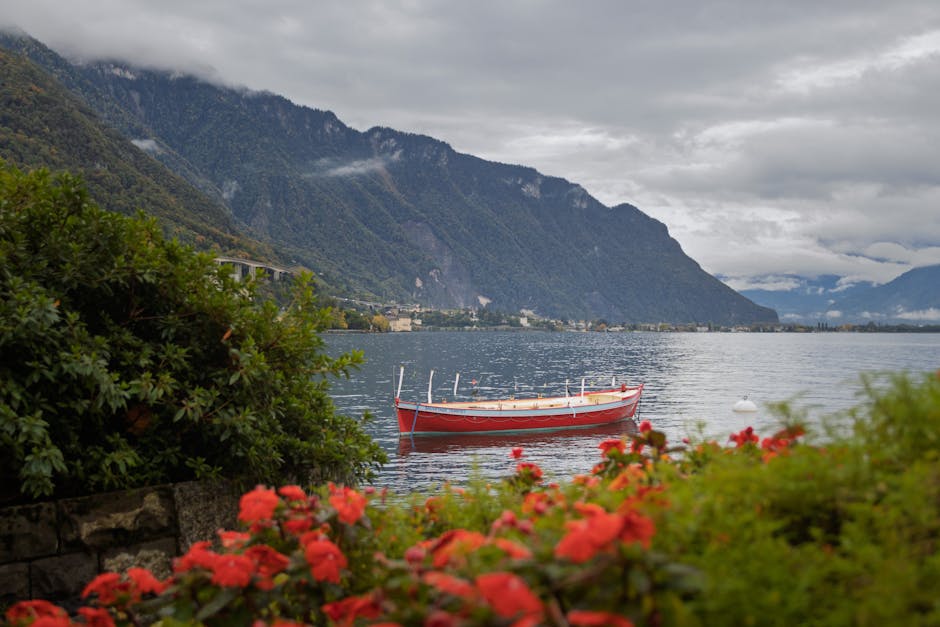 Easy
EasyGeneva, Switzerland
Discover the lives of Rousseau and Voltaire on this self-guided literary walking route through the historic heart of Enlightenment-era Geneva.
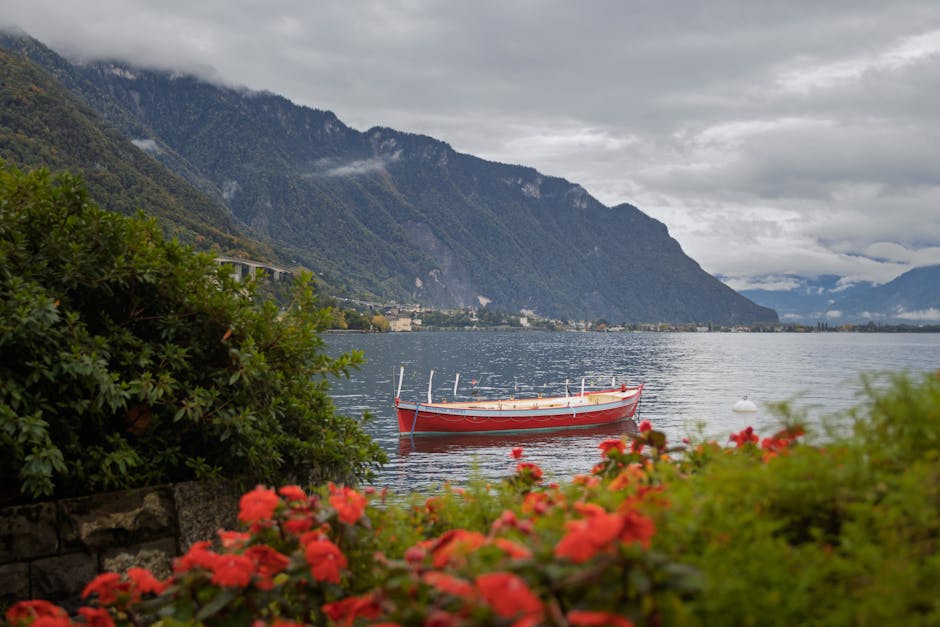 Moderate
Geneva, Switzerland
Uncover Geneva’s secrets on this self-guided walk through the Old Town’s historic streets, from the Reformation Wall to medieval cathedrals.
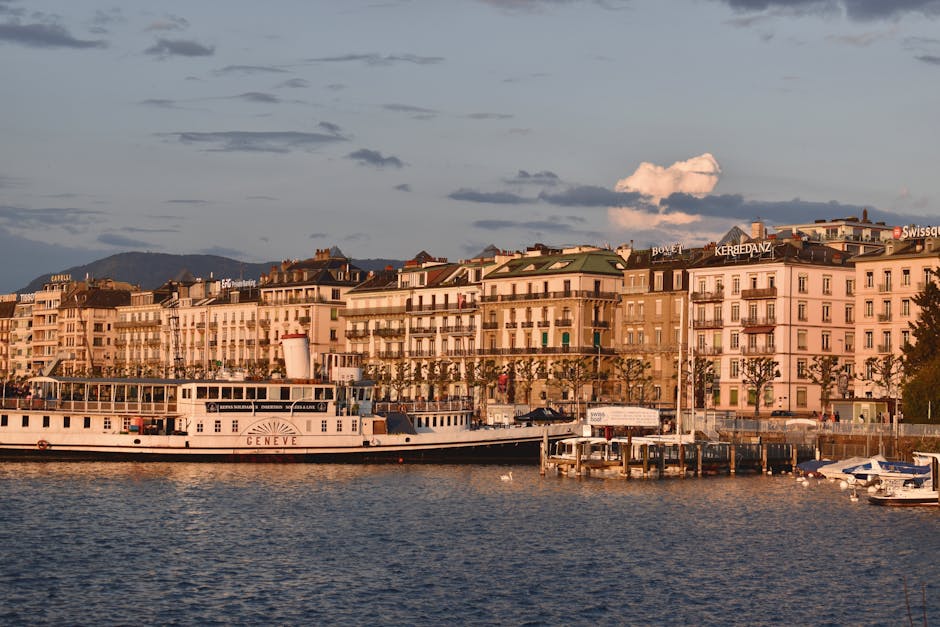 Easy
EasyGeneva, Switzerland
Discover the Mediterranean soul of Geneva. Explore Carouge’s Sardinian architecture, artisan workshops, and hidden gardens on this self-guided walk.