Self-guided audio tour in Galway
Start Free on iPhone
Start free on iPhone to unlock this self-guided walking tour in Galway. Hear all the stories that make it amazing, walk at your own pace, and begin whenever you want.
Your Private Tour Guide
Galway is often celebrated for its vibrant buskers and colorful pubs, but the true pulse of the city has always been the River Corrib. This self-guided walk invites you to explore the industrial heritage and natural wonders of one of Europe’s shortest yet most powerful rivers. As you follow the water’s edge, you will discover how the Corrib’s relentless flow once powered dozens of mills, making Galway a thriving hub of commerce long before it became a cultural capital. This walking route takes you from the edge of the Atlantic through the intricate network of canals that define the Riverside neighborhood. You will encounter the unique Fisheries Watchtower, a rare Victorian structure dedicated to the management of the river’s famous salmon stocks, and stroll across bridges that offer panoramic views of the historic Claddagh and the Spanish Arch. The trail also explores the Eglington Canal, a feat of 19th-century engineering designed to link the city’s trade to the vast Lough Corrib. Along Bridge Street, you will see the remnants of the city’s milling district, where water races still cut through the urban landscape. The journey concludes near the majestic Galway Cathedral and the iconic Salmon Weir Bridge, where, depending on the season, you can watch hundreds of salmon battling the current. This self-guided adventure is perfect for those who want to see a different side of the city, focusing on the intersection of nature and human ingenuity. Whether you are a history buff or a nature lover, this walking tour Galway experience provides a tranquil escape from the bustling city center while revealing the hidden stories of the water that built the town.
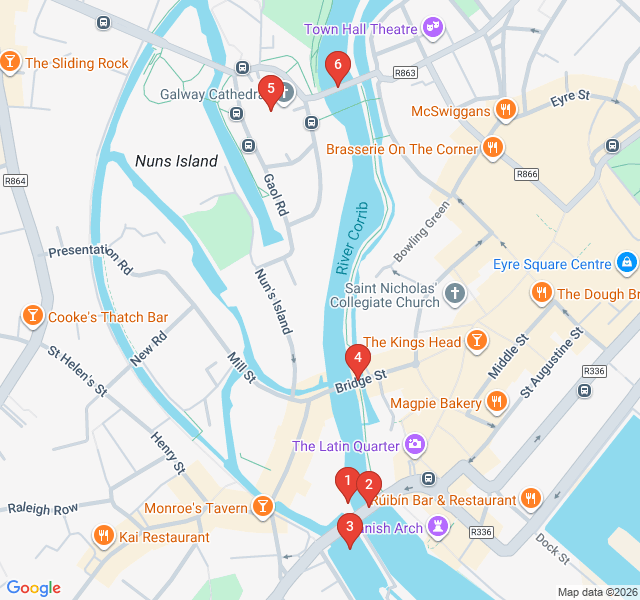
Numbers indicate the order of stops on the tour.
Welcome to the start of your industrial heritage trail at the Fisheries Watchtower Museum. This striking red-brick Victorian building is the only one of its kind in Ireland. Built in 1853, it wasn't just a pretty landmark; it served a vital purpose as a lookout for the Fishery Manager to spot illegal poaching and monitor the salmon stocks. The River Corrib is legendary for its Atlantic salmon, and this tower was the nerve center of the industry. Inside, you can find artifacts from Galway's maritime past, including traditional fishing gear and old photographs of the river. Take a moment to appreciate the tower’s unique Neo-Gothic architecture before we head toward the bridge.
As you stand on Wolfe Tone Bridge, you are at the gateway between the Corrib and the Atlantic Ocean. To one side, you see the Spanish Arch and the remains of the old city walls; to the other, the famous Claddagh, once a distinct fishing village where the Claddagh ring originated. The water beneath you is moving at an incredible speed—the Corrib is one of the fastest rivers in Europe relative to its length. This immense volume of water was the 'white coal' that powered Galway's early industries. Look out for the Mute Swans that often gather here; they are a permanent fixture of the Galway waterfront.
Turn your attention to the Eglington Canal, an ambitious Victorian engineering project completed in 1852. It was designed to provide a deep-water navigation route between Lough Corrib and the sea, allowing larger vessels to bypass the shallow, rocky river sections. Though it never reached its full commercial potential due to the arrival of the railway shortly after its completion, the canal remains a beautiful example of 19th-century infrastructure. Notice the heavy lock gates and the towpaths where horses once pulled barges laden with stone, grain, and turf. Today, it serves as a peaceful green corridor for locals and a haven for urban wildlife.
Bridge Street may look like a standard city street today, but it was once the heart of Galway’s milling district. If you look closely at the buildings and the narrow channels of water running beneath or beside them, you are seeing the 'mill races.' At its peak, the River Corrib powered over 30 mills in this small area, producing everything from flour and paper to wool and marble. The constant sound of rushing water was the soundtrack of the city's economy. This area highlights the transition from medieval trade to industrial manufacturing, where the natural force of the river was harnessed for the city's survival.
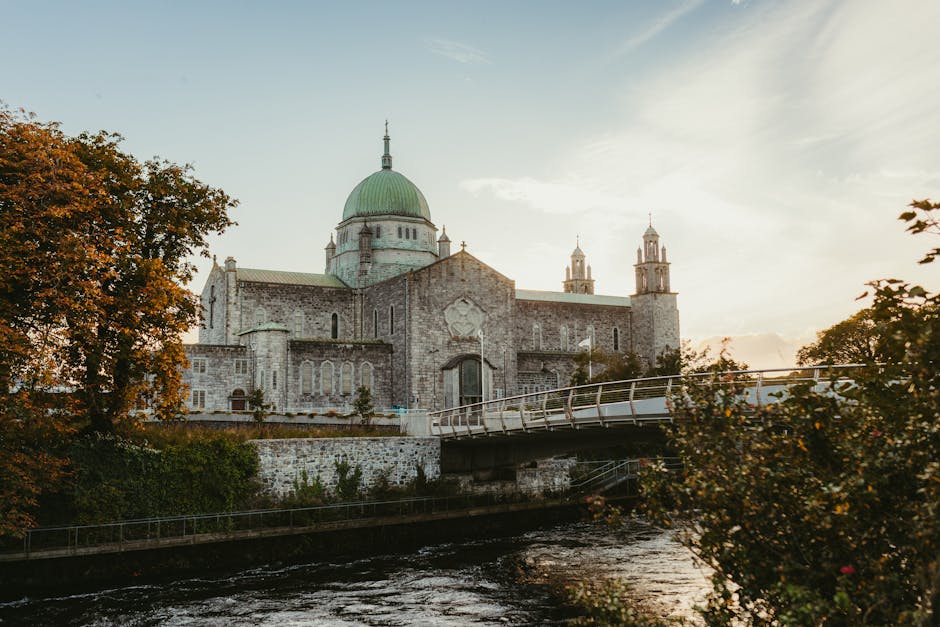
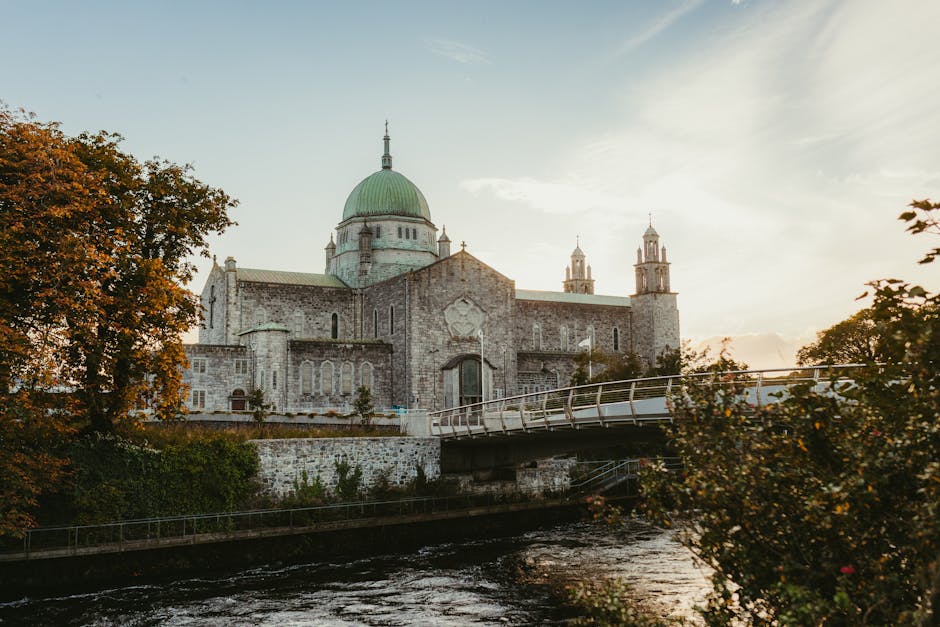
Standing on the site of the former Galway County Jail, the Cathedral of Our Lady Assumed into Heaven and St Nicholas is one of the most impressive buildings in the city. Completed in 1965, it is one of the last great stone cathedrals built in Europe. Its architecture is an eclectic mix of Renaissance, Romanesque, and Gothic styles. The location on Nun's Island is significant, as the river surrounds the site on almost all sides. Step inside to see the stunning Connemara marble floors and the vibrant stained glass, which includes a window depicting John F. Kennedy, who was a frequent visitor to Ireland.
The final stop on our walk is the Salmon Weir Bridge, built in 1818 to connect the courthouse to the cathedral. This is perhaps the best place in Galway to witness the power of nature. During the summer months, if you look over the side of the bridge, you can often see hundreds of salmon resting in the clear water, waiting for the right moment to leap over the weir and head upstream to Lough Corrib to spawn. The weir itself is a crucial piece of water management, regulating the flow of the river to prevent flooding in the city while ensuring the fish can continue their ancient migration.
Start Free on iPhone
Explore “The River Corrib Industrial Heritage Trail” with your very own Private Tour Guide with Zigway. Start free on iPhone, skip the large group and the fixed routes, and hear the city come alive as you go.
Your Private Tour Guide
Don't miss the good stuff
Explore Freely
 Easy
EasyGalway, Ireland
Explore Galway’s literary soul on this self-guided walk through historic bookshops, legendary theaters, and the haunts of Joyce and Wilde.
 Easy
EasyGalway, Ireland
Explore Galway’s vibrant street art, contemporary galleries, and scenic photography spots on this independent neighborhood stroll.
 Easy
EasyGalway, Ireland
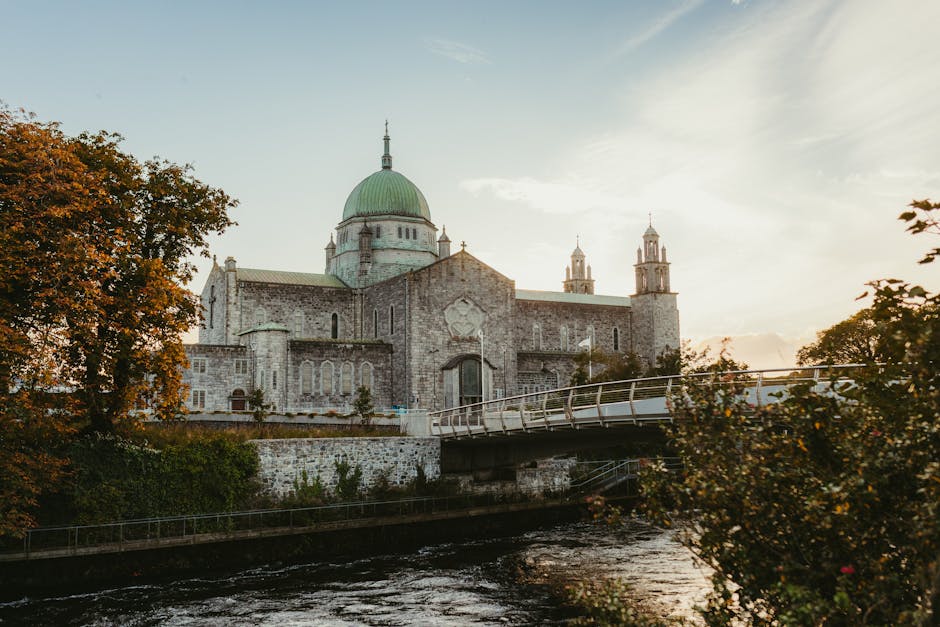
Capture Galway's most iconic views on this self-guided stroll through the Claddagh and along the vibrant Long Walk.
 Easy
EasyGalway, Ireland
Explore Salthill’s iconic promenade, discover local traditions, and enjoy stunning Atlantic views on this refreshing self-guided seaside walk.
 Easy
EasyGothenburg, Sweden
Explore Gothenburg's maritime soul on this self-guided walk from historic shipyards to sleek modern piers and iconic industrial landmarks.
 Easy
EasyNairobi, Kenya
Discover Nairobi’s literary soul on this self-guided walk through historic libraries, iconic bookshops, and cultural centers in the heart of the CBD.
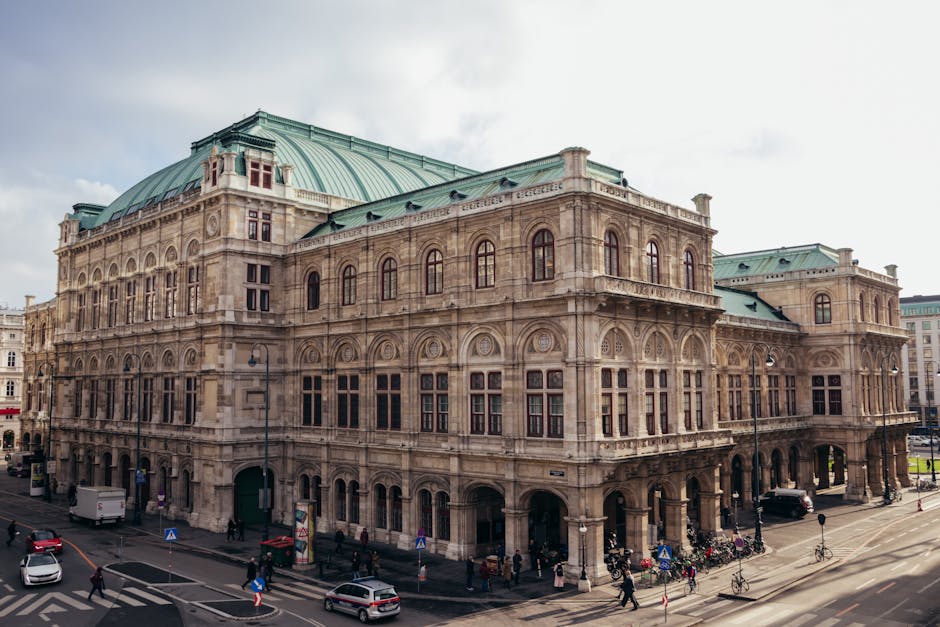 Moderate
Vienna, Austria
Discover the noir world of The Third Man and Cold War Vienna on this atmospheric self-guided audio walk through the historic Innere Stadt.
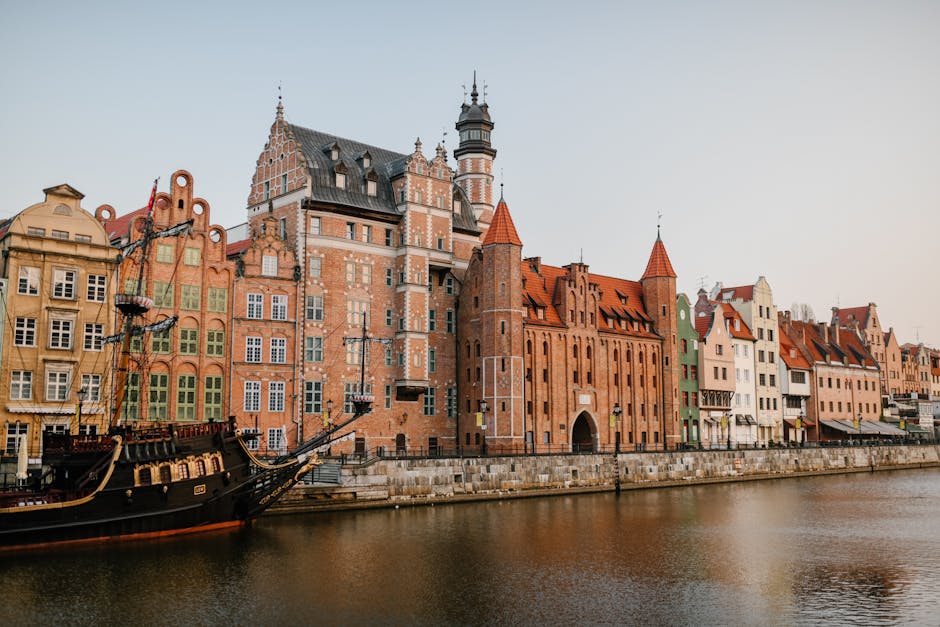 Moderate
Gdansk, Poland
Discover the bohemian soul of Gdańsk. Explore the literary landmarks of Günter Grass, Prussian villas, and the trendy cafes of historic Wrzeszcz.
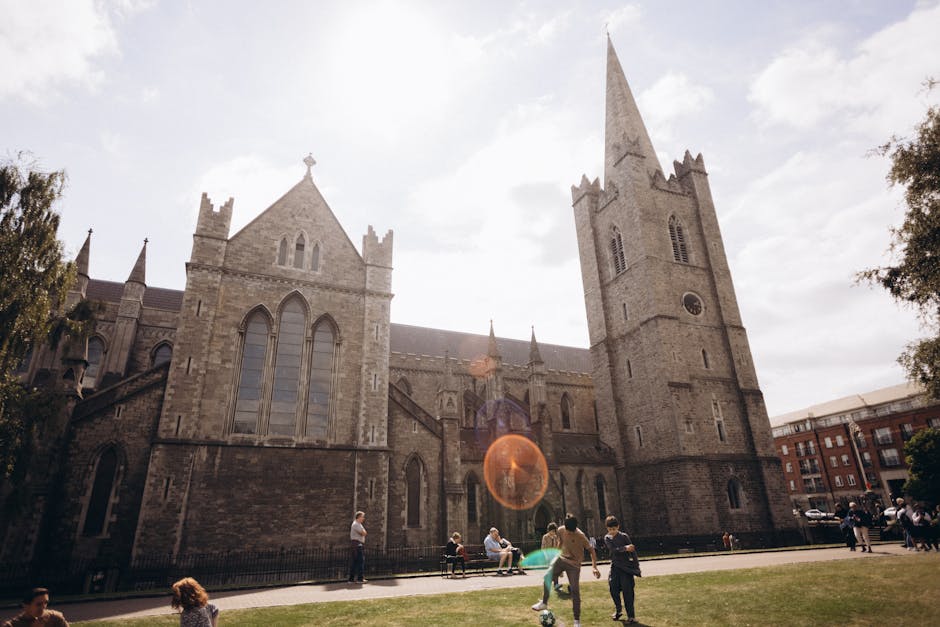 Easy
EasyDublin, Ireland
Explore Dublin's 'Silicon Docks' on this self-guided walk featuring futuristic bridges, famine history, and world-class modern architecture.
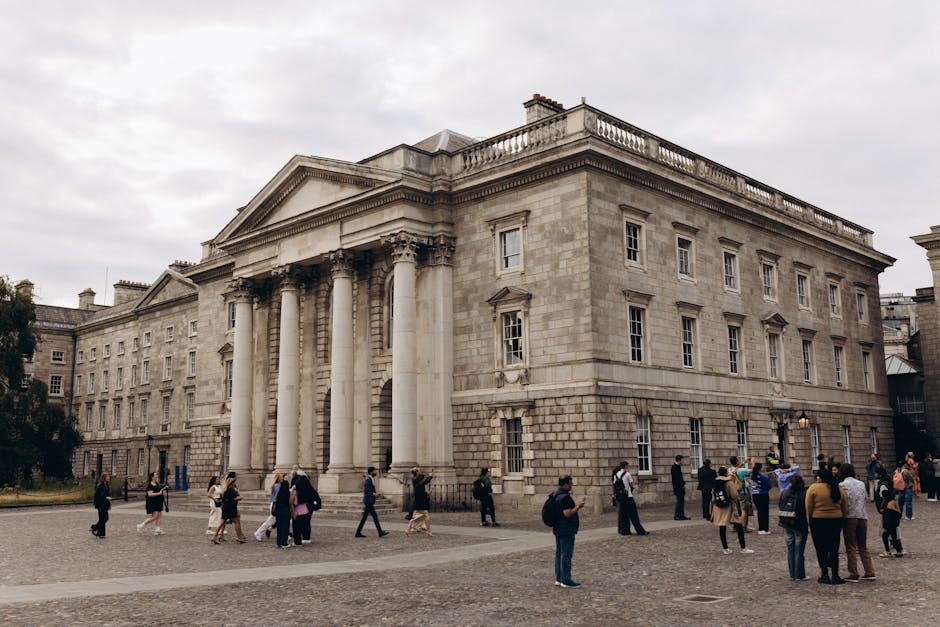 Moderate
Dublin, Ireland
Uncover Dublin’s macabre history on this self-guided walk featuring mummies, medieval rebels, and the city’s most infamous legends.
 Moderate
Dublin, Ireland
Discover Dublin's poetic waterways and modern docks on this self-guided walk through leafy canals and glass-fronted tech hubs.
 Easy
EasyDublin, Ireland
Explore Dublin's storied streets at your own pace on this self-guided literary walk, from Joyce’s statues to Wilde’s colorful memorial.