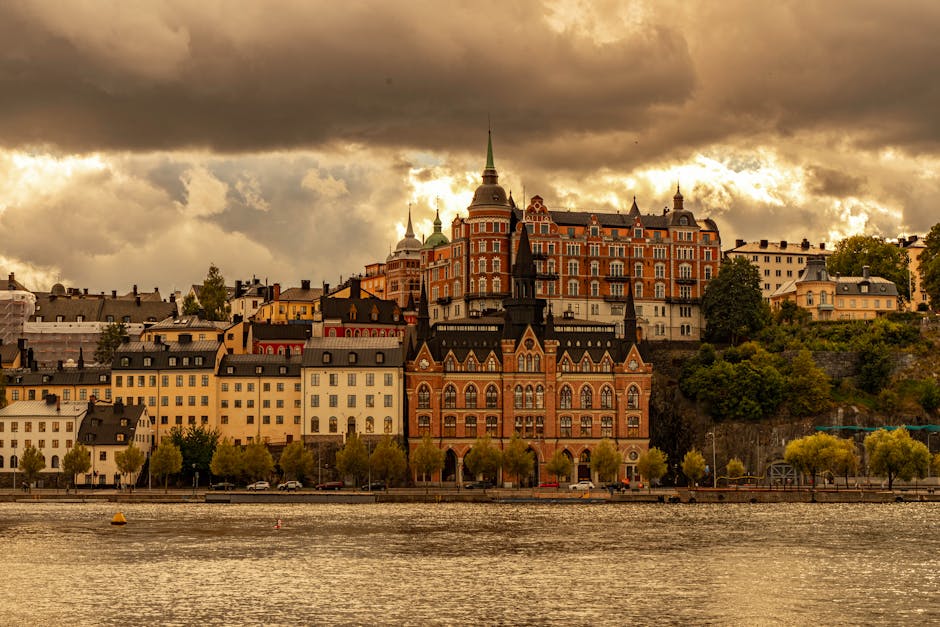
Self-guided audio tour in Stockholm
Start Free on iPhone
Start free on iPhone to unlock this self-guided walking tour in Stockholm. Hear all the stories that make it amazing, walk at your own pace, and begin whenever you want.
Your Private Tour Guide
Escape the bustling city center and discover Djurgården, an island that has served as the Swedish Crown's private hunting ground since the 15th century. This neighborhood stroll offers a unique blend of maritime power, cultural heritage, and serene landscapes. Starting at the water's edge, this walking route leads you past world-class museums before transitioning into the lush, quiet interior of what locals call the city's 'Green Lung.' You will explore the legacy of the Swedish Empire at the Vasa Museum and admire the grand architecture of the Nordic Museum before crossing the historic Djurgårdsbron bridge. As you move deeper into the island, the atmosphere shifts from monumental to pastoral. The route invites you to wander through the biodynamic orchards of Rosendals Trädgård and see the Empire-style elegance of Rosendal Palace. This self-guided walk is perfect for those who want to experience the dual nature of Stockholm: a sophisticated European capital and a wild, natural sanctuary. Whether you are interested in the dramatic story of a 17th-century shipwreck or the peaceful sight of herons nesting in the Isbladskärret marshes, this path provides a comprehensive look at the island's royal history and ecological diversity. Exploring independently allows you to linger under ancient oaks or stop for a traditional fika in a greenhouse, making it a highlight of any walking tour Stockholm adventure. This journey through Djurgården captures the essence of Swedish 'Allemansrätten'—the right to roam—right in the heart of the capital.
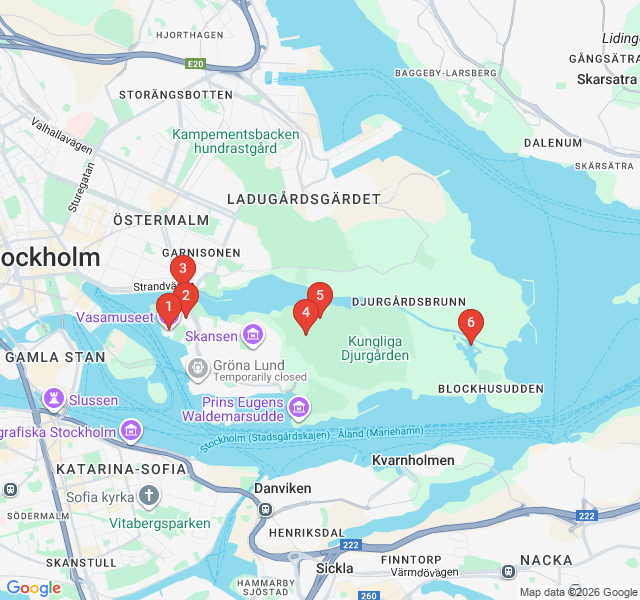
Numbers indicate the order of stops on the tour.
The Vasa Museum houses the world's best-preserved 17th-century ship. Built to be the pride of the Swedish Imperial fleet, the Vasa tragically sank on its maiden voyage in 1628, just minutes after leaving port. It lay at the bottom of Stockholm harbor for 333 years until it was salvaged in 1961. The brackish water of the Baltic Sea protected the oak hull from wood-eating worms, leaving the intricate carvings of lions, heroes, and emperors remarkably intact. As you stand near the hull, notice the sheer scale of the vessel, which was intended to project power but was ultimately undone by a design that was too top-heavy for its narrow base.
The Nordiska Museet, or Nordic Museum, is a cathedral-like structure dedicated to Swedish cultural history and ethnography. Founded by Artur Hazelius in the late 19th century, the building itself is a masterpiece of the Swedish Renaissance style, inspired by Danish castles like Frederiksborg. Inside the massive main hall, a giant oak statue of King Gustav Vasa keeps watch. The museum's collection spans everything from Sami culture and folk art to modern Swedish design and fashion. It serves as a testament to the daily lives and traditions of the Nordic people over the last five centuries, housed in one of Stockholm's most imposing landmarks.
Djurgårdsbron is the primary gateway to the island. Built for the Stockholm World's Fair in 1897, this cast-iron bridge is decorated with statues of Norse gods atop tall granite pillars. Look for Thor with his hammer Mjölnir, Frigg holding a distaff, Freyja with her cats, and Heimdall blowing his horn. The bridge offers one of the best vantage points for looking back at the city skyline and the Strandvägen waterfront. Historically, this bridge marked the transition from the urban grit of the city to the protected royal parklands, a boundary that still feels palpable as you cross over the water into the greenery.
Rosendals Trädgård is a pioneer in biodynamic gardening and a beloved local escape. This isn't just a garden; it's a working nursery and orchard where the focus is on sustainability and education. You can walk through the rows of vegetables, flowers, and fruit trees that provide ingredients for the on-site wood-fired bakery and café. The atmosphere here is quintessentially Swedish—relaxed, rustic, and deeply connected to the seasons. In the spring, the apple blossoms are a highlight, while late summer brings a bounty of dahlias. It is the perfect spot to experience the Swedish concept of fika amidst the scent of damp earth and blooming roses.
Rosendal Palace was built in the 1820s for King Karl XIV Johan, the first monarch of the Bernadotte dynasty. Designed by Fredrik Blom, it is a premier example of the Swedish Empire style, also known as the Karl Johan style. Unlike the massive Royal Palace in the Old Town, Rosendal was intended as a summer retreat—a place for the king to escape the formalities of court life. The palace was actually a prefabricated wooden building, though it was finished to look like stone. Today, it remains largely as it was in the 19th century, reflecting the king's personal tastes and the transition of Sweden into a new era of European influence.
Isbladskärret is a peaceful wetland area that showcases the wilder side of Djurgården. Once a bay that was drained for farmland, it was restored to a marshland in the 1980s and has since become a haven for birdlife. It is particularly famous for its colony of grey herons, which can often be seen nesting in the tall oaks surrounding the water. The area feels worlds away from the city, offering a quiet space for reflection among the reeds and lily pads. Walking the perimeter of the marsh, you might spot swans, geese, and various migratory birds, proving that even in a major capital, nature is never more than a short stroll away.
Start Free on iPhone
Explore “The Royal Green Lung: Parks and Palaces of Djurgården” with your very own Private Tour Guide with Zigway. Start free on iPhone, skip the large group and the fixed routes, and hear the city come alive as you go.
Your Private Tour Guide
Don't miss the good stuff
Explore Freely
 Easy
EasyStockholm, Sweden
Taste your way through Stockholm's premier food halls and historic cafes on this flavor-focused self-guided walk through the city's heart.
 Easy
EasyStockholm, Sweden
Discover Stockholm's naval legacy on this peaceful self-guided walk through historic barracks, grand admiralty houses, and scenic island fortresses.
 Moderate
Stockholm, Sweden
Walk the gritty, atmospheric streets of Södermalm and discover the real-life locations of Stieg Larsson's Millennium trilogy.
 Easy
EasyStockholm, Sweden
Explore the world's longest art gallery on this self-guided walk through Stockholm’s most stunning cavernous subway stations.
 Easy
EasyWarsaw, Poland
Explore the 'Polish Versailles' at your own pace. Discover Baroque architecture, royal history, and stunning gardens on this self-guided walk.
 Moderate
Gothenburg, Sweden
Explore Gothenburg’s lush "Green Lung" on this self-guided walk through the Botanical Garden, Slottsskogen park, and rugged Änggård Mountains.
 Easy
EasyKrakow, Poland
Uncover Krakow's legendary past on this self-guided walk from literary monuments to the fire-breathing Wawel Dragon.
 Easy
EasyGdansk, Poland
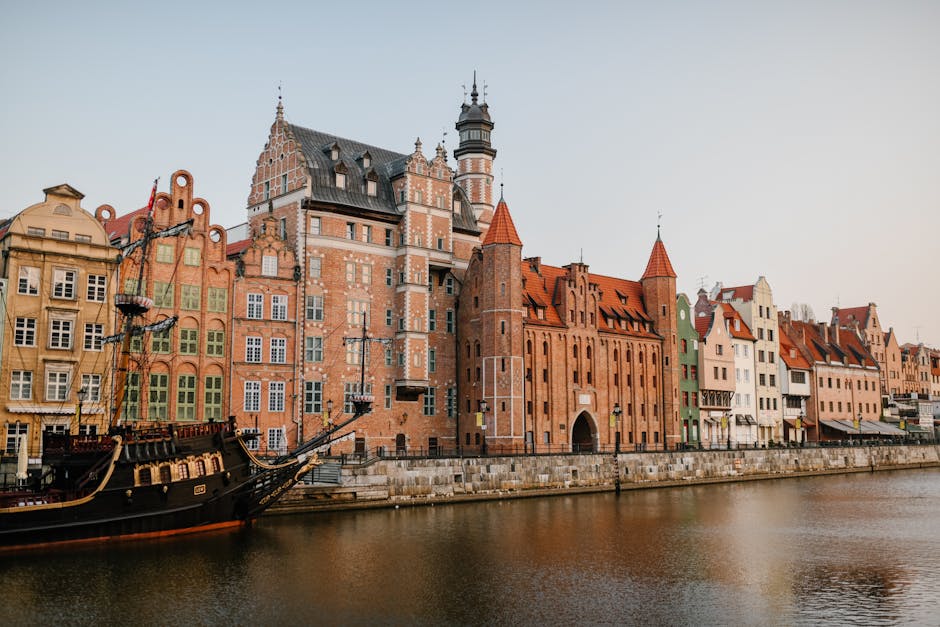
Discover the monastic heritage, world-famous organs, and lush botanical gardens of Oliwa on this peaceful self-guided neighborhood stroll.
 Easy
EasyGothenburg, Sweden
Discover Gothenburg’s maritime flavors on this self-guided walk through historic market halls and iconic seafood landmarks.
 Moderate
Gothenburg, Sweden
Discover Gothenburg’s maritime soul on this self-guided walk from the historic Central Station to the scenic riverfront at Stenpiren.
 Easy
EasyGothenburg, Sweden
Explore Gothenburg's elegant academic district, featuring grand 19th-century stone architecture and the iconic cultural hub of Götaplatsen.
 Easy
EasyGothenburg, Sweden
Explore Gothenburg’s historic wooden houses, legendary giant cinnamon buns, and panoramic fortress views on this self-guided neighborhood stroll.