Self-guided audio tour in Vilnius
Start Free on iPhone
Start free on iPhone to unlock this self-guided walking tour in Vilnius. Hear all the stories that make it amazing, walk at your own pace, and begin whenever you want.
Your Private Tour Guide
Vilnius is a city of striking architectural layers, where Baroque spires often stand in the shadow of a complex 20th-century history. This self-guided walk through the Naujamiestis district invites you to peel back these layers and explore the traces left by the Soviet era, from Brutalist monuments to the chilling remnants of the secret police. By following this walking route, you will uncover the stories of a nation that endured decades of occupation before reclaiming its independence in a display of remarkable civic courage. The journey begins at the Green Bridge, once a showcase for Soviet social realism, and moves toward the stark, imposing structure of the Vilnius Opera and Ballet Theatre. As you progress, the narrative shifts from public architecture to the somber realities of state control at the Museum of Occupations and Freedom Fights, located in the former KGB headquarters. This neighborhood stroll provides a deep dive into the 'Dark Tourism' side of the city, offering a visceral connection to the past that a standard walking tour Vilnius might overlook. You will explore Lukiškės Square, once the site of the largest Lenin monument in the Lithuanian SSR, and conclude at the Seimas, where the barricades of the 1991 independence struggle are still memorialized. This audio walk is designed for those who want to understand the resilience of the Lithuanian spirit and the physical scars left by the Iron Curtain. Whether you are a history enthusiast or a first-time visitor, this route offers an essential perspective on how Vilnius transformed from a Soviet outpost into a vibrant European capital. Unlike a traditional guided tour Vilnius experience, this self-guided adventure allows you to pause and reflect at each site, ensuring a personal and profound engagement with the city's twentieth-century legacy.
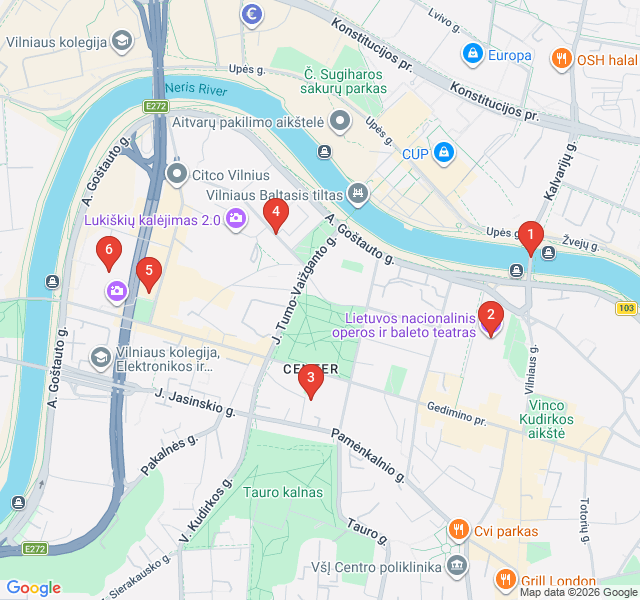
Numbers indicate the order of stops on the tour.
Start your journey at the Green Bridge, the oldest bridge in the city. For decades, this structure was a primary symbol of Soviet presence in Vilnius, adorned with four massive social-realist statues representing soldiers, workers, students, and farmers. These figures were finally removed in 2015, a significant moment in Lithuania’s ongoing process of de-Sovietization. As you look across the Neris River, consider how the removal of such monuments changes the identity of a city. The bridge remains a vital artery connecting the old and new parts of Vilnius, but its empty pedestals serve as a silent reminder of the ideological weight the city has shed since 1990.
This striking example of Late Modernist/Brutalist architecture was completed in 1974. Designed by Nijolė Bučiūtė, its glass and brown brick facade was intended to reflect the cultural prestige of the Soviet Union. While the interior is famous for its massive chandeliers and red carpets, the building itself represents a period when the state heavily funded high culture to project an image of stability and sophistication. It stands as a landmark of the Naujamiestis district, bridging the gap between the utilitarian Soviet aesthetic and a more expressive, artistic architectural style that was emerging in the late 20th century.
You are standing before one of the most somber sites in the Baltic states. This building served as the headquarters for the Gestapo during the Nazi occupation and later as the KGB headquarters and prison for nearly fifty years. Look closely at the exterior foundation stones; you will see the names of resistance fighters carved into the granite. Inside, the basement remains almost exactly as the KGB left it in 1991, including the execution chamber and isolation cells. This stop is the emotional heart of our walking route, documenting the loss of liberty and the immense bravery of those who fought for Lithuanian independence from within these walls.
Lukiškės Square was once the ideological center of Soviet Vilnius. A massive statue of Lenin stood at its center until 1991, when it was famously toppled during the collapse of the USSR. Today, the square has been completely renovated into a space for recreation and memory. It is a place of transition, where the heavy symbolism of the past has been replaced by fountains and open lawns. However, its history as a site of executions during the 1863 Uprising and its role in Soviet military parades make it a crucial chapter in the story of Lithuania’s struggle against imperial and totalitarian control.
This massive Neoclassical building is the main research library of Lithuania. Built during the Soviet period, its architecture was designed to be 'Socialist in content and National in form.' It represents the state's efforts to control knowledge and literacy, yet it also became a repository for the very culture the occupation sought to suppress. During the drive for independence, the steps of this library were a frequent gathering point for activists. It sits at the end of Gediminas Avenue, the city's main thoroughfare, and serves as a transition point to the political heart of modern Lithuania.
The final stop is the Seimas, the Lithuanian Parliament. In January 1991, thousands of unarmed civilians gathered here to protect their newly declared independence from Soviet tanks. You can still see fragments of the original concrete barricades and anti-tank defenses preserved behind glass outside the building. These artifacts are a powerful testament to the 'Singing Revolution,' where song and peaceful protest eventually broke the Iron Curtain. This is where the Soviet era in Lithuania officially ended and the modern democratic state began, making it the perfect place to conclude your exploration of the city's difficult but triumphant history.
Start Free on iPhone
Explore “Shadows of the Iron Curtain” with your very own Private Tour Guide with Zigway. Start free on iPhone, skip the large group and the fixed routes, and hear the city come alive as you go.
Your Private Tour Guide
Don't miss the good stuff
Explore Freely
 Easy
EasyVilnius, Lithuania
Discover the 'Rome of the North' on this self-guided walk through the Baroque churches and historic courtyards of Vilnius Old Town.
 Easy
EasyVilnius, Lithuania
Explore fairy-tale wooden villas, a rare Karaite Kenesa, and peaceful river paths on this self-guided audio walk through Vilnius’ greenest district.
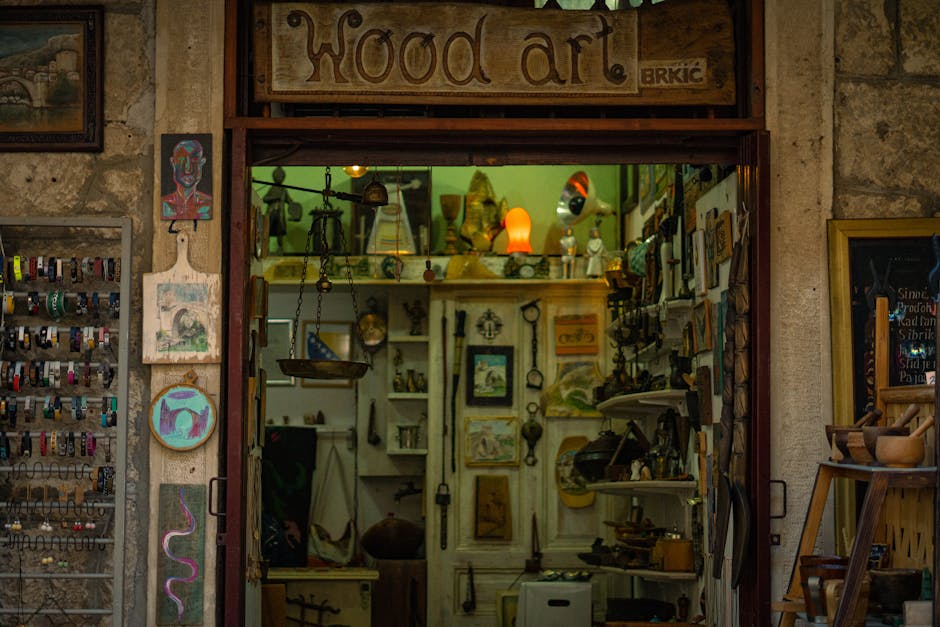 Easy
EasyVilnius, Lithuania
Explore the quirky, artistic, and self-proclaimed Independent Republic of Užupis on this creative self-guided walk through Vilnius' bohemian heart.
 Challenging
Vilnius, Lithuania
Scale the historic hills of Vilnius on this self-guided walk for breathtaking panoramas and photography of the Old Town.
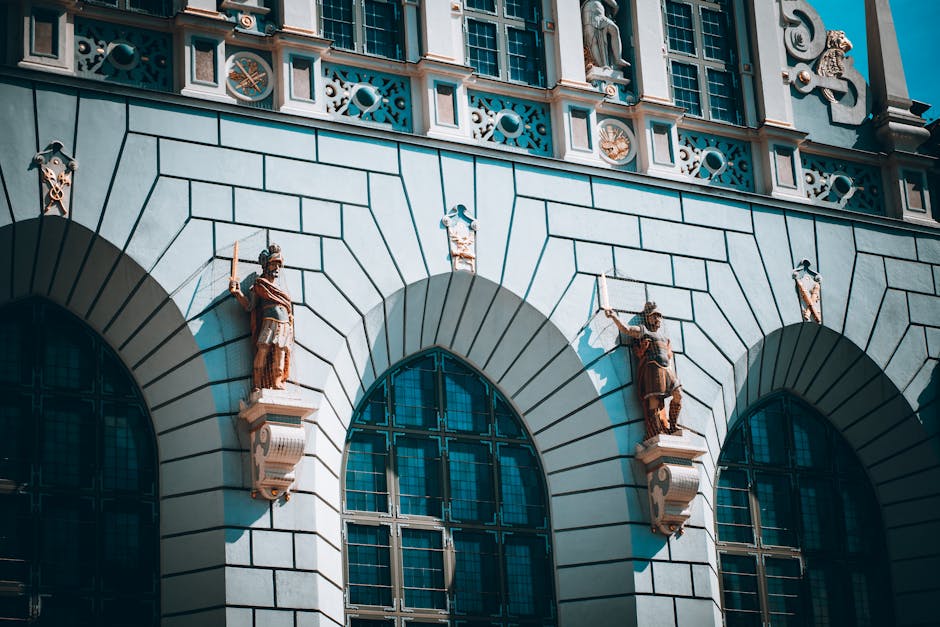 Moderate
Gdansk, Poland
Discover the origins of WWII in Gdansk on this self-guided walk through heroic last stands, massive museums, and strategic hilltop fortifications.
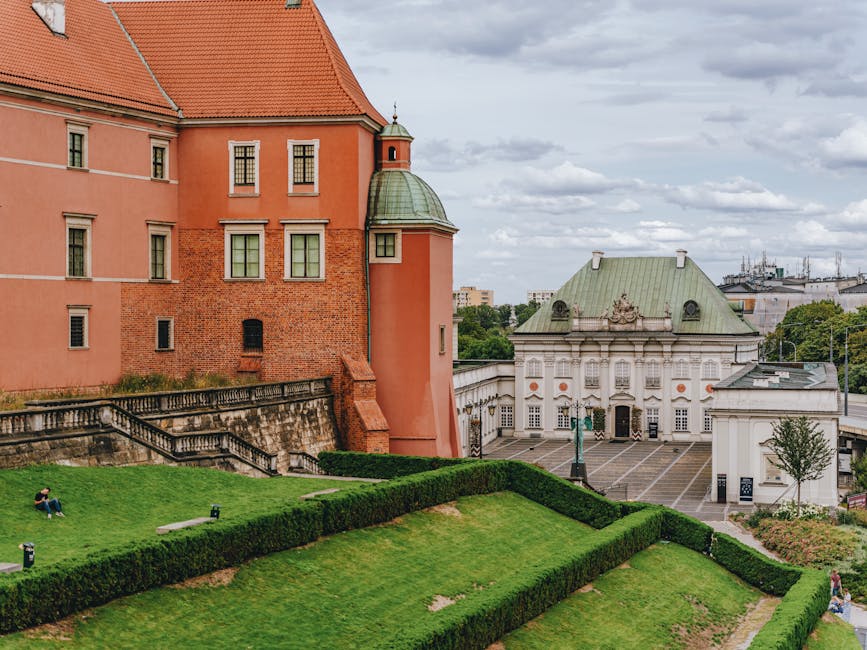 Moderate
Warsaw, Poland
Explore the resilient spirit of Warsaw's Muranów district on this self-guided walk through the history and landmarks of the former Jewish Ghetto.
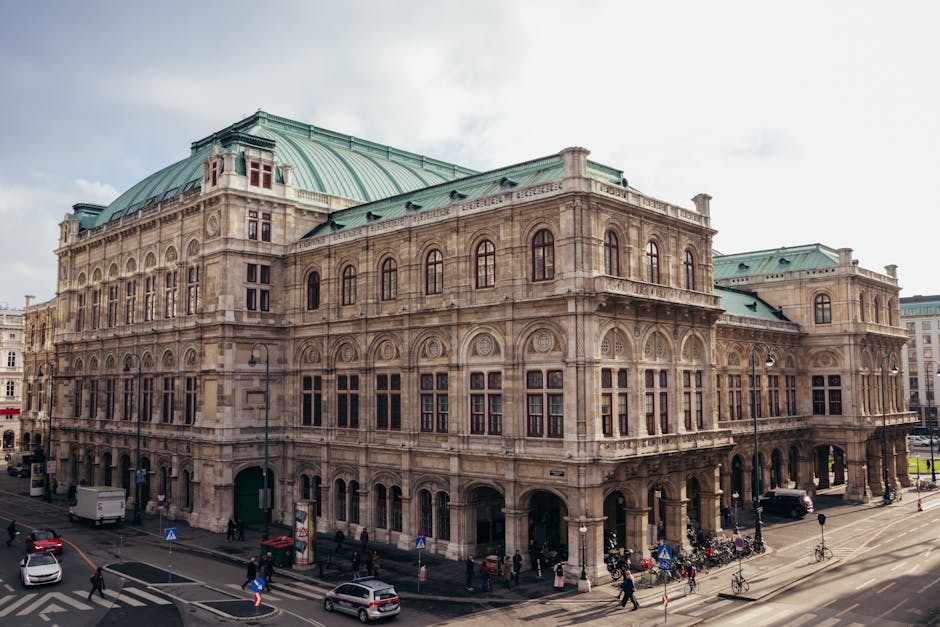 Moderate
Vienna, Austria
Follow the footsteps of Mozart and Strauss through Vienna’s historic center on this self-guided walk through the city's rich musical history.
 Moderate
Warsaw, Poland
A powerful self-guided walk through Warsaw's WWII history, tracking the 1944 Uprising from ruined skyscrapers to solemn memorials.