Self-guided audio tour in Tokyo
Start Free on iPhone
Start free on iPhone to unlock this self-guided walking tour in Tokyo. Hear all the stories that make it amazing, walk at your own pace, and begin whenever you want.
Your Private Tour Guide
Escape the neon-lit frenzy of Shinjuku and Shibuya for the tranquil, residential charm of Setagaya. This self-guided walk invites you into a side of Tokyo where history feels personal and the pace slows down. The centerpiece of this journey is the legendary Gotokuji Temple, famous worldwide as the birthplace of the 'Maneki-neko' or beckoning cat. As you explore this neighborhood stroll, you will discover why thousands of these white feline figurines have become a symbol of good fortune and how a single cat supposedly saved a samurai lord from a lightning strike centuries ago. Beyond the cats, this walking route offers a rare chance to ride the Tokyu Setagaya Line, one of the city's last remaining streetcar systems, providing a nostalgic glimpse into mid-century Tokyo. You will visit a Shinto shrine with deep ties to professional sumo wrestling and pay respects at the final resting place of a revolutionary scholar who shaped modern Japanese education. This walking tour Tokyo experience is perfect for those seeking a blend of religious history and local culture. The path winds through quiet backstreets, past local boutiques, and ends at one of the city's most celebrated bakeries. Whether you are a photography enthusiast looking for that iconic 'sea of cats' shot or a traveler wanting to discover hidden gems away from the main tourist hubs, this audio walk provides the context and stories to make the suburban landscape come alive. By choosing this independent way to explore, you can spend as long as you like admiring the intricate temple carvings or browsing the charming shops of Shoin-jinja-dori without the pressure of a group schedule.
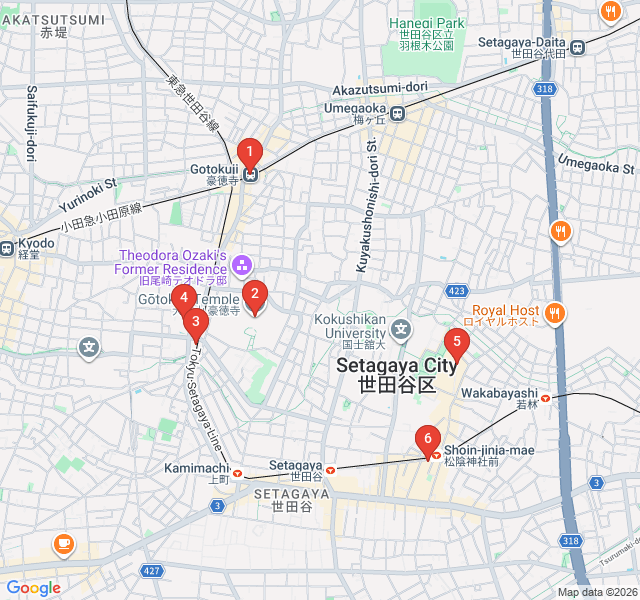
Numbers indicate the order of stops on the tour.
Welcome to the start of your self-guided adventure in Setagaya. As you step out of Gotokuji Station, keep your eyes peeled for the small bronze statue of a beckoning cat right outside the exit. This station serves as the gateway to one of Tokyo's most charming legends. The neighborhood's identity is deeply intertwined with the Maneki-neko, or 'Lucky Cat.' You’ll notice cat motifs on shop windows, street signs, and even the pavement. This area was once part of a massive estate owned by the Li clan, powerful daimyo during the Edo period. Today, it is a quiet residential enclave that retains a village-like atmosphere despite being just minutes from the world’s busiest train station. Take a moment to soak in the local vibe before we head toward the temple that started it all.
Gotokuji Temple is an oasis of calm and the spiritual home of the Maneki-neko. Legend has it that in the 17th century, a high-ranking samurai was sheltering under a tree nearby when he saw a cat beckoning him into the temple. Moments later, the tree was struck by lightning. Grateful for his life, the samurai became the temple's patron. Today, you can see thousands of white ceramic cats offered by visitors whose wishes have come true. While the 'cat corner' is the most photographed spot, don’t miss the stunning three-story pagoda nearby, which features intricate wood carvings—look closely and you might even find cats carved into the zodiac animals. This is a place of quiet reflection, so please maintain a respectful volume as you explore the grounds.
To reach our next destination, we are taking a short trip on the Tokyu Setagaya Line. This isn't just a commute; it’s a piece of living history. This is one of only two remaining tram lines in all of Tokyo, operating on a gauge and style that feels wonderfully old-fashioned. The 'tams' are small, consisting of only two cars, and they weave through the narrow gaps between houses, often so close you could almost touch the laundry hanging on balconies. If you’re lucky, you might even catch the special 'Maneki-neko' themed train, decorated with cat ears and paw prints. It’s a short, scenic ride that perfectly captures the slow-city charm of the Setagaya district.
Setagaya Hachiman-gu is a Shinto shrine with a unique physical feature: a permanent 'dohyo' or sumo wrestling ring. In the Edo period, sumo matches were often held here to entertain the deities and pray for a good harvest. Even today, a festival in September features matches by local university students. The shrine is dedicated to Hachiman, the god of war and protector of the samurai, which explains its historical importance to the local ruling families. The approach to the shrine is lined with towering trees and a beautiful pond filled with koi fish. It’s a stark contrast to the urban sprawl of Tokyo, offering a sense of how the landscape looked hundreds of years ago.
This elegant shrine is dedicated to Yoshida Shoin, a brilliant scholar and revolutionary who was executed by the Shogunate at the young age of 29. Despite his short life, his teachings inspired the leaders who eventually overthrew the Shogun and ushered in the Meiji Restoration. Because of his intellect, students from all over Japan come here to pray for success in their exams. The shrine grounds are impeccably maintained and house a replica of the small schoolhouse where Shoin taught. The atmosphere here is one of scholarly prestige and quiet dignity. Take a walk to the back of the grounds to see the cemetery where Shoin and several of his loyal followers are buried.
We conclude our walking route at Boulangerie Sudo, widely considered one of the best bakeries in Japan. This isn't your average bread shop; the pastry chefs here are famous for their precision and creative use of seasonal Japanese ingredients. Their signature honey-glazed 'Sudo' bread and fruit-topped danishes are so popular that locals often queue up before the doors even open. It’s the perfect place to grab a reward after your walk. Please note that it is incredibly popular, so some items may sell out by early afternoon. Once you’ve secured your treats, you are just steps away from the Shoin-jinja-mae station, making it easy to continue your exploration or head back to central Tokyo.
Start Free on iPhone
Explore “The Lucky Cat Trail: Setagaya’s Hidden Temples” with your very own Private Tour Guide with Zigway. Start free on iPhone, skip the large group and the fixed routes, and hear the city come alive as you go.
Your Private Tour Guide
Don't miss the good stuff
Explore Freely
 Moderate
Tokyo, Japan
Discover Tokyo's premier creative district on this self-guided walk through Roppongi’s world-class museums and striking modern architecture.
 Easy
EasyTokyo, Japan
Discover the 'Old Tokyo' charm of Yanaka on this self-guided walk through historic temples, artisan alleys, and a stunning torii gate shrine.
 Easy
EasyTokyo, Japan
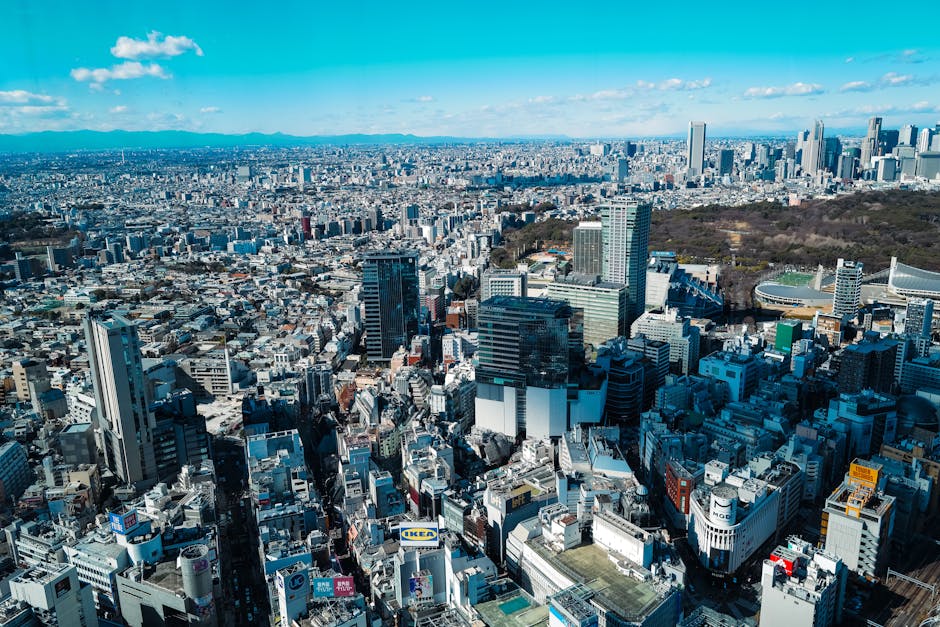
Experience Shibuya's electric energy on this self-guided walk from the iconic Scramble Crossing to the panoramic views of Shibuya Sky.
 Easy
EasyTokyo, Japan
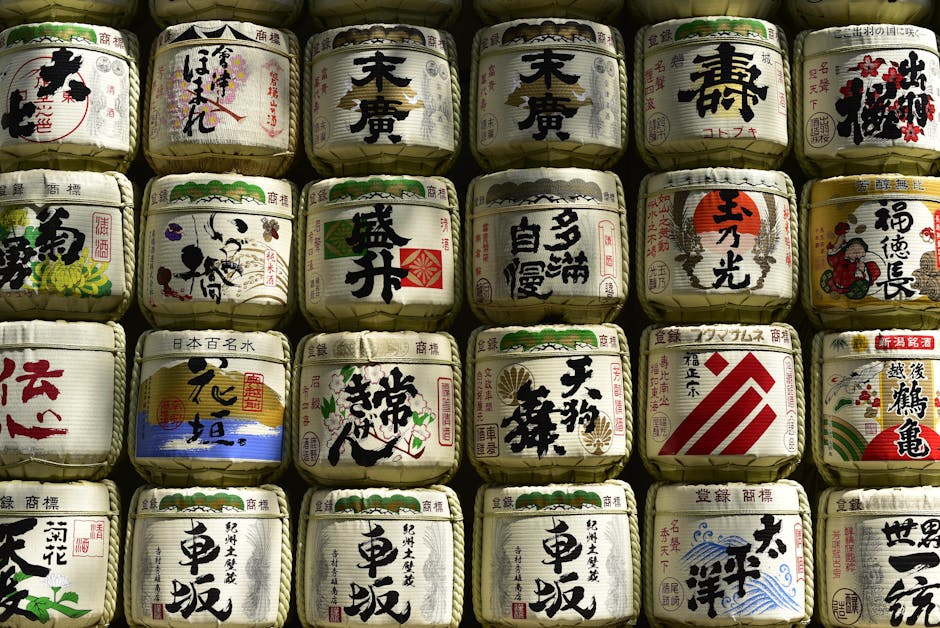
Explore Tokyo's indie heart. From vintage fashion in Shimokitazawa to world-class art in Shinjuku, discover the city's creative soul independently.
 Moderate
Nairobi, Kenya
Discover the creative soul of Nairobi on this self-guided walk through the city's premier art galleries, markets, and artisan workshops.
 Moderate
Nairobi, Kenya
Discover Nairobi's lush side on this self-guided walk through botanical gardens, historic memorials, and vibrant local markets.
 Moderate
Nairobi, Kenya
Discover the pulse of Nairobi's contemporary art scene on this self-guided walk through the galleries and creative spaces of Kilimani.
 Moderate
Gdansk, Poland
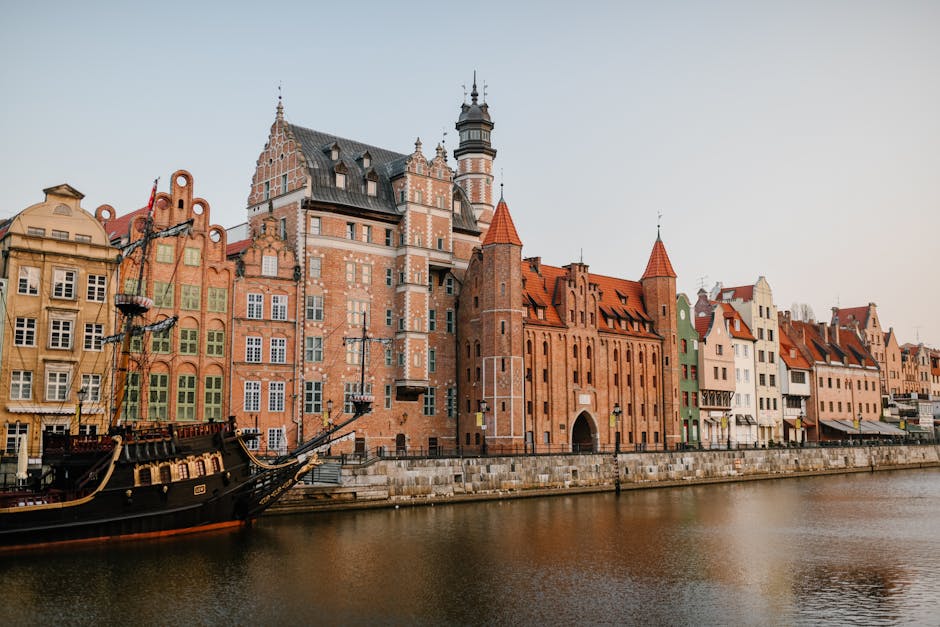
Discover the raw beauty of Gdansk’s Lower Town. Explore industrial ruins, hidden sluices, and riverside bastions on this self-guided walk.
 Moderate
Kyoto, Japan
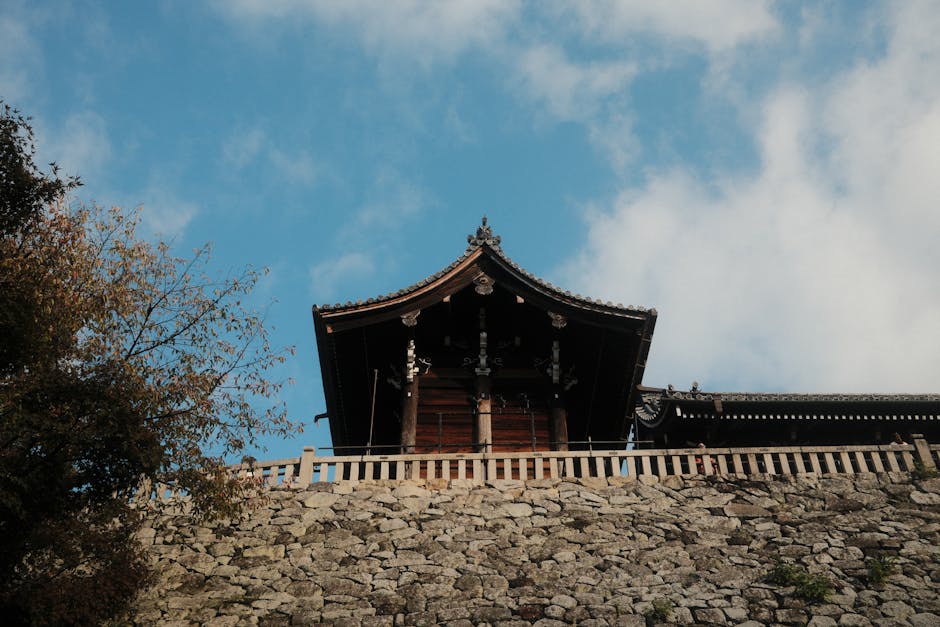
Discover the soul of old Kyoto on this self-guided walk through preserved stone lanes, iconic pagodas, and the grand wooden stage of Kiyomizu-dera.
 Challenging
Kyoto, Japan
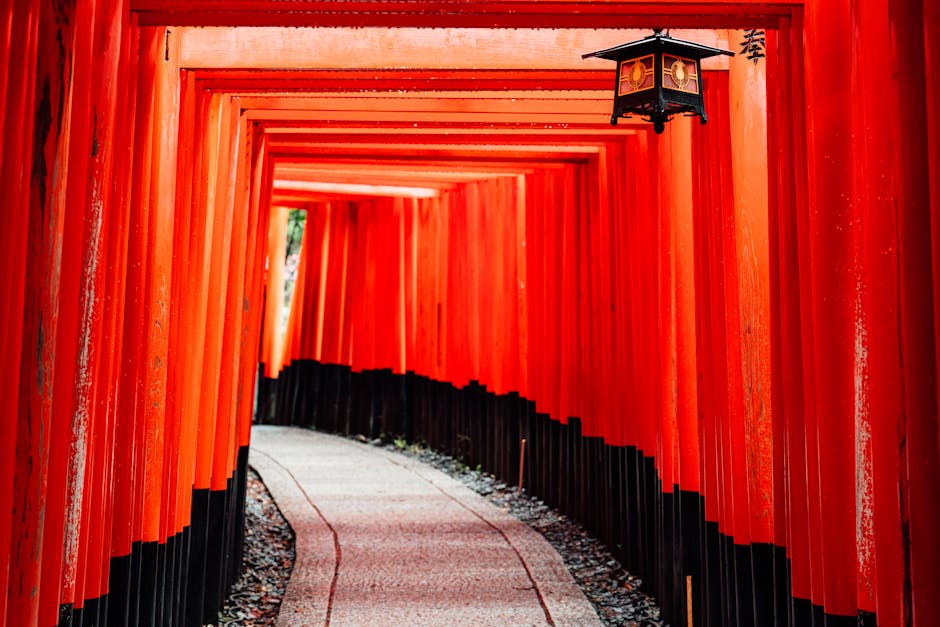
Ascend the sacred Mount Inari through thousands of vermillion torii gates on this challenging and spiritual self-guided walk in Kyoto.
 Easy
EasyKyoto, Japan
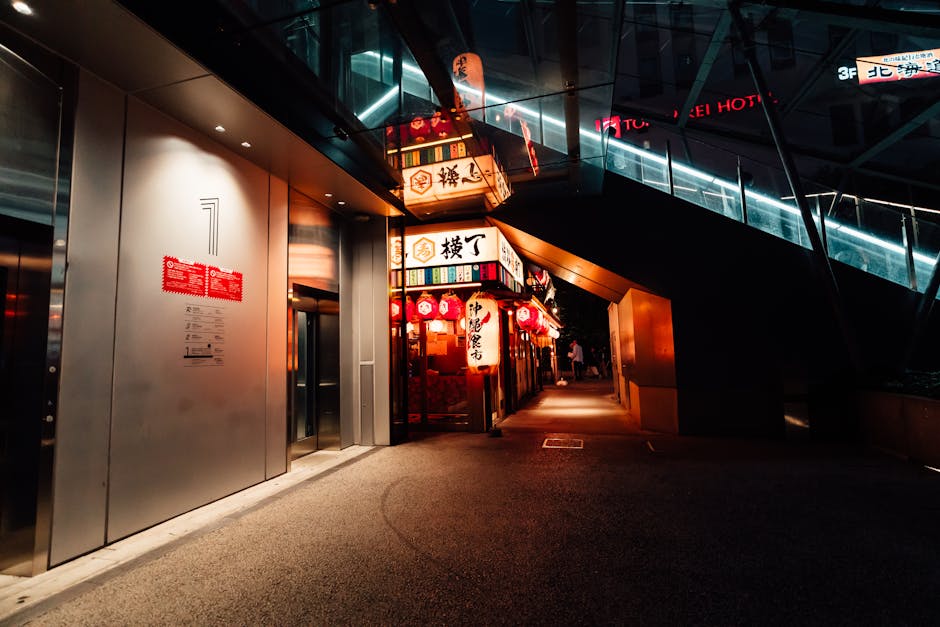
Explore Kyoto's most atmospheric alleyway. Discover geiko history, riverside dining, and hidden nightlife on this self-guided evening stroll.
 Moderate
Kyoto, Japan
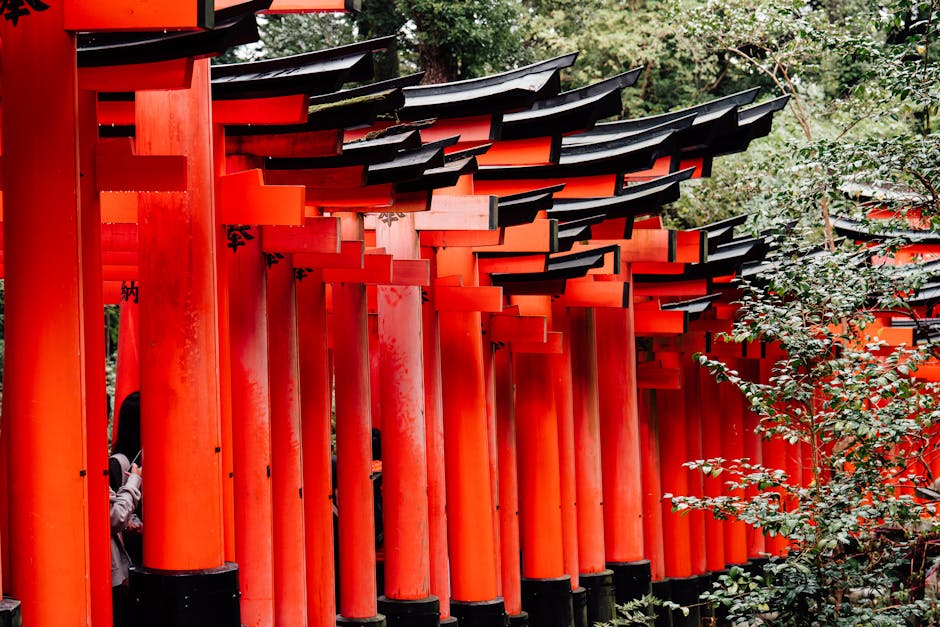
Experience a serene self-guided walk along Kyoto's iconic Philosopher's Path, visiting Zen temples, hidden shrines, and the stunning Silver Pavilion.