Self-guided audio tour in Chicago
Start Free on iPhone
Start free on iPhone to unlock this self-guided walking tour in Chicago. Hear all the stories that make it amazing, walk at your own pace, and begin whenever you want.
Your Private Tour Guide
Step into the vibrant heart of Pilsen, a neighborhood that serves as a living canvas for the Mexican-American experience in Chicago. This self-guided walking route invites you to explore one of the city's most culturally rich enclaves, where every brick and concrete wall tells a story of migration, resilience, and artistic triumph. As you wander through the streets, you will encounter a staggering array of public art that has defined this community since the 1960s. This isn't just a simple stroll; it is an immersion into the Mexican Diaspora, where the murals act as a visual language for political protest, cultural pride, and community identity. This walking tour Chicago offers a deep dive into the evolution of street art from traditional Chicano styles to contemporary international collaborations. The journey begins at the National Museum of Mexican Art, a world-class institution that sets the historical stage for the neighborhood's creative spirit. From there, you will navigate through Harrison Park and along the massive concrete embankment of 16th Street, which features over two miles of continuous artwork. You will also experience the bustling commercial life of 18th Street, where the scent of authentic panaderías mixes with the sight of modernist transit architecture. You will see landmarks like Thalia Hall, a Bohemian-style opera house that has been the soul of Pilsen's social life for over a century, and Casa Aztlan, a cornerstone of the neighborhood's activism. While a guided tour Chicago might provide a rigid schedule, this audio walk allows you to linger at your favorite murals, grab a taco at a local stand, or sit in the park to soak in the atmosphere. Whether you are an art aficionado or a history buff, this walking route provides an independent way to discover the soul of Chicago's Mexican community. Please note that because street art is an ever-changing medium, you may discover new masterpieces or see old favorites that have evolved since your last visit. **Note:** This area is known for its ever-changing character. Street art, pop-up venues, and temporary exhibitions may differ from what's described. That's part of the adventure - you might discover something entirely new!
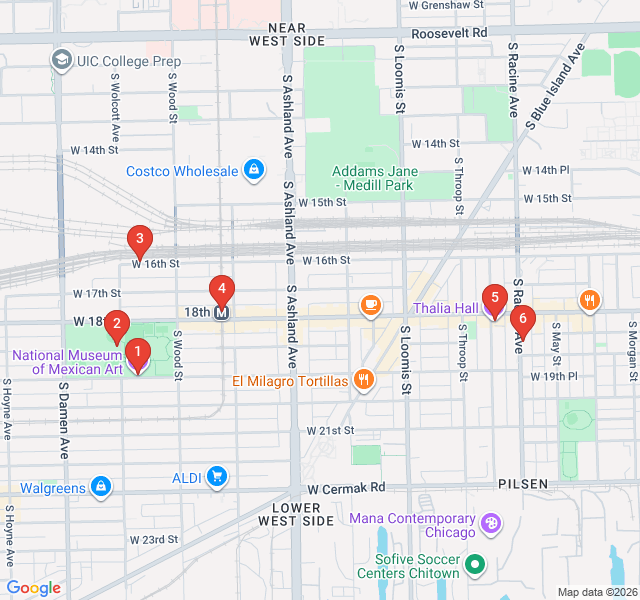
Numbers indicate the order of stops on the tour.
Start your journey at the National Museum of Mexican Art, the only Latino museum accredited by the American Alliance of Museums. Founded in 1982, this institution serves as a cultural anchor for Pilsen. Inside, you'll find a massive permanent collection spanning 3,000 years of history, from pre-Columbian artifacts to contemporary works by Mexican and Mexican-American artists. The museum is particularly famous for its annual Day of the Dead exhibit, which is one of the largest in the United States. Take a moment to appreciate the exterior murals on the museum building itself, which often reflect the themes of the current exhibits. This stop provides the essential context of the Mexican Diaspora needed to understand the symbols and stories you will see on the streets today.
Stepping out from the museum, you find yourself in Harrison Park, the 17-acre green heart of the Pilsen community. This park is more than just a recreational space; it is a gathering point for local families and a site for cultural festivals. As you walk through, look for the various sculptures and smaller murals tucked away near the fieldhouse and playgrounds. The park has historically been a site of community organizing and celebration. Notice how the art here often focuses on themes of family and heritage. The open space provides a beautiful contrast to the densely built urban corridors you are about to explore, offering a glimpse into the daily life of the neighborhood.
Prepare for a visual feast as you reach the 16th Street railway embankment. This long concrete wall has become one of the most famous canvases for street art in the world. Stretching for miles, the wall features a diverse array of styles, from traditional portraits of Mexican icons like Frida Kahlo and Emiliano Zapata to abstract graffiti and surrealist imagery by international artists. Because this area is a 'living gallery,' the art here changes frequently; new murals are often painted over older ones during community festivals. This section of the walk highlights the neighborhood's transition from an industrial hub to a global center for public art. Take your time to walk along the wall, as the sheer scale of the work is best appreciated on foot.
As you move toward the commercial heart of the neighborhood, the 18th Street Pink Line station stands as a testament to the community's dedication to art. Even the transit infrastructure here is decorated; the station features vibrant mosaics and murals that depict the history of the neighborhood and its residents. This area is the pulsing center of Pilsen, where you'll find a high concentration of local businesses, from long-standing panaderías to modern coffee shops. The murals in this vicinity often carry strong social and political messages, reflecting the community's ongoing struggle against gentrification and its pride in its roots. It is a perfect spot to observe the intersection of art and everyday urban life.
Thalia Hall is one of Pilsen's most significant architectural landmarks. Built in 1892 by John Dusek, it was modeled after the Prague Opera House and originally served as a 'community house' for the Bohemian immigrants who lived here before the Mexican community arrived. Over the decades, it has functioned as a theater, a retail space, and a gathering hall. After a major restoration, it now serves as a premier music venue and home to award-winning restaurants. The building's Romanesque Revival style, with its ornate brickwork and turrets, stands as a reminder of the neighborhood's multi-layered immigrant history. It represents the successful preservation of historic architecture while adapting to the needs of a modern, creative community.
Your walk concludes at Casa Aztlan, a building that for decades served as a community center and a symbol of the Chicano movement in Chicago. Its facade is famous for being completely covered in a mural that features iconic figures of Mexican history and symbols of indigenous heritage. Although the building has transitioned into residential use in recent years, the facade remains a protected and vital landmark. The name 'Aztlan' refers to the ancestral home of the Aztec people, a powerful symbol in the quest for Mexican-American identity. This site encapsulates the theme of the route: art as a form of resistance, a method of preservation, and a declaration of presence in the city.
Start Free on iPhone
Explore “Murals of the Mexican Diaspora: Pilsen's Painted Streets” with your very own Private Tour Guide with Zigway. Start free on iPhone, skip the large group and the fixed routes, and hear the city come alive as you go.
Your Private Tour Guide
Don't miss the good stuff
Explore Freely
 Moderate
Chicago, United States
Explore the dark history of Al Capone and the North Side Gang on this self-guided walk through Chicago’s most infamous Prohibition-era crime scenes.
 Easy
EasyChicago, United States
Explore the evolution of Chicago’s meatpacking district into a world-class culinary and tech hub on this independent self-guided walk.
 Easy
EasyChicago, United States
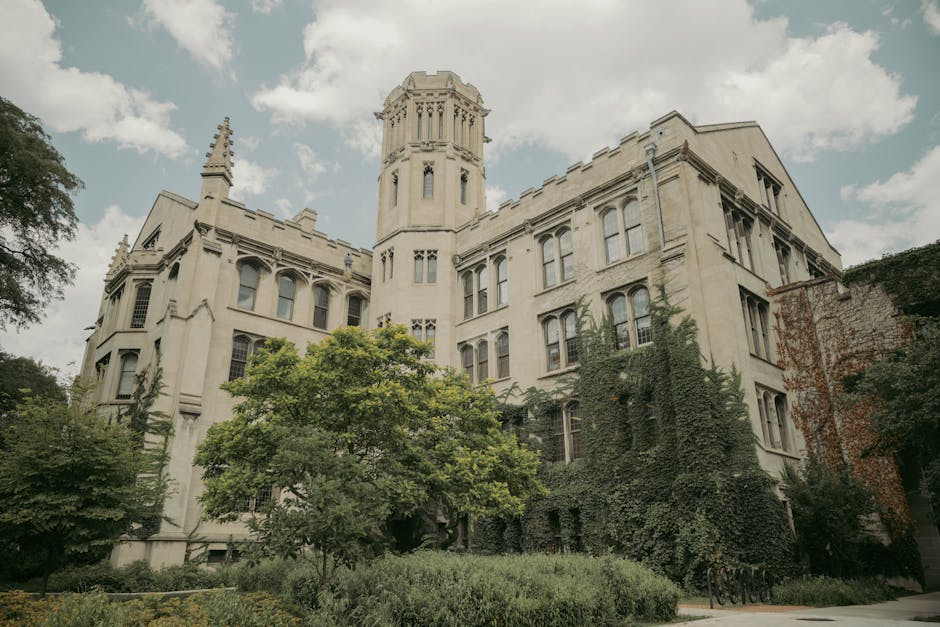
Explore the hidden tunnels of the Chicago Pedway on this self-guided walking route through the Loop’s secret architectural wonders.
 Moderate
Chicago, United States
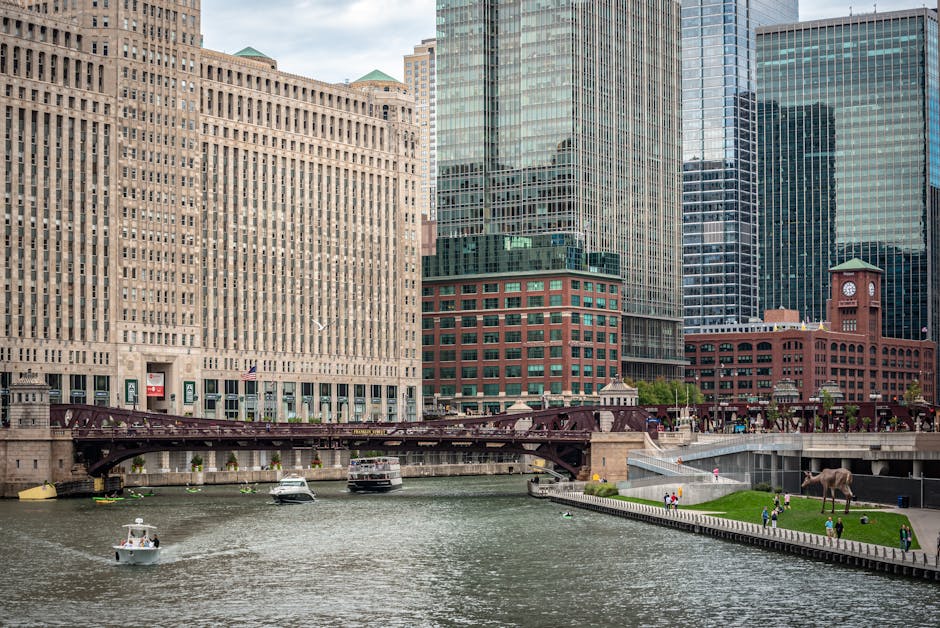
Explore the 'Black Metropolis' and discover the cradle of African American history and civil rights on this self-guided walk through Bronzeville.
 Moderate
Gdansk, Poland
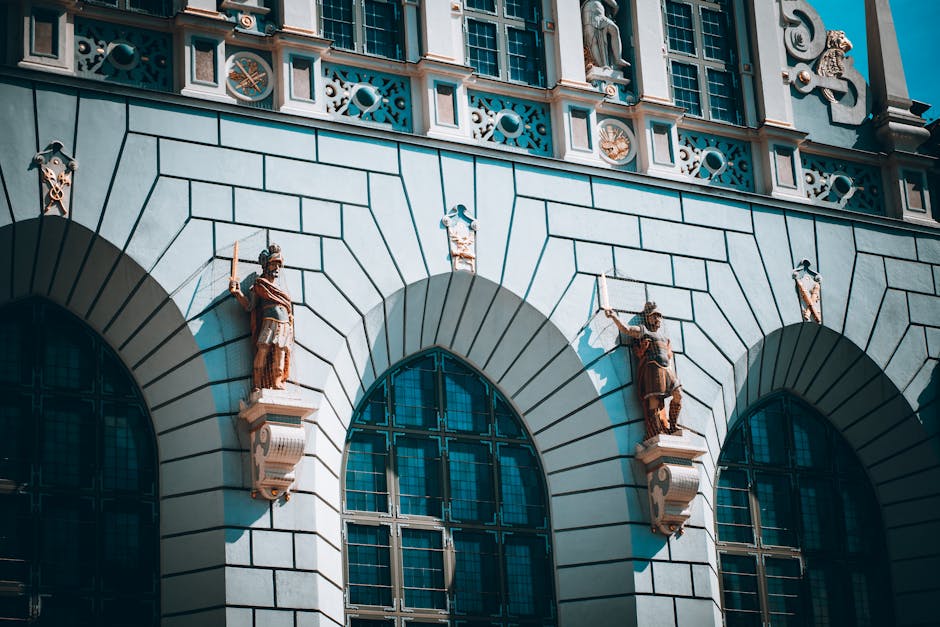
Discover Zaspa, a massive open-air gallery where grey housing blocks are transformed by over 60 monumental murals. Explore at your own pace.
 Moderate
Nairobi, Kenya
Discover the pulse of Nairobi's contemporary art scene on this self-guided walk through the galleries and creative spaces of Kilimani.
 Easy
EasyKrakow, Poland
Explore Krakow’s artistic evolution from Renaissance masterpieces to vibrant urban murals on this inspiring self-guided walk through the city.
 Moderate
Helsinki, Finland
Explore Helsinki's bohemian heart. Discover historic saunas, granite churches, and the vibrant local life of the Kallio neighborhood at your own pace.
 Easy
EasyNashville, United States
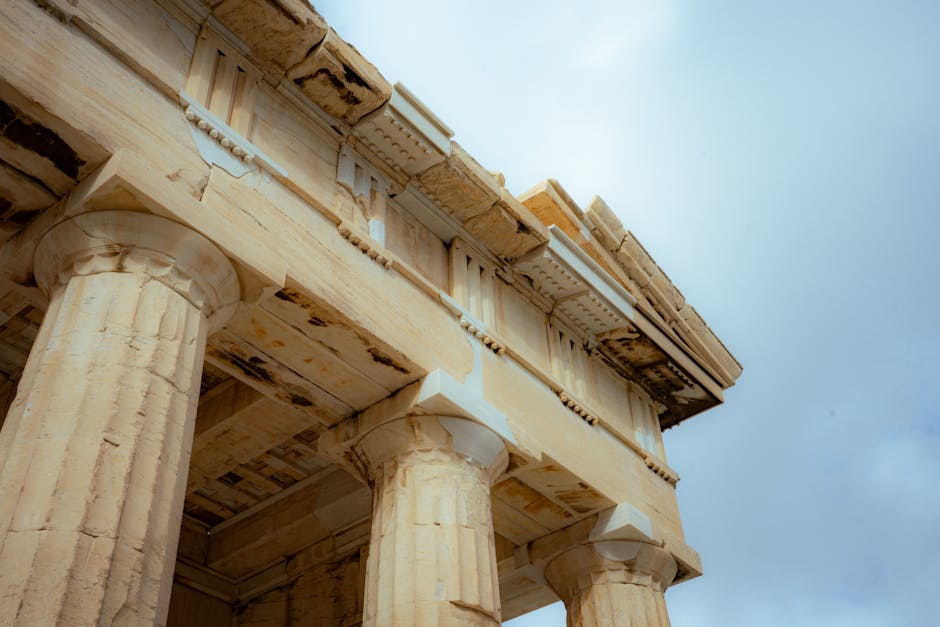
Explore the 'Athens of the South' on this self-guided walk through Centennial Park, featuring the world's only full-scale Parthenon replica.
 Easy
EasyNashville, United States
Explore Nashville's academic heart and Art Deco gems on this self-guided walk through historic Hillsboro Village.
 Easy
EasyNashville, United States
Explore the heart of Nashville's music industry. Discover iconic studios and the history of the legendary Nashville Sound at your own pace.
 Easy
EasyNashville, United States
Explore Nashville's oldest neighborhood! Discover Victorian architecture, Civil War history, and world-class craft beer on this self-guided walk.