Self-guided audio tour in Naples
Start Free on iPhone
Start free on iPhone to unlock this self-guided walking tour in Naples. Hear all the stories that make it amazing, walk at your own pace, and begin whenever you want.
Your Private Tour Guide
Perched high above the Tyrrhenian Sea, Posillipo is a name derived from the Greek Pausilypon, meaning respite from worry. This self-guided walk invites you to explore one of Naples' most prestigious and scenic neighborhoods, where ancient Roman history meets the azure beauty of the Mediterranean coast. Unlike the bustling city center, this neighborhood stroll offers a slower pace, leading you from the crumbling grandeur of seaside palaces to the hidden coves of Marechiaro. Along this walking route, you will uncover the layers of Neapolitan identity—from the legendary hauntings of Palazzo Donn'Anna to the archaeological treasures of a Roman villa once owned by Vedius Pollio. This journey isn't just about the views; it's a deep dive into the maritime heritage and architectural splendor that have made Posillipo a destination for poets and emperors for millennia. Whether you are captivated by the panoramic vistas of Vesuvius or the quiet charm of a village church, this independent exploration provides the flexibility to linger where you choose. Discover the intersection of nature and history as you wind through leafy parks and descend into the Seiano Grotto, an ancient Roman engineering marvel that opens into a theater overlooking the waves. This is a quintessential walking tour Naples experience for those who seek to escape the crowds and find the soul of the city by the sea. As you navigate the winding coastal roads, you will find that every turn reveals a new perspective on the Gulf of Naples, offering a peaceful alternative to the urban intensity found elsewhere in the city. This self-guided adventure is perfect for photography enthusiasts and history buffs alike, providing a rare glimpse into the luxurious villas and ancient ruins that have defined this coastline for over two thousand years. Start exploring with Zigway and let the sea breeze guide you through the historic heart of Posillipo.
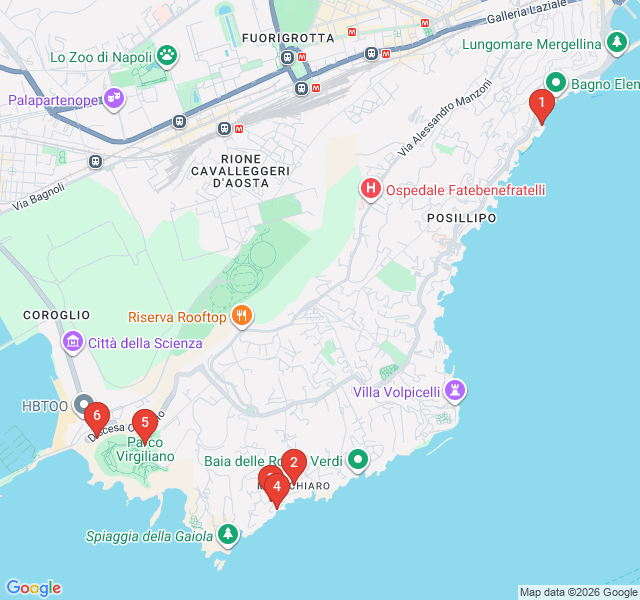
Numbers indicate the order of stops on the tour.
Standing as a monumental sentinel at the water's edge, Palazzo Donn'Anna is one of Naples' most evocative landmarks. Built in the 17th century for Anna Carafa, the wife of the Spanish Viceroy, the palace was never actually completed, giving it the appearance of an ancient ruin reclaimed by the sea. Local legends whisper of ghosts and secret meetings within its salt-worn walls. As you observe the structure from the street, notice how the architecture blends Baroque ambition with the rugged volcanic coastline. It serves as a perfect introduction to the mix of aristocratic luxury and weathered history that defines the Posillipo neighborhood.
Marechiaro is a small fishing village that has captured the hearts of poets and musicians for centuries. In the early 20th century, it was the symbol of the 'Dolce Vita' Neapolitan style. This tiny harbor, with its colorful boats and clear water, feels worlds away from the urban grit of downtown Naples. The name itself suggests 'clear sea,' and it remains a favorite spot for locals to enjoy a coffee or a dip in the Mediterranean. Take a moment to soak in the atmosphere of this maritime enclave, which has inspired famous Neapolitan songs and countless romantic tales.
This modest but significant church sits on a site with deep historical roots. The 'del Faro' in its name refers to the ancient Roman lighthouse that once stood here, guiding ships into the busy waters of the Gulf. Inside, you can see archaeological fragments from the Roman era, including columns and sarcophagi that were repurposed during the church's construction. It is a testament to how Naples constantly builds upon its own past, layering Christian worship over the foundations of imperial Rome. The church offers a quiet, spiritual pause before you continue your ascent up the coastal hills.
Look for the small, unassuming window adorned with a single carnation. This is the 'Fenestrella di Marechiaro,' made famous by the poet Salvatore di Giacomo. Legend says that the poet saw a carnation on the sill and was inspired to write one of the most famous Neapolitan songs of all time. Below the window, a small marble plaque commemorates the lyrics. This spot is a pilgrimage site for lovers and fans of Neapolitan culture, representing the deep connection between the physical landscape of the city and its rich musical and literary traditions.
Parco Virgiliano, also known as the Park of Remembrance, offers arguably the best panoramic views in all of Italy. Situated on the tip of the Posillipo promontory, the park is designed in a series of terraces that overlook the islands of Procida, Ischia, and the mysterious islet of Nisida. On a clear day, you can see the entire coastline from the Sorrento Peninsula to Cape Miseno. It is a lush, green escape filled with Mediterranean flora, providing a peaceful environment for a neighborhood stroll away from the traffic. The wind here carries the scent of pine and salt, making it a favorite for local joggers and families.
Your journey concludes at the Pausilypon Archaeological Park, accessed through the impressive Grotta di Seiano. This 800-meter-long tunnel was carved by the Romans to connect the villas of Posillipo with the Phlegraean Fields. Emerging from the tunnel, you find the ruins of the villa of Vedius Pollio, which included a private theater and an odeon. This site was once a place of immense luxury where Roman elites came to find 'respite from worry.' The way the ancient stone structures overlook the Gaiola Underwater Park creates a stunning harmony between man-made ingenuity and natural beauty, marking a grand finale to your walk.
Start Free on iPhone
Explore “Posillipo Coastal Walk: Roman Ruins and Sea Views” with your very own Private Tour Guide with Zigway. Start free on iPhone, skip the large group and the fixed routes, and hear the city come alive as you go.
Your Private Tour Guide
Don't miss the good stuff
Explore Freely
 Moderate
Naples, Italy
Explore the vibrant street art, hidden shrines, and legendary Maradona murals in the heart of Naples' most iconic neighborhood.
 Challenging
Naples, Italy
Follow Elena and Lila’s journey through Naples. Explore the gritty streets and elegant plazas that defined Elena Ferrante’s Neapolitan Novels.
 Easy
EasyNaples, Italy
Uncover 2,500 years of history on this self-guided walk through the subterranean wonders and ancient layers of the Naples historic center.
 Easy
EasyNaples, Italy
Explore the Bourbon legacy on this self-guided walk from the ornate Galleria Umberto I to the historic Ovo Castle overlooking the sea.
 Moderate
Gdansk, Poland
Discover Zaspa, a massive open-air gallery where grey housing blocks are transformed by over 60 monumental murals. Explore at your own pace.
 Easy
EasyHelsinki, Finland
Discover Helsinki's oldest neighborhood on this self-guided audio walk through Kruununhaka’s historic streets, hidden courtyards, and scenic shores.
 Moderate
Gothenburg, Sweden
Discover Gothenburg’s maritime soul on this self-guided walk from the historic Central Station to the scenic riverfront at Stenpiren.
 Moderate
Nairobi, Kenya
Discover Nairobi's lush side on this self-guided walk through botanical gardens, historic memorials, and vibrant local markets.
 Easy
EasyRome, Italy
Explore Rome’s industrial heart on this self-guided walk featuring massive murals, the 'Iron Colosseum,' and unique industrial archaeology.
 Easy
EasyRome, Italy
Explore Rome’s whimsical Fairytale District. A self-guided walk through Art Nouveau palaces, mythical fountains, and the magical Coppedè architecture.
 Moderate
Rome, Italy
Uncover Rome's hidden history on this self-guided walk through ancient gladiator pits, subterranean temples, and buried Roman houses.
 Challenging
Rome, Italy
Walk the 'Queen of Roads.' Explore ancient catacombs, imperial villas, and historic basalt stones on this scenic self-guided Roman adventure.