Self-guided audio tour in Budapest
Start Free on iPhone
Start free on iPhone to unlock this self-guided walking tour in Budapest. Hear all the stories that make it amazing, walk at your own pace, and begin whenever you want.
Your Private Tour Guide
Step back into the 19th-century golden age of Hungary with this self-guided walk through the Palotanegyed, or Palace District. Located in the heart of District VIII, this neighborhood was once the preferred enclave for the Hungarian aristocracy who wished to live within a stone's throw of the National Museum. As you explore independently, you will discover a dense concentration of former noble residences, each with a story of opulence, revolution, and eventual transformation. This walking route highlights the transition from the grand neoclassical era to the bohemian academic hub the district has become today. Unlike the more tourist-heavy districts across the city, the Palace District offers a quieter, more authentic glimpse into the city's soul. You will wander past the site where the 1848 Revolution was ignited and see how former ballrooms have been converted into one of the world's most beautiful libraries. This neighborhood stroll is perfect for those who appreciate fine architecture and the layers of history found in hidden courtyards and quiet side streets. Discover the legacy of the 'Magnates' Quarter' at your own pace, taking time to admire the intricate masonry and the Italianate piazzas that make this area feel like a Mediterranean escape in the middle of Central Europe. This walking tour Budapest experience is designed for those who want to see the city beyond the typical postcard views.
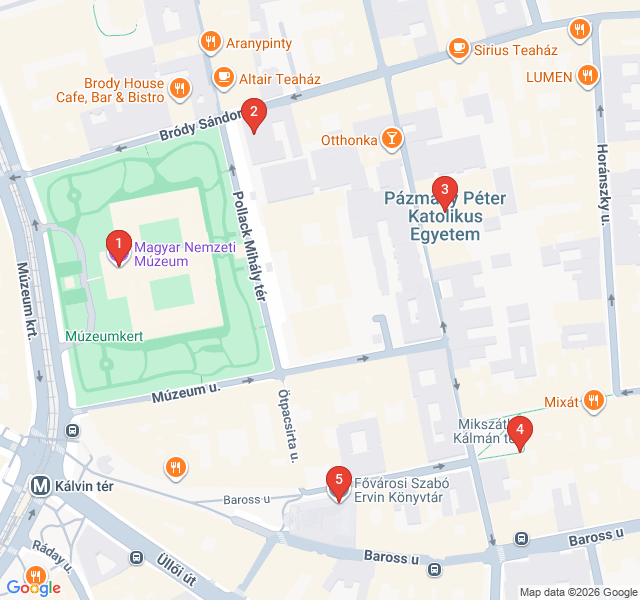
Numbers indicate the order of stops on the tour.
Start your self-guided adventure at the cradle of Hungarian identity. This Neoclassical masterpiece, designed by Mihály Pollack, is more than just a museum; it is a symbol of national pride. On March 15, 1848, the poet Sándor Petőfi allegedly stood on these very steps to recite his 'National Song,' sparking the revolution against Habsburg rule. Take a moment to walk through the Museum Gardens, which have served as a peaceful retreat for locals for over 150 years. The building itself, with its massive Corinthian columns, set the architectural standard for the surrounding Palace District, encouraging the nobility to build their grand city residences in its shadow.
Located directly behind the museum, this palace was built for the powerful Festetics family. It is a prime example of Neo-Renaissance architecture, designed by Miklós Ybl, the same architect who created the Budapest Opera House. Notice the elegant proportions and the detailed stonework. Today, the building houses the Andrássy University, but its interior still retains the grandeur of the 19th century, including a magnificent ballroom and a monumental staircase. In its heyday, this was the site of legendary aristocratic gatherings, where the elite of the Austro-Hungarian Empire would rub shoulders.
As you continue your walking route, you will see how the district has evolved into a center of learning. This university occupies several former noble residences, including the former Esterházy Palace. The presence of thousands of students has given the 'Palotanegyed' a youthful, intellectual energy that contrasts beautifully with its stately stone facades. Look up at the rooflines and window frames of the buildings on Szentkirályi utca; many still bear the coats of arms of the families that once called this street home. It is a perfect example of how Budapest repurposes its historic heritage for modern life.
This square is the social heart of the Palace District. Named after one of Hungary's most beloved 19th-century novelists, Kálmán Mikszáth, the space feels more like an Italian piazza than a Central European square. You will find a statue of the writer casually leaning against a wall, watching over the cafes and terraces. The architecture here is diverse, ranging from late-romantic to eclectic styles. It is a favorite spot for locals to enjoy a coffee and soak in the bohemian atmosphere. The district's reputation for literature and art is palpable here, making it a highlight of any neighborhood stroll.
This is perhaps the best-kept secret in the district. While it is a functioning public library, its core is the former Wenckheim Palace. Built in the late 1880s in a Neo-Baroque style, the palace was eventually converted into a library, but the original ballrooms, smoking rooms, and dining halls were meticulously preserved as reading rooms. The gold and silver salons, with their carved wood paneling, crystal chandeliers, and spiral staircases, offer a jaw-dropping glimpse into the life of the high nobility. It is frequently cited as one of the most beautiful libraries in the world, and a must-see for architecture lovers.
The final stop on this route is the Almásy Palace. The Almásy family was one of the most distinguished names in Hungary—you might recognize the name from the film 'The English Patient,' which was based on a real-life member of this family. This specific palace on Múzeum utca showcases the refined, understated luxury that defined the district before the World Wars. The facade is a masterclass in Neoclassical balance. Standing here, you can see how the entire street creates a unified 'Magnates' Quarter.' Reflect on the transition of these buildings from private family homes to the institutional and cultural landmarks that define Budapest today.
Start Free on iPhone
Explore “The Grand Palace District Walk” with your very own Private Tour Guide with Zigway. Start free on iPhone, skip the large group and the fixed routes, and hear the city come alive as you go.
Your Private Tour Guide
Don't miss the good stuff
Explore Freely
 Easy
EasyBudapest, Hungary
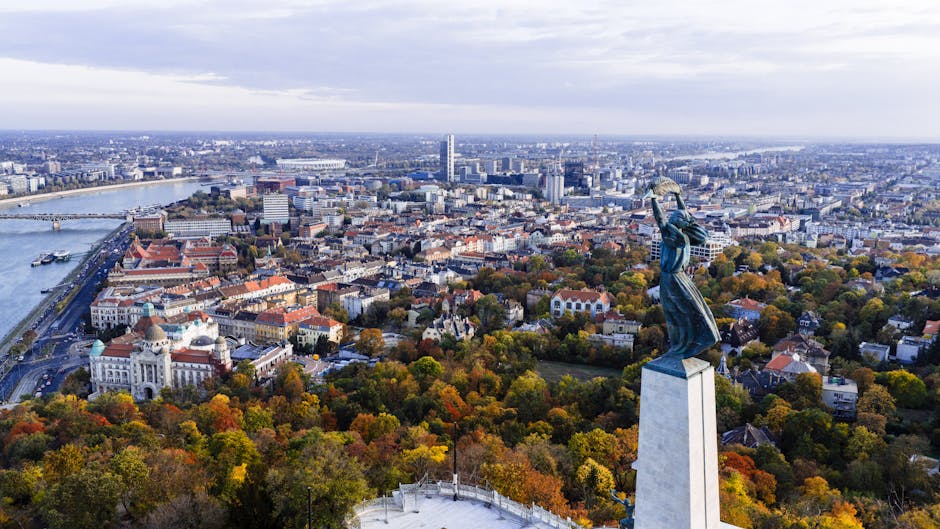
Experience the magic of Budapest at sunset on this self-guided walk along the Danube, featuring iconic bridges, historic halls, and hidden gems.
 Easy
EasyBudapest, Hungary
Discover the vibrant street art and legendary ruin bars of District VII on this self-guided walk through Budapest’s most eclectic neighborhood.
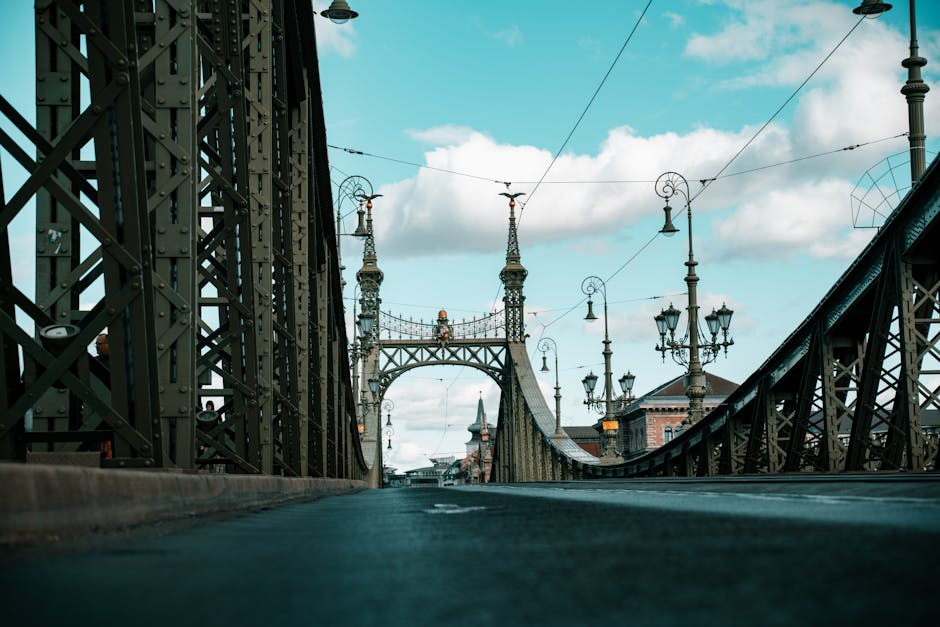 Moderate
Budapest, Hungary
Explore the historic heart of Budapest with this self-guided walk through the Royal Buda Castle district, featuring panoramic views and medieval lore.
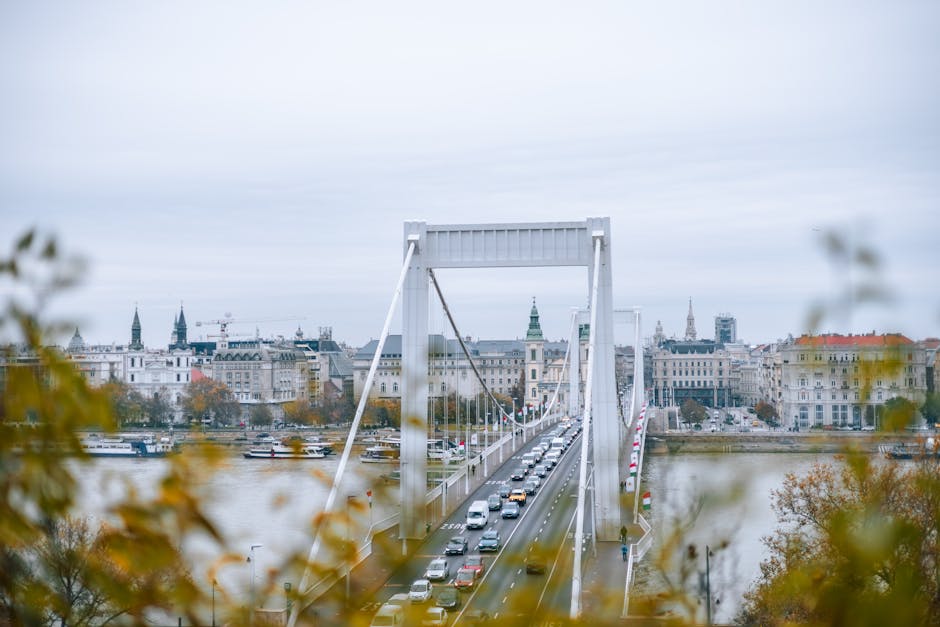 Easy
EasyBudapest, Hungary
Discover the whimsical world of Hungarian Art Nouveau on this self-guided walk through Budapest’s most stunning Secessionist landmarks.
 Easy
EasyKrakow, Poland
Explore the prestigious Jagiellonian University district, featuring Neo-Gothic architecture, Baroque churches, and Krakow's hidden scholarly gems.
 Easy
EasyGothenburg, Sweden
Explore Gothenburg's elegant academic district, featuring grand 19th-century stone architecture and the iconic cultural hub of Götaplatsen.
 Easy
EasyGothenburg, Sweden
Discover Gothenburg’s 17th-century Dutch foundations, historic canals, and military fortifications on this self-guided architectural walk.
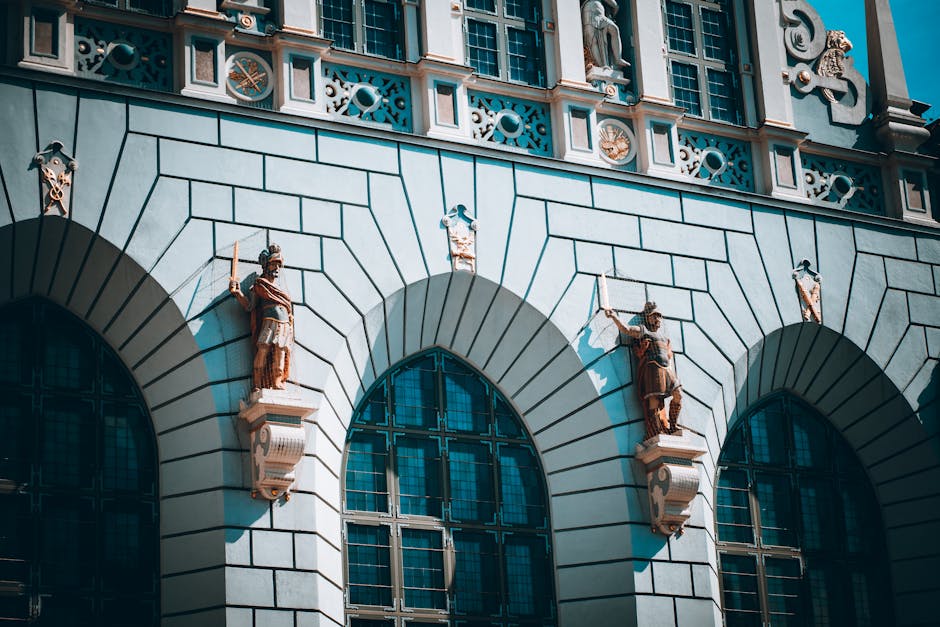 Easy
EasyGdansk, Poland
Discover the opulent Royal Way of Gdansk at your own pace. Explore Hanseatic history, gilded architecture, and the iconic Neptune's Fountain.