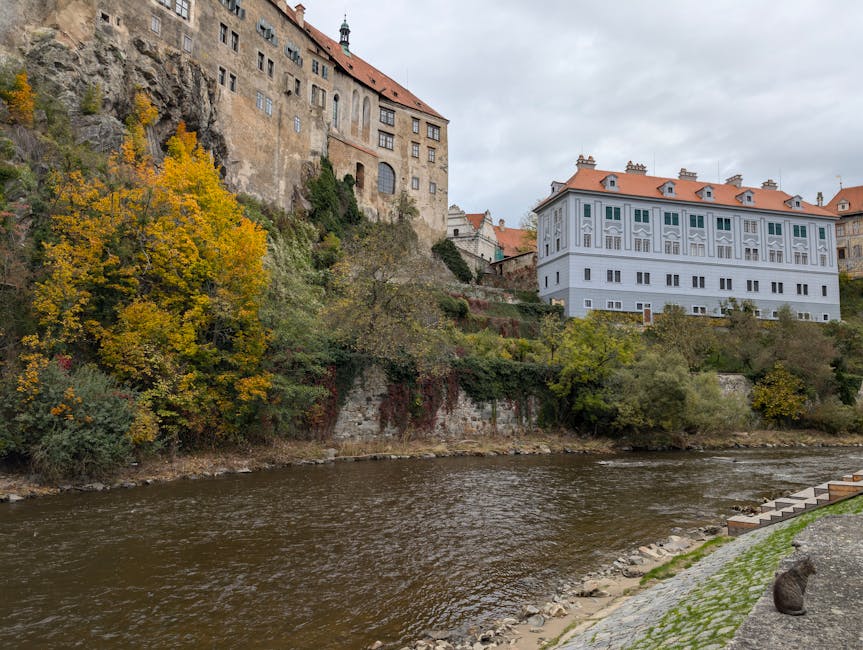
Self-guided audio tour in Cesky Krumlov
Start Free on iPhone
Start free on iPhone to unlock this self-guided walking tour in Cesky Krumlov. Hear all the stories that make it amazing, walk at your own pace, and begin whenever you want.
Your Private Tour Guide
Step into the distorted, expressive world of Egon Schiele with this self-guided walk through the labyrinthine streets of Cesky Krumlov. While most visitors flock to the castle, this walking route invites you to see the town through the eyes of one of the 20th century's most provocative artists. Schiele, whose mother was born here, found deep inspiration in the 'Dead City,' as he called it, capturing its medieval spires and crumbling facades in his signature jagged style. This journey explores the intersection of art and history, revealing how this fairytale setting fueled a radical creative vision. Your self-guided adventure begins at the Regional Museum, where you can gather context on the town's evolution, before moving toward the Church of St. Vitus. This Gothic masterpiece wasn't just a place of worship; it was a recurring subject in Schiele's sketches, its verticality mirroring his own elongated figures. As you explore independently, you will reach the Egon Schiele Art Centrum, a former brewery now dedicated to his legacy and contemporary art. The route then leads you away from the primary tourist hubs into the Plešivec district. Here, the atmosphere shifts, reflecting the bohemian lifestyle Schiele sought when he moved here in 1911. You will visit the site of his garden studio, where he lived with his muse Wally Neuzil, a period marked by both incredible productivity and local scandal. This neighborhood stroll concludes at the Synagogue, a poignant reminder of the town’s diverse cultural history and the tragic shifts of the 20th century. This is not a traditional walking tour Cesky Krumlov visitors usually take; instead, it is a deep dive into the psyche of an artist who dared to challenge the conventions of his time. Whether you are an art aficionado or a curious traveler, this audio walk offers a unique perspective on a familiar destination. By following this route, you can appreciate the architectural details that Schiele transformed into masterpieces, all while moving at your own pace through one of Europe's most beautiful towns.
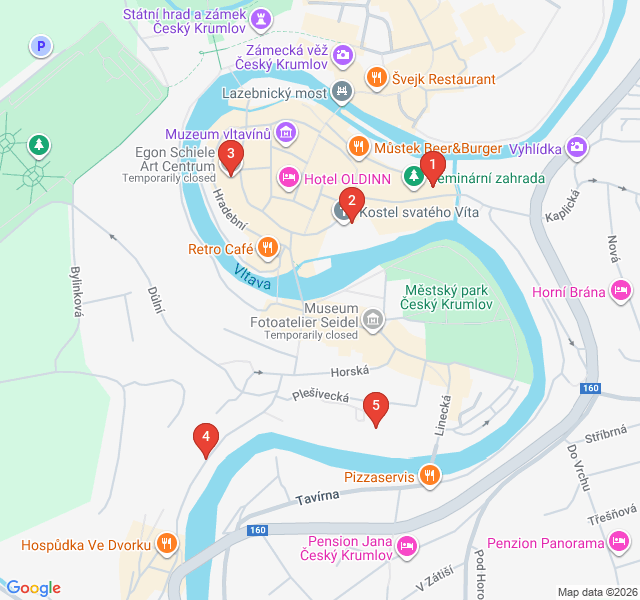
Numbers indicate the order of stops on the tour.
Begin your exploration at the Regional Museum, located in a former Jesuit seminary. This building stands as a sentinel over the town, offering a panoramic view that helps orient you to the medieval layout Schiele found so captivating. While the museum houses an incredible ceramic model of the town as it looked in the 19th century, its significance for this walk lies in the heritage it preserves. Schiele’s mother, Marie Soukupová, was born in Cesky Krumlov, and it was this family connection that repeatedly drew the artist back to these narrow lanes. The museum provides the essential historical backdrop, showing the transition from a feudal seat to the bohemian enclave that would eventually both embrace and reject the radical young painter.
The Church of St. Vitus is a masterpiece of South Bohemian Gothic architecture, but for Egon Schiele, it was a geometric obsession. Its slender, tapering tower appears in numerous drawings and paintings from his time here. Unlike the romanticized versions of the church seen on postcards, Schiele depicted it with stark, melancholic lines, often emphasizing the contrast between the rigid religious structure and the organic, flowing river below. As you stand before the church, note the intricate stonework and the way the building dominates the skyline. This site represents the traditional world Schiele was born into—a world he would spend his short but intense career deconstructing through his art.
This impressive complex, housed in a sprawling former brewery, is the heart of Schiele’s legacy in the town. Established in 1993, the Centrum was a monumental effort to bring the artist back to the place that once asked him to leave. In 1911, Schiele’s lifestyle and his use of young local models caused a public outcry, leading to his eventual departure. Today, the space honors him with a permanent exhibition of his drawings, letters, and personal furniture. As you wander through the high-ceilinged galleries, you can feel the tension between the historic architecture and the avant-garde works. It is a place for reflection on how time can transform a scandalous outsider into a local icon.
Walking down Plešivecká takes you across the bridge and into a different side of the city. This area was historically a suburb for craftsmen and workers, offering a grittier, more authentic atmosphere than the noble inner town. Schiele was fascinated by the 'backside' of the city—the laundry hanging from windows, the moss on the roofs, and the way the houses seemed to huddle together for warmth. This street captures the essence of his 'Dead City' series. Notice the varying heights and colors of the buildings; to Schiele, these weren't just structures, but living, breathing entities with their own stories of decay and resilience. This is the perfect spot to see the town as a collection of shapes and shadows.
You are now at the site of Schiele’s most productive period in Krumlov. This garden house, perched on a terrace overlooking the Vltava, was his sanctuary in 1911. Here, he lived with Wally Neuzil, his partner and most famous muse. The studio was a place of light and creativity, where he worked on his large-scale landscapes and provocative figures. While the original atmosphere of his 'bohemian' life is gone, the garden and the view remain much as they were. Imagine the artist sitting here, looking across the water at the town’s silhouette, translating the medieval rooftops into the jagged, emotive lines that would eventually change the course of modern art. It is one of the most intimate spots in the city.
The final stop is the Synagogue, a beautiful Art Nouveau building completed in 1909, just two years before Schiele’s main stay in the town. Its existence speaks to the vibrant, multicultural society that existed here at the turn of the century. Though not directly linked to Schiele’s work, the Synagogue represents the 'other' history of Krumlov—the stories of the Jewish community that were nearly erased during the mid-20th century. After decades of neglect during the communist era, it has been meticulously restored. Its presence on this walk serves as a reminder that history and art are often fragile, requiring a conscious effort to preserve and remember the voices that were once silenced.
Start Free on iPhone
Explore “Egon Schiele and the Artist's Lens” with your very own Private Tour Guide with Zigway. Start free on iPhone, skip the large group and the fixed routes, and hear the city come alive as you go.
Your Private Tour Guide
Don't miss the good stuff
Explore Freely
 Easy
EasyCesky Krumlov, Czech Republic
Discover the flavors of South Bohemia on this self-guided walk through the historic taverns, breweries, and riverside cafes of Cesky Krumlov.
 Moderate
Cesky Krumlov, Czech Republic
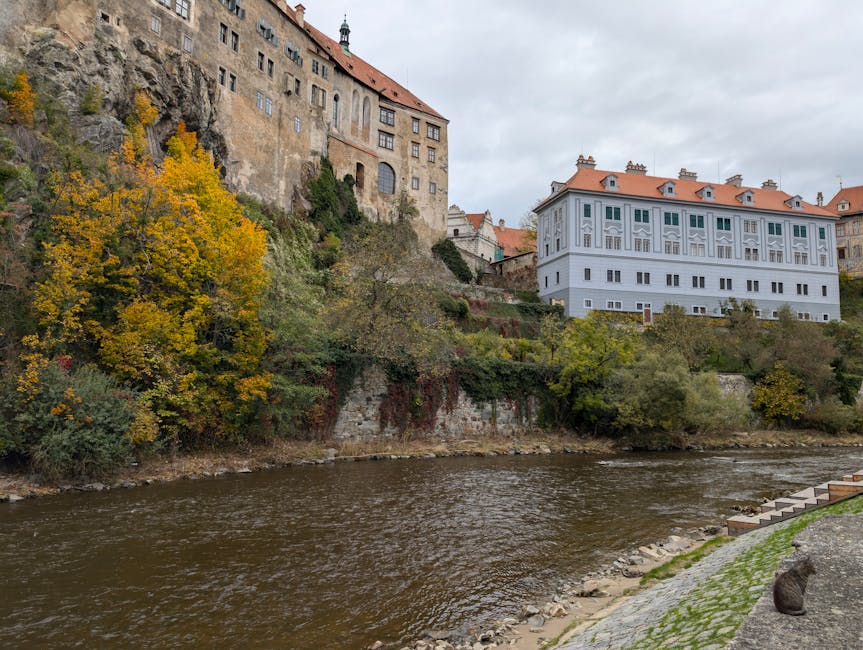
Escape the crowds and discover the artistic soul, historic villas, and hidden stories of Cesky Krumlov's most authentic neighborhood, Plešivec.
 Easy
EasyCesky Krumlov, Czech Republic
Discover the haunting legends and eerie history of Cesky Krumlov on this atmospheric self-guided audio walk through the moonlit Inner City.
 Easy
EasyCesky Krumlov, Czech Republic
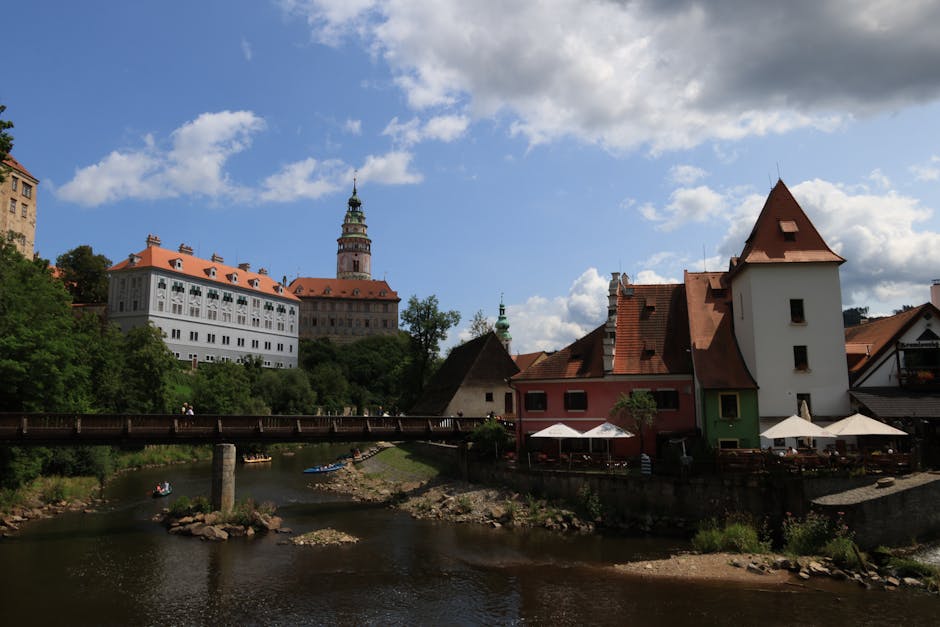
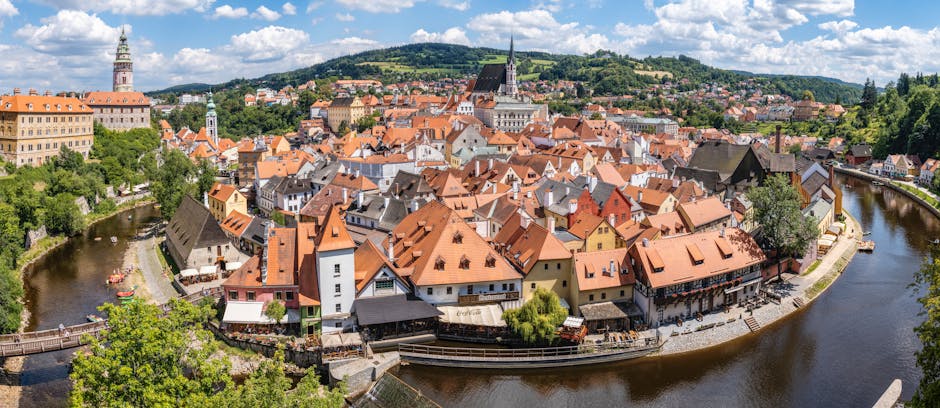
Explore the romantic Vltava riverbanks, hidden medieval alleys, and iconic bridges of Cesky Krumlov on this scenic self-guided photography walk.
 Moderate
Vienna, Austria
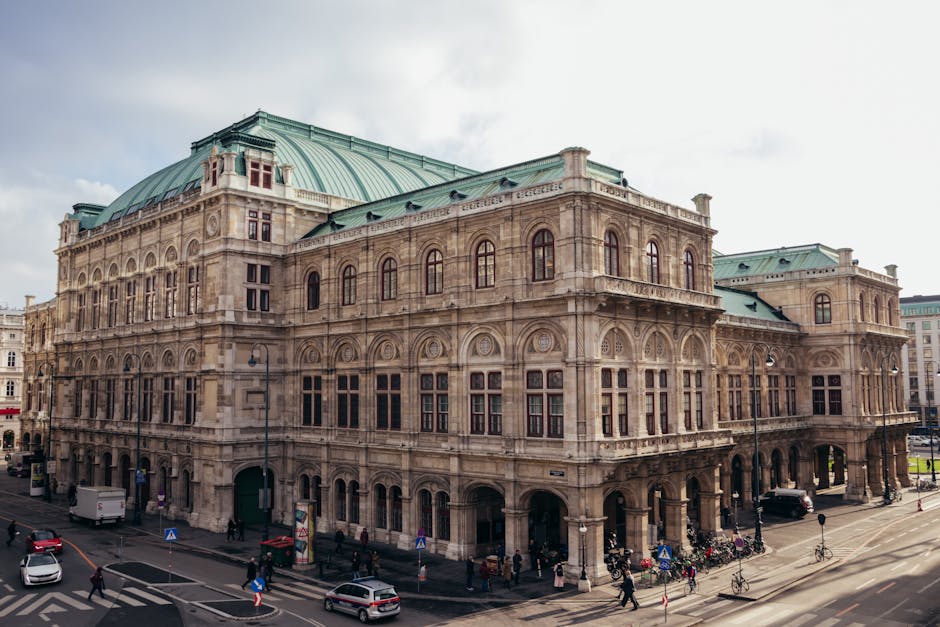
Discover the noir world of The Third Man and Cold War Vienna on this atmospheric self-guided audio walk through the historic Innere Stadt.
 Moderate
Krakow, Poland
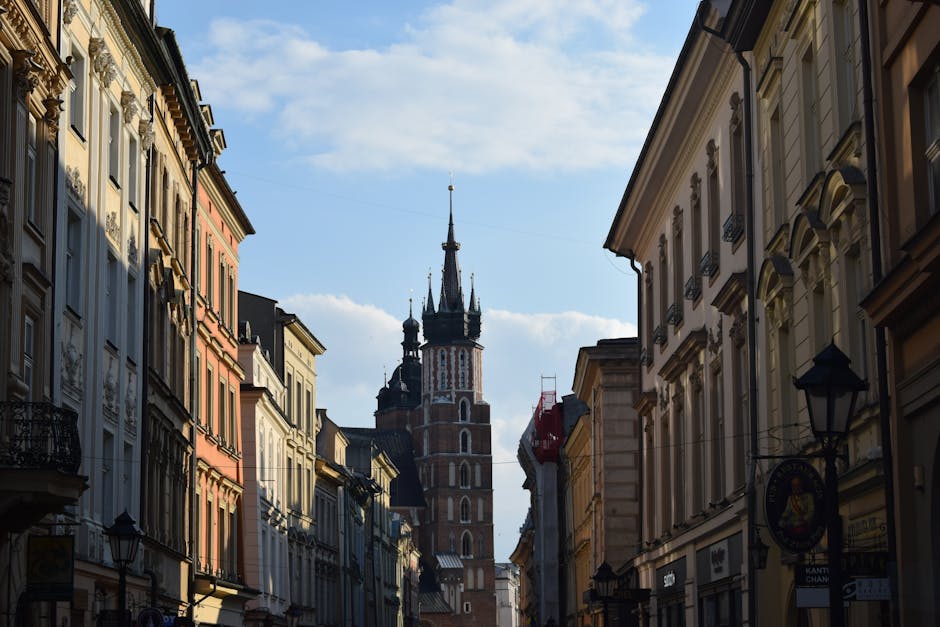
Discover Krakow’s stunning skyline and riverside charm on this self-guided audio walk through scenic viewpoints and historic mounds.
 Moderate
Gdansk, Poland
Discover Zaspa, a massive open-air gallery where grey housing blocks are transformed by over 60 monumental murals. Explore at your own pace.
 Easy
EasyGothenburg, Sweden
Explore Gothenburg’s historic wooden houses, legendary giant cinnamon buns, and panoramic fortress views on this self-guided neighborhood stroll.
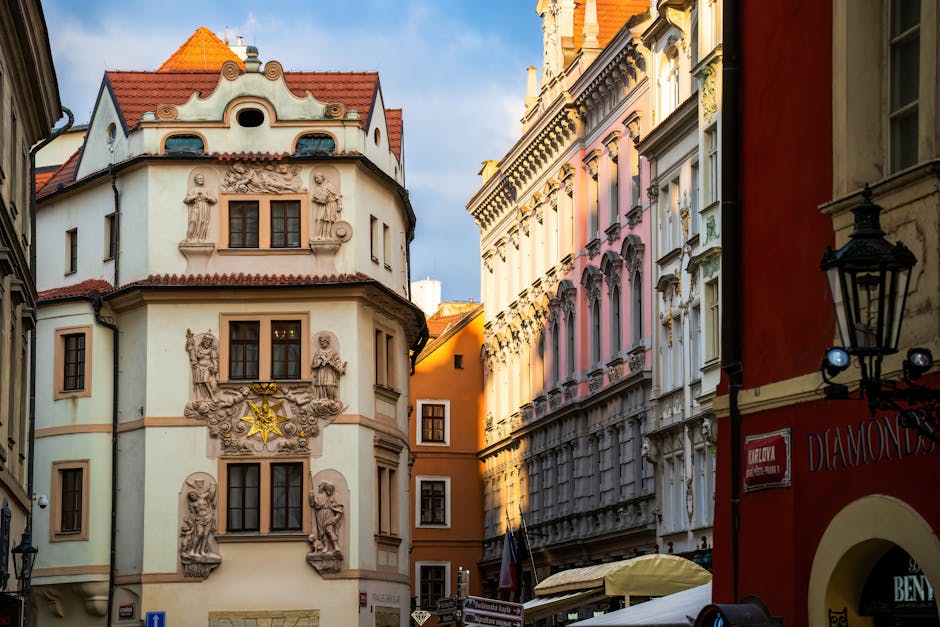 Easy
EasyPrague, Czech Republic
Explore the world's only Cubist architecture on this self-guided walking route through Prague's New Town and Old Town.
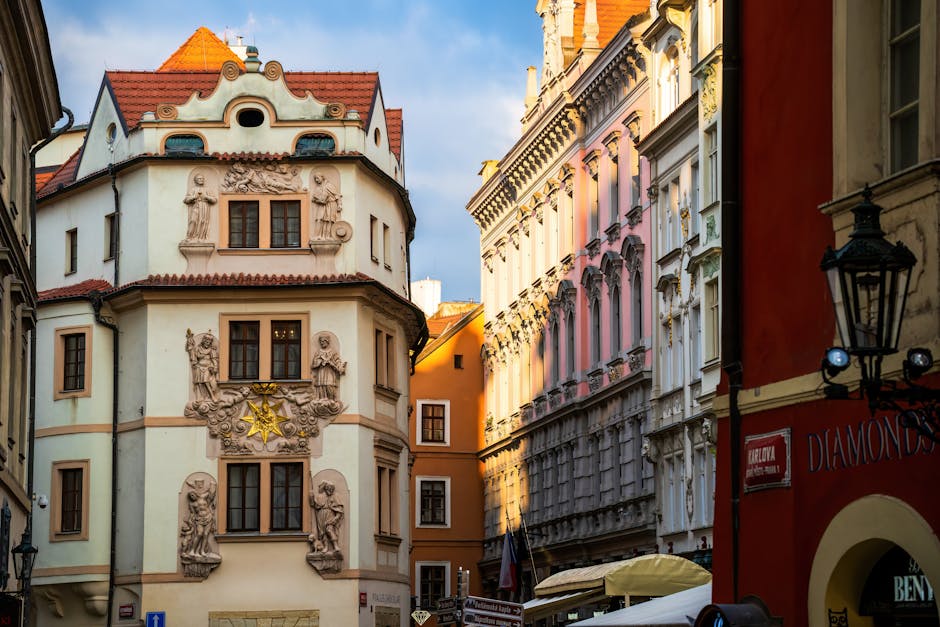 Easy
EasyPrague, Czech Republic
Discover Prague's Golden Age on this self-guided walk through stunning Art Nouveau landmarks, from the Municipal House to Mucha's masterpieces.
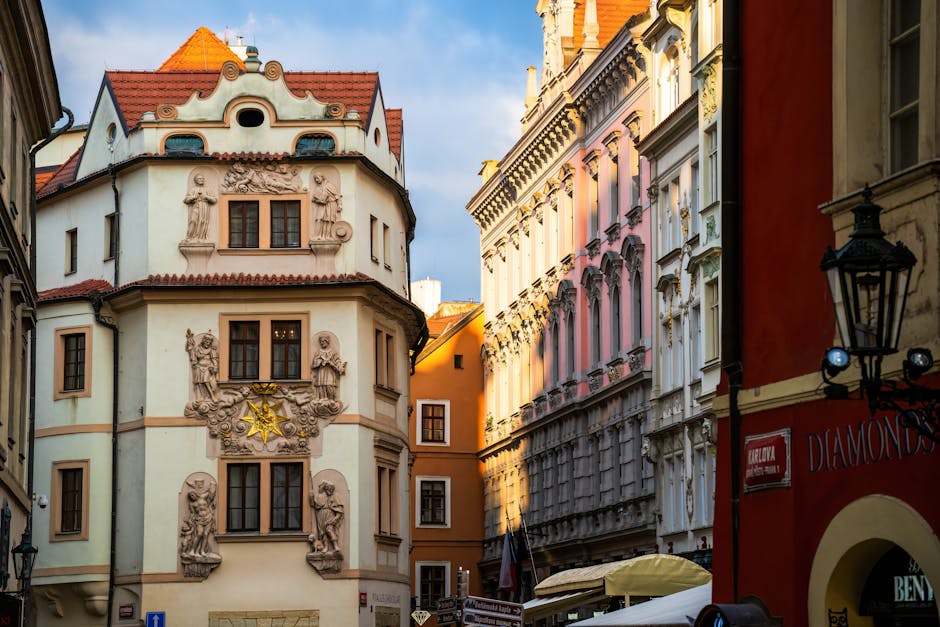 Challenging
Prague, Czech Republic
Discover Prague’s royal district and capture stunning panoramic vistas on this self-guided walking route through Hradčany and the Castle complex.
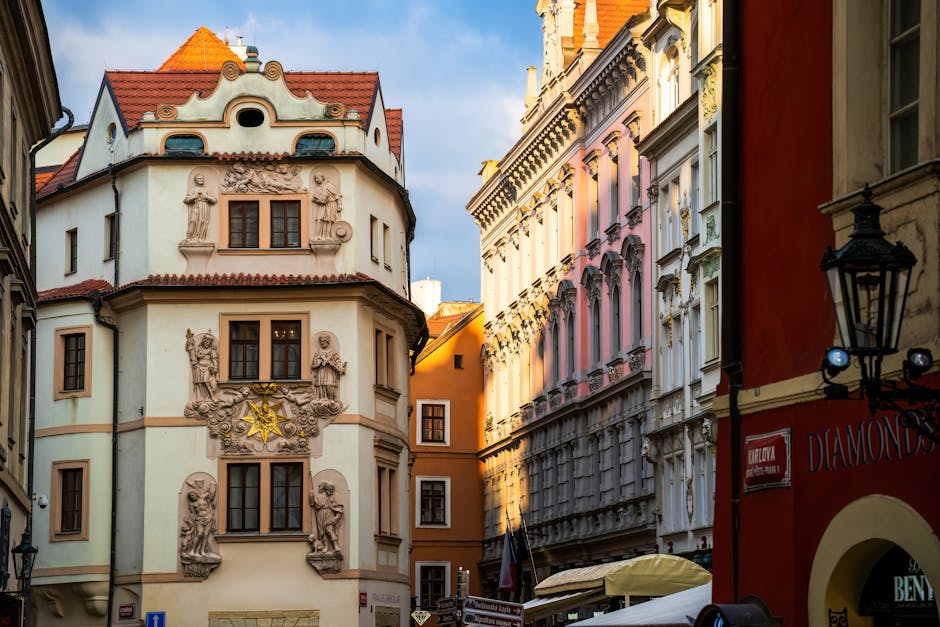 Easy
EasyPrague, Czech Republic
Discover the history of Pilsner and Prague's legendary pub culture on this self-guided audio walk through historic breweries and hidden local haunts.