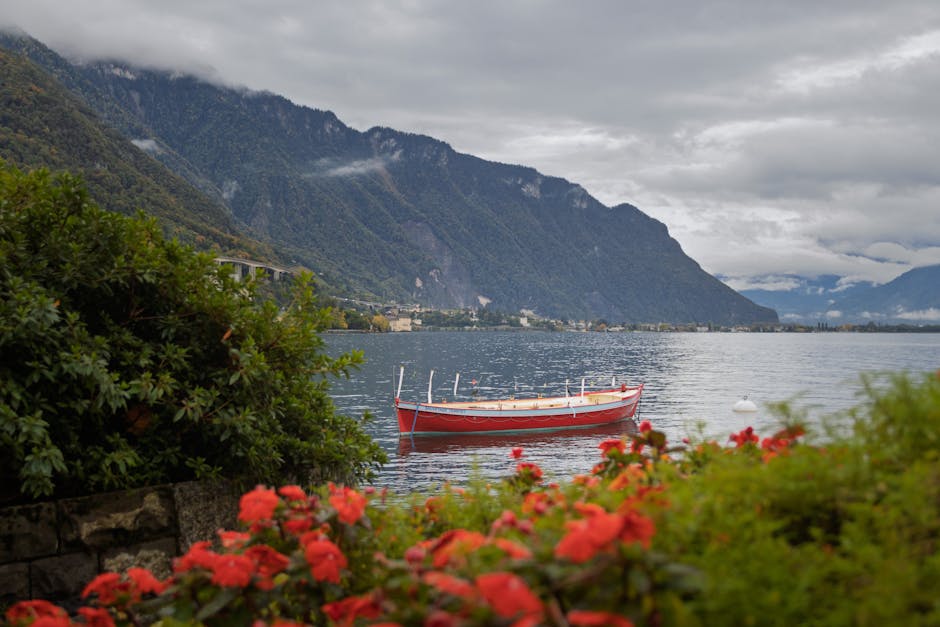
Self-guided audio tour in Geneva
Start Free on iPhone
Start free on iPhone to unlock this self-guided walking tour in Geneva. Hear all the stories that make it amazing, walk at your own pace, and begin whenever you want.
Your Private Tour Guide
Geneva is globally synonymous with precision and luxury. This self-guided walking route invites you to uncover the secrets of "The Clockwork City," tracing the evolution of horology from a 16th-century necessity to a modern art form. For centuries, the ticking of gears has been the heartbeat of this city, and this neighborhood stroll through Geneva’s center reveals why. The journey begins in the Plainpalais district at the Patek Philippe Museum, a temple dedicated to the art of time. From there, you will traverse the Rhône River, passing the historic Tour de l'Île, where the city's early watchmakers once lived and worked. The route then leads you through the high-end boutiques of Rue du Rhône, where the world’s most prestigious brands showcase their mechanical masterpieces. You will conclude your exploration at the iconic L'Horloge Fleurie (Flower Clock) in the Jardin Anglais, a living monument to Geneva’s botanical and technical prowess. What makes this walking route special is the narrative of transformation. You will learn how the Protestant Reformation, led by Jean Calvin, inadvertently birthed the Swiss watch industry. By banning the wearing of jewelry, Calvin forced the city's talented goldsmiths to turn their skills toward a more functional craft: watchmaking. This shift laid the foundation for Geneva to become the global epicenter of luxury timepieces. As you explore independently, you will encounter landmarks like the Pont de la Machine, which once powered the city's industry, and the Vacheron Constantin boutique, representing the oldest watch manufacturer in continuous operation. This walking tour Geneva experience offers a deep dive into the technical innovation and artistic flair that define Swiss heritage. Whether you are a dedicated horologist or a curious traveler, this stroll provides a fascinating look at how Geneva mastered the art of measuring time. This is not just a walk through streets, but a walk through the history of human ingenuity.
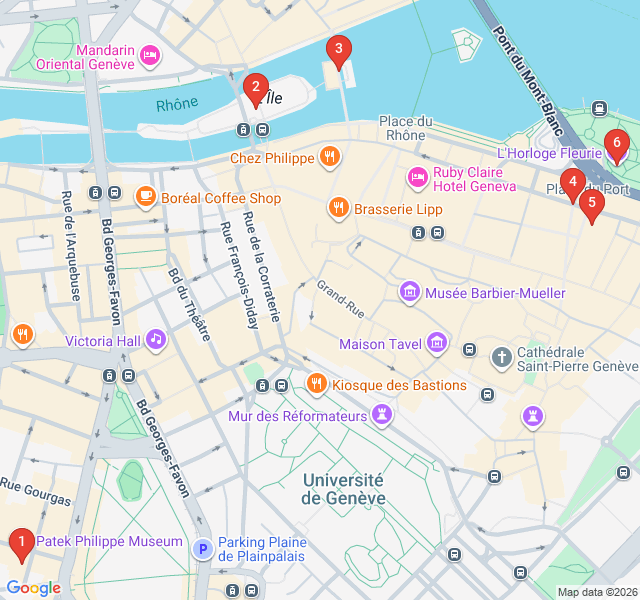
Numbers indicate the order of stops on the tour.
Welcome to the Patek Philippe Museum, often described as a temple of watchmaking. Opened in 2001, this museum houses one of the most prestigious horological collections in the world. As you stand before this restored industrial building, consider that it contains over five centuries of history. The collection is divided into two main parts: the Antiques Collection, featuring timepieces from the 16th century, and the Patek Philippe Collection, showcasing the brand’s creations since 1839. It was here that Antoine Norbert de Patek and Adrien Philippe revolutionized the industry by inventing the keyless winding system. This museum isn't just about watches; it’s about the human obsession with capturing time through art and engineering.
Standing on this small island in the Rhône, you are looking at the Tour de l'Île, the only remaining part of a medieval castle built in the 13th century. While it once served as a fortification and a prison, its significance to our theme lies in the surrounding district. This area was the historic heart of Geneva's watchmaking industry. The 'cabinotiers'—highly skilled craftsmen—worked in small, sun-drenched workshops called 'cabinets' in the upper floors of these buildings. They were the elite of Geneva’s working class, known for their literacy and political engagement. Their meticulous work on this very island helped establish the 'Geneva Seal' as a mark of ultimate quality.
The Pont de la Machine is a testament to the industrial side of Geneva’s clockwork heritage. Built in the 1840s, this structure originally housed a hydraulic pumping station that supplied water to the city's fountains and, crucially, powered the machinery used by watchmakers. Before electricity was common, the river's flow was the literal lifeblood of the industry. Today, the building serves as a space for exhibitions and cultural events, but its name remains a reminder of the era when Geneva transitioned from manual craftsmanship to industrial precision. Take a moment to look at the rushing water of the Rhône; it was this power that helped keep the city’s gears turning for decades.
Step onto Rue du Rhône, the most expensive and prestigious shopping street in Switzerland. This is where the heritage of the 'cabinotiers' meets modern global luxury. As you walk past the gleaming storefronts of Rolex, Omega, and Cartier, you are witnessing the pinnacle of the Swiss economy. Every major watch house strives for a presence here. The street follows the line of the old city walls and has evolved into a showcase for 'Haute Horlogerie.' Even if you aren't in the market for a five-figure timepiece, the window displays themselves are works of art, often reflecting the intricate mechanical movements hidden inside the watches.
You are standing before the historic home of Vacheron Constantin, the oldest watch manufacturer in the world to have been in continuous operation since its founding in 1755. Established by Jean-Marc Vacheron, a master watchmaker and 'cabinotier,' the company has survived revolutions and world wars without ever stopping production. In 1819, François Constantin joined the firm, famously coining the motto: 'Do better if possible, and that is always possible.' This boutique is more than a store; it is a monument to longevity and the pursuit of perfection. The brand is a founding member of the Federation of the Swiss Watch Industry, ensuring that the traditional skills of Geneva are preserved for future generations.
The final stop on our walking route is L'Horloge Fleurie, or the Flower Clock. Located in the Jardin Anglais since 1955, this is perhaps the most photographed clock in Switzerland. It is a masterpiece that combines Geneva’s world-famous watchmaking technology with its tradition of landscape gardening. The clock's eight dials change their floral arrangements with the seasons, requiring thousands of plants. While it looks like a simple garden feature, the mechanism beneath is exceptionally complex. It features the longest second hand in the world for a flower clock, measuring 2.5 meters. It serves as a beautiful, living symbol of a city that has mastered both the mechanical and the natural world.
Start Free on iPhone
Explore “The Clockwork City: Geneva's Watchmaking Heritage” with your very own Private Tour Guide with Zigway. Start free on iPhone, skip the large group and the fixed routes, and hear the city come alive as you go.
Your Private Tour Guide
Don't miss the good stuff
Explore Freely
 Easy
EasyGeneva, Switzerland
Explore Geneva's bohemian heart on this self-guided walk through flea markets, contemporary art galleries, and literary landmarks.
 Easy
EasyGeneva, Switzerland
Discover the lives of Rousseau and Voltaire on this self-guided literary walking route through the historic heart of Enlightenment-era Geneva.
 Moderate
Geneva, Switzerland
Uncover Geneva’s secrets on this self-guided walk through the Old Town’s historic streets, from the Reformation Wall to medieval cathedrals.
 Easy
EasyGeneva, Switzerland
Discover the Mediterranean soul of Geneva. Explore Carouge’s Sardinian architecture, artisan workshops, and hidden gardens on this self-guided walk.
 Moderate
Warsaw, Poland
Explore the resilient spirit of Warsaw's Muranów district on this self-guided walk through the history and landmarks of the former Jewish Ghetto.
 Easy
EasyGdansk, Poland
Taste the history of the Baltic. Explore Gdansk's culinary heritage from medieval markets to gold-flecked liqueurs on this self-guided walk.
 Moderate
Warsaw, Poland
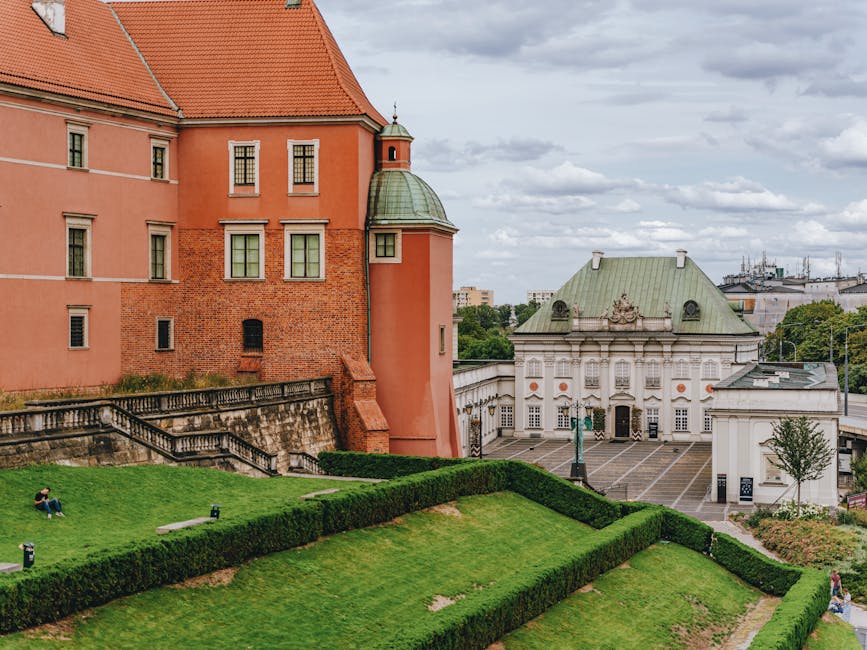
A powerful self-guided walk through Warsaw's WWII history, tracking the 1944 Uprising from ruined skyscrapers to solemn memorials.
 Easy
EasyGothenburg, Sweden
Explore Gothenburg's elegant academic district, featuring grand 19th-century stone architecture and the iconic cultural hub of Götaplatsen.
 Moderate
Zurich, Switzerland
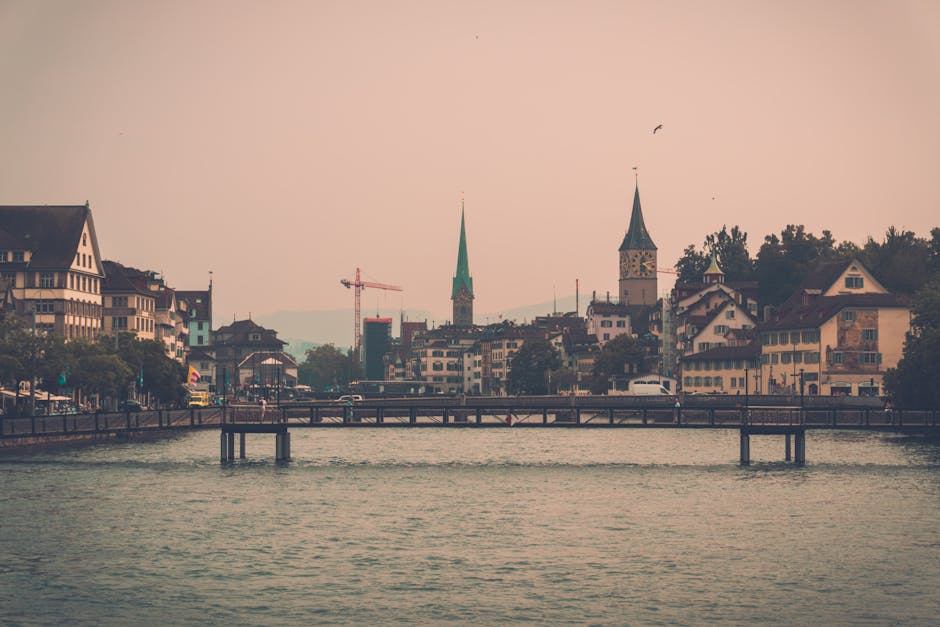
Follow the footsteps of Einstein and James Joyce on a self-guided walk through Zurich's intellectual and literary heart.
 Easy
EasyZurich, Switzerland
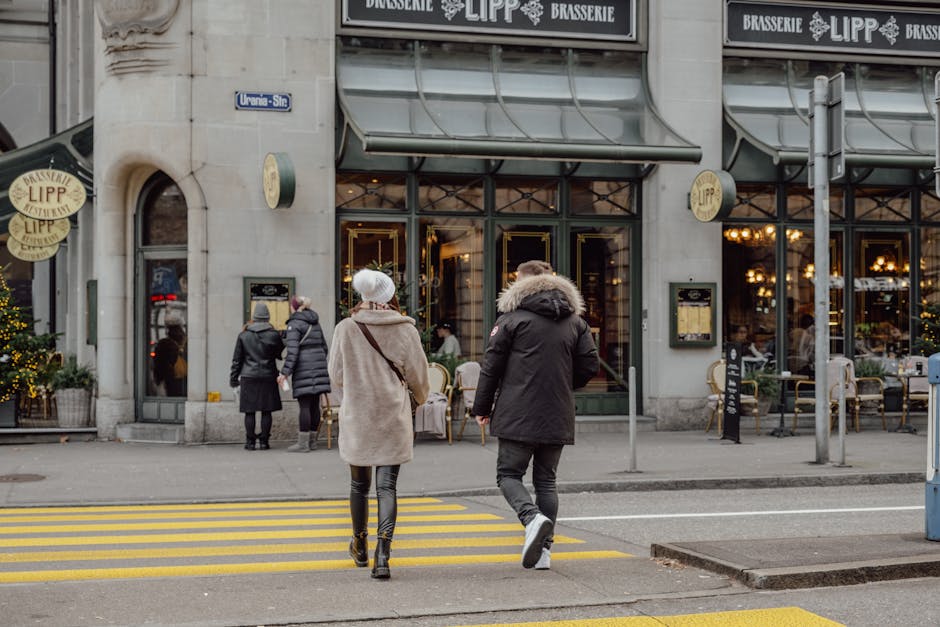
Explore Zurich's edgy side on this self-guided walk through Langstrasse, from red-light history to contemporary art and vibrant nightlife.
 Moderate
Zurich, Switzerland
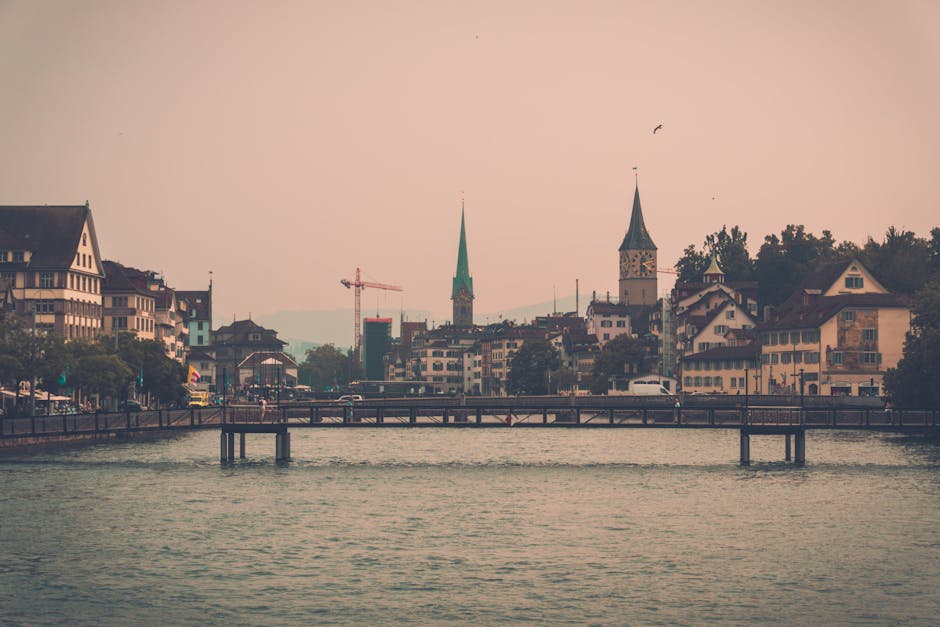
Explore Zurich's most breathtaking panoramas and hidden photography spots on this self-guided walking route through the historic city center.
 Easy
EasyZurich, Switzerland
Discover Zurich's medieval heart, from Dadaist rebels to Reformation history, on this atmospheric self-guided audio walk through the Altstadt.