Self-guided audio tour in Lisbon
Start Free on iPhone
Start free on iPhone to unlock this self-guided walking tour in Lisbon. Hear all the stories that make it amazing, walk at your own pace, and begin whenever you want.
Your Private Tour Guide
Belém is more than just a neighborhood; it is a portal to the era when Portuguese caravels set sail into the unknown. This self-guided walk invites you to trace the footsteps of explorers like Vasco da Gama and Ferdinand Magellan along the banks of the Tagus River. As you embark on this neighborhood stroll, you will encounter the pinnacle of Manueline architecture, a uniquely Portuguese style that blends maritime motifs with late Gothic grandeur. This walking route is designed for those who want to immerse themselves in history without the constraints of a rigid schedule. You will begin at the legendary Pastéis de Belém bakery, where the scent of cinnamon and custard has lingered since 1837, before moving toward the vast Praça do Império. The journey continues through the cloisters of the Jerónimos Monastery, a UNESCO World Heritage site built with the wealth of the spice trade. While many look for a walking tour Lisbon offers in a group setting, this independent experience allows you to pause and appreciate the intricate stone carvings of sea monsters and coral at your own pace. You will also see the striking contrast of the Centro Cultural de Belém, a modern bastion of art, before reaching the riverfront. Here, the Monument to the Discoveries stands tall, celebrating the figures who mapped the world. Finally, the walk concludes at the iconic Belém Tower, a fortress that once guarded the harbor and served as the last sight of home for departing sailors. Whether you are a history buff or an architecture lover, this travel experience provides a deep dive into the maritime soul of Portugal. Unlike a traditional guided tour Lisbon visitors might find crowded, this route offers the freedom to linger by the water and soak in the sunset over the 25 de Abril Bridge.
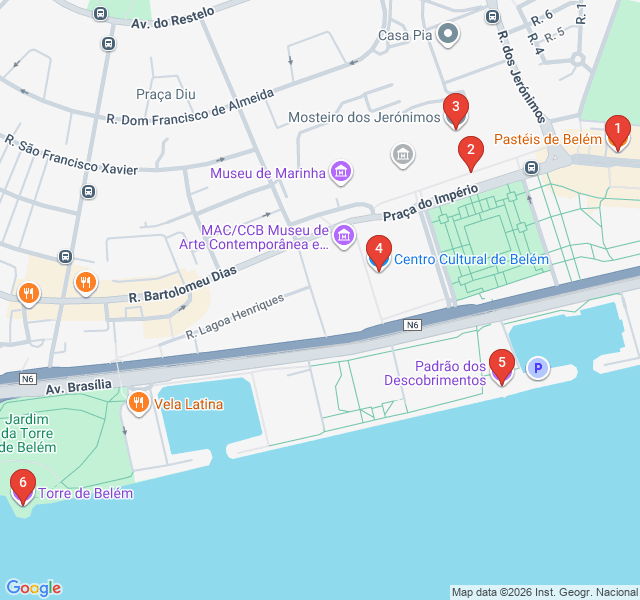
Numbers indicate the order of stops on the tour.
Your journey begins at a place that tastes like history. Since 1837, this bakery has been producing the world-famous 'Pastéis de Belém' using a secret recipe originally created by the monks of the nearby Jerónimos Monastery. Following the Liberal Revolution of 1820, many monasteries were closed, and the monks began selling these custard tarts to survive. Today, the blue-and-white tiled rooms inside can seat hundreds, but the recipe remains a guarded secret known only to a few master bakers. Take a moment to enjoy a tart sprinkled with cinnamon and powdered sugar before you head toward the monuments.
Step into one of the largest squares in Europe. The 'Empire Square' was laid out in the 1940s for the Portuguese World Exhibition. Its centerpiece is a monumental fountain, surrounded by meticulously manicured gardens and coat-of-arms mosaics representing various parts of the former Portuguese Empire. This space serves as a grand foyer to the monastery behind it and offers one of the best perspectives to appreciate the scale of Belém’s monumental architecture. It is a place of transition, where the spiritual world of the church meets the political and maritime history of the nation.
This UNESCO World Heritage site is the jewel of Manueline architecture. Built in the early 1500s, its construction was funded by the 'Vintena da Pimenta,' a tax on spices coming from the East. Look closely at the limestone facades; you will see stone-carved ropes, anchors, and exotic fruits—symbols of the sea that defined this era. Inside the church of Santa Maria, you will find the tombs of explorer Vasco da Gama and the poet Luís de Camões. The cloisters are widely considered among the most beautiful in the world, featuring two levels of intricate, honey-colored stone arches.
Known locally as the CCB, this modern complex provides a sharp, limestone-clad contrast to the ancient monastery across the street. Built in the early 1990s to host Portugal's presidency of the European Union, it has since become a hub for contemporary culture. It houses the Berardo Collection Museum, featuring works by Picasso, Warhol, and Dalí. Even if you don't go inside for the art, the 'hanging gardens' and terraces offer a peaceful elevated view of the river and the monuments you are about to visit. It represents Lisbon's transition from a colonial power to a modern European capital.
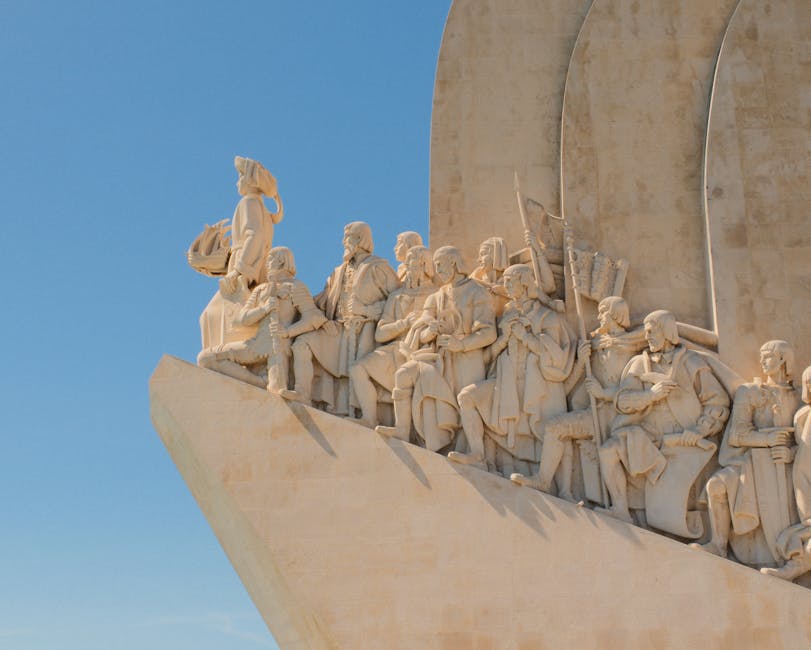
Standing on the edge of the Tagus, this 52-meter high concrete structure is shaped like the prow of a ship. It was inaugurated in 1960 to commemorate the 500th anniversary of the death of Prince Henry the Navigator, who stands at the very front looking out to sea. Behind him are 32 other figures, including explorers, cartographers, and even the Queen Philippa of Lancaster. On the pavement in front of the monument, don't miss the enormous wind rose and world map in mosaic, showing the dates and routes of Portuguese voyages across the globe. It is a powerful tribute to the Age of Discovery.
Our walk concludes at the Torre de Belém, an iconic fortress that seems to float on the water at high tide. Built between 1514 and 1519, it served as both a defensive bastion and a ceremonial gateway to the city. Its architecture is a masterclass in Manueline style, featuring delicate watchtowers with Moorish influence and a famous stone carving of a rhinoceros—the first ever seen in Europe. For sailors returning from years at sea, this tower was the welcoming face of Lisbon. Today, it stands as a symbol of the city's enduring connection to the Atlantic Ocean.
Start Free on iPhone
Explore “The Age of Discovery: Belém’s Maritime Monuments” with your very own Private Tour Guide with Zigway. Start free on iPhone, skip the large group and the fixed routes, and hear the city come alive as you go.
Your Private Tour Guide
Don't miss the good stuff
Explore Freely
 Easy
EasyLisbon, Portugal
Discover grand palaces, exotic botanical gardens, and hidden water reservoirs in Lisbon's most elegant and trendy neighborhood.
 Challenging
Lisbon, Portugal
Ascend to Lisbon's highest peaks. Explore the panoramic viewpoints, hidden gardens, and historic worker housing of the authentic Graça neighborhood.
 Moderate
Lisbon, Portugal
Experience Lisbon's bohemian soul on this evening walk through Bairro Alto's street art, panoramic views, and traditional cherry liqueur spots.
 Moderate
Lisbon, Portugal
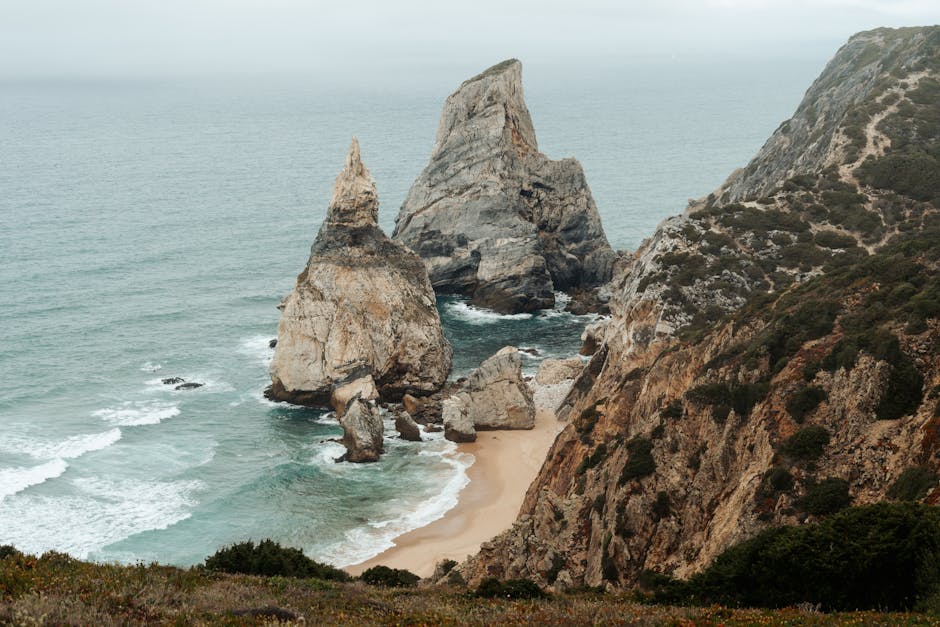
Discover the multicultural heart and Fado roots of Lisbon on this soulful self-guided walk through Mouraria's historic alleys.
 Easy
EasyNairobi, Kenya
Discover Nairobi's iconic skyline on this self-guided architecture walk through the CBD’s most famous modernist and Brutalist landmarks.
 Easy
EasyNairobi, Kenya
Explore Nairobi's architectural evolution from colonial-era landmarks to iconic Brutalist skyscrapers on this historic self-guided walking route.
 Easy
EasyGothenburg, Sweden
Discover Gothenburg’s 17th-century Dutch foundations, historic canals, and military fortifications on this self-guided architectural walk.
 Easy
EasyGdansk, Poland
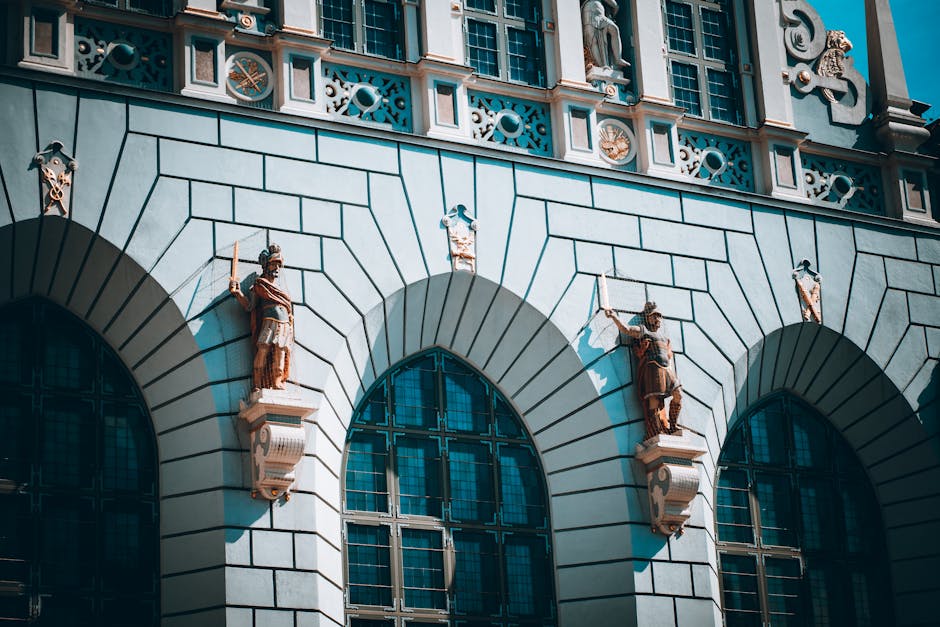
Discover the opulent Royal Way of Gdansk at your own pace. Explore Hanseatic history, gilded architecture, and the iconic Neptune's Fountain.
 Easy
EasyPorto, Portugal
Taste the soul of Porto on this self-guided stroll through the historic Bolhão Market and its legendary surrounding food shops.
 Moderate
Porto, Portugal
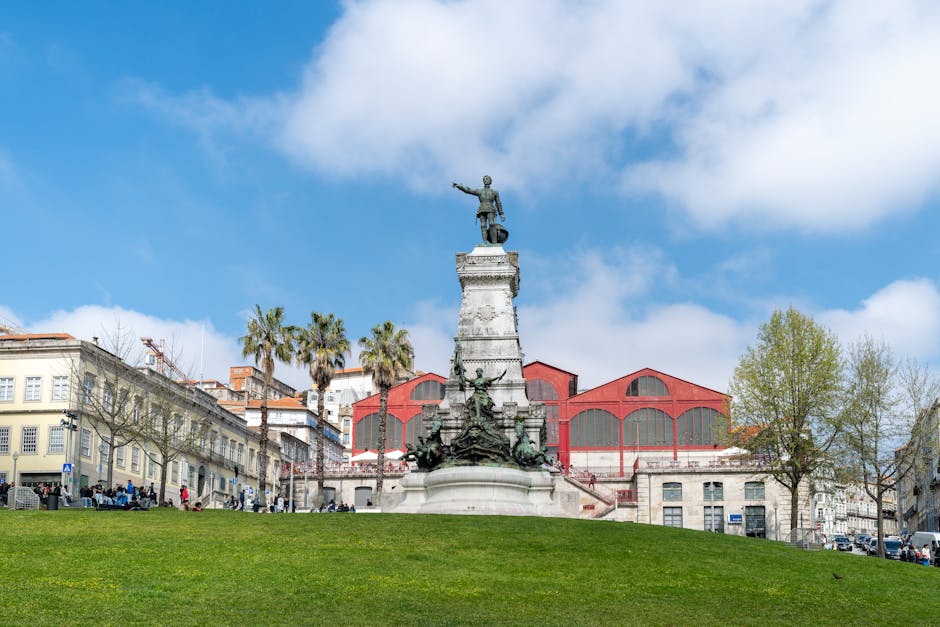
Uncover the hidden history of Porto's Jewish community and the secrets of the Inquisition on this self-guided walking route through historic Miragaia.
 Challenging
Porto, Portugal
Explore Porto's 'High City' on this self-guided walk through Baroque landmarks, medieval cathedrals, and stunning panoramic viewpoints.
 Moderate
Porto, Portugal
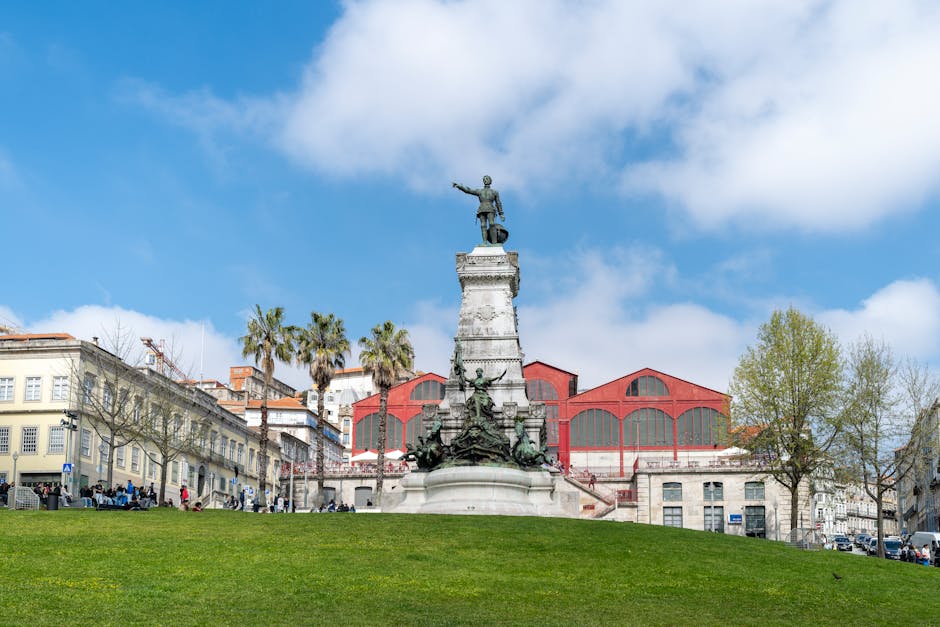
Explore Porto's UNESCO-listed riverside district at your own pace through medieval alleys, golden churches, and historic maritime landmarks.