Self-guided audio tour in Buenos Aires
Start Free on iPhone
Start free on iPhone to unlock this self-guided walking tour in Buenos Aires. Hear all the stories that make it amazing, walk at your own pace, and begin whenever you want.
Your Private Tour Guide
Step away from the polished avenues of Recoleta and dive into the authentic, creative heart of Buenos Aires with this self-guided walk through Chacarita. Once an overlooked residential and industrial hub, Chacarita has transformed into the city’s most exciting cultural frontier. This neighborhood stroll captures the perfect balance between the old-world charm of traditional 'barrios' and a cutting-edge culinary and artistic movement. As you explore independently, you will discover why this area is often called the 'coolest' neighborhood in the city, offering a more intimate look at local life than a typical walking tour Buenos Aires might provide. The route begins with a taste of local tradition at a modern vermutería, celebrating the city's deep-rooted love for the aperitif. From there, the walk leads you through quiet, tree-lined streets to find hidden literary sanctuaries and a massive treasure trove of antiques at the Mercado de las Pulgas. You will experience the neighborhood’s dual nature: its vibrant, living energy and its solemn, historic depths. The journey concludes at the monumental Chacarita Cemetery, a sprawling 'city of the dead' that serves as the final resting place for tango legends and cultural icons. Unlike the more famous Recoleta, this site offers a vast, diverse architectural landscape that reflects the true diversity of the Argentine people. Whether you are a food lover seeking the latest culinary hotspots or a history enthusiast looking for hidden gems, this walking route provides the flexibility to linger where you choose. By choosing a self-guided experience over a traditional guided tour Buenos Aires, you can soak in the atmosphere of Los Andes Park or spend extra time browsing vintage finds at your own pace. This is travel for the curious, designed to show you the creative edge of Buenos Aires where tradition meets the avant-garde. **Note:** This area is known for its ever-changing character. Street art, pop-up venues, and temporary exhibitions may differ from what's described. That's part of the adventure - you might discover something entirely new!
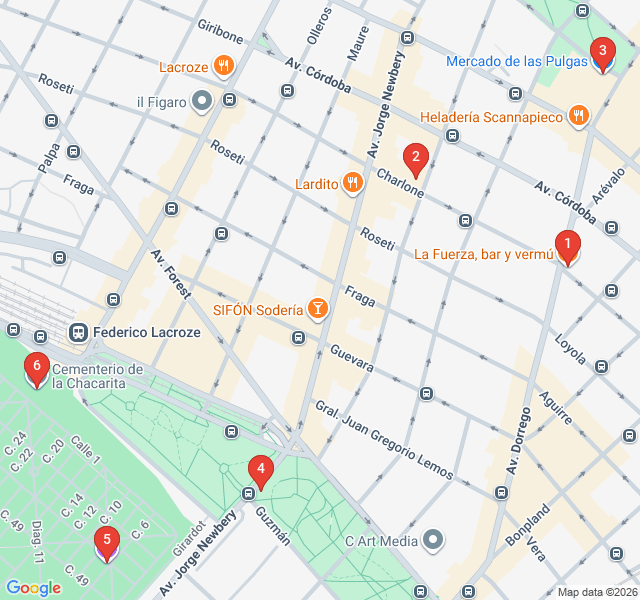
Numbers indicate the order of stops on the tour.
Start your self-guided adventure at the corner of Avenida Dorrego and Castillo. La Fuerza is more than just a bar; it is the epicenter of the global vermouth resurgence. In Argentina, 'la hora del vermut' (the vermouth hour) is a sacred social ritual brought over by Italian immigrants. La Fuerza honors this by producing their own vermouth using botanicals from the Andes mountains. The building itself, with its classic rounded corner, is a perfect example of neighborhood architecture. Take a moment to notice the vibrant murals nearby, which change frequently as local artists use the neighborhood as an ever-evolving canvas. It’s the perfect spot to toast to the beginning of your journey.
A short walk away lies FALENA, a place that redefines the concept of a bookstore. There is no large sign here; look for an unassuming brick building that feels more like a private home. Once inside, you are greeted by a stunning combination of exposed brick, curated bookshelves, and a cozy fireplace. FALENA is a sanctuary for bibliophiles, focusing on high-quality editions and specialized subjects. The atmosphere is intentionally quiet and contemplative, offering a glimpse into the intellectual heart of the neighborhood. The selection of books is curated like an art gallery, making it a favorite for locals seeking inspiration away from the city's busier commercial hubs.
Now, head toward the Mercado de las Pulgas, or the Flea Market. This massive indoor space is a labyrinth of history. For decades, it has served as the go-to spot for Porteños looking to furnish their homes with character. You’ll find everything from mid-century modern furniture and vintage signage to antique glassware and obscure collectibles. The vendors here are often skilled restorers, and you can sometimes hear the sound of sanding or polishing as you walk the aisles. The market reflects the eclectic soul of Buenos Aires—a city that never throws anything away and finds beauty in the patina of the past. It's a sensory experience of wood polish, old paper, and discovery.
As you walk toward the cemetery, you will pass through Los Andes Park. This green lung is a vital social space for the neighborhood. On weekends, it often hosts a bustling local fair where you can find handmade crafts and second-hand clothes. However, the park has a somber history; it was originally established as a burial site during the yellow fever epidemic of the 1870s when the city ran out of space. Today, that history is buried beneath lush lawns and towering trees. Look for the 'Monument to the Andes' sculpture, which pays tribute to the indigenous peoples of the mountain range. It’s a great place to observe the daily rhythms of Chacarita life, from dog walkers to groups sharing mate.
Entering the Chacarita Cemetery, make your way to the final resting place of the most famous man in Argentine history: Carlos Gardel. Known as 'The King of Tango,' Gardel’s death in a 1935 plane crash sparked national mourning. His mausoleum is a site of pilgrimage. You will notice a life-sized bronze statue of Gardel, always impeccably dressed in a tuxedo. Look closely at his hand; fans often leave a lit cigarette between his fingers as a tribute. The base of the monument is frequently covered in fresh flowers and plaques from devotees around the world. It is said that 'Gardel sings better every day,' a testament to his eternal presence in the hearts of the people.
Conclude your walk by exploring the wider grounds of the Chacarita Cemetery. Covering nearly 95 hectares, it is the largest cemetery in Argentina. While Recoleta is for the elite, Chacarita is for the people. The architecture here is incredibly diverse, ranging from ornate family vaults to the striking, Brutalist design of the 'Sexto Panteón.' This underground section, designed by architect Itala Fulvia Villa, is a masterpiece of mid-century modernism, featuring geometric concrete skylights that create a hauntingly beautiful play of light. As you wander, you’ll find the graves of artists, musicians, and everyday citizens, making it a profound reflection of the city’s complex social fabric and history.
Start Free on iPhone
Explore “Chacarita: The Creative Edge” with your very own Private Tour Guide with Zigway. Start free on iPhone, skip the large group and the fixed routes, and hear the city come alive as you go.
Your Private Tour Guide
Don't miss the good stuff
Explore Freely
 Easy
EasyBuenos Aires, Argentina
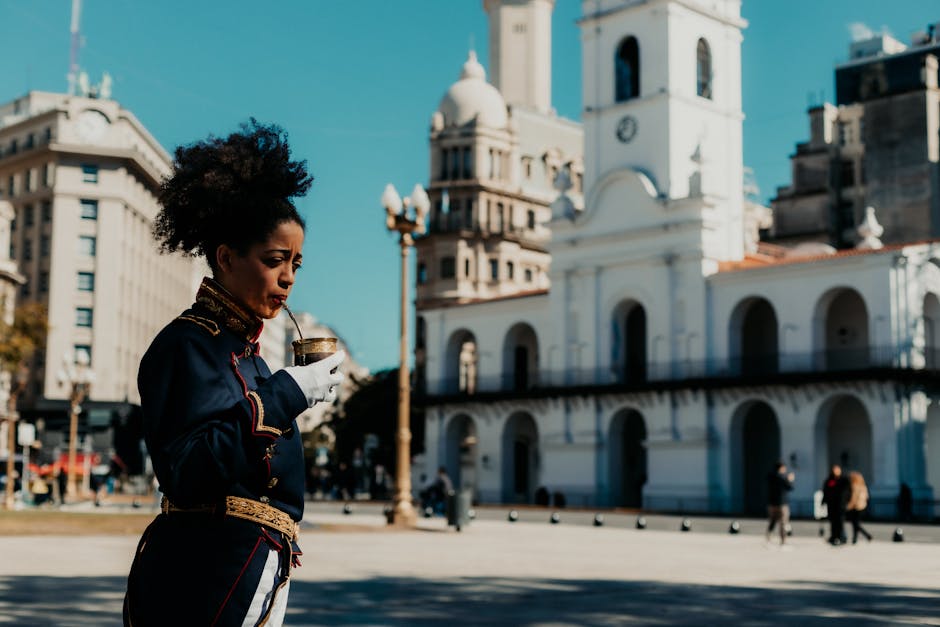
Explore the elegance of Recoleta on this self-guided walk featuring grand museums, colonial churches, and the legendary Recoleta Cemetery.
 Easy
EasyBuenos Aires, Argentina
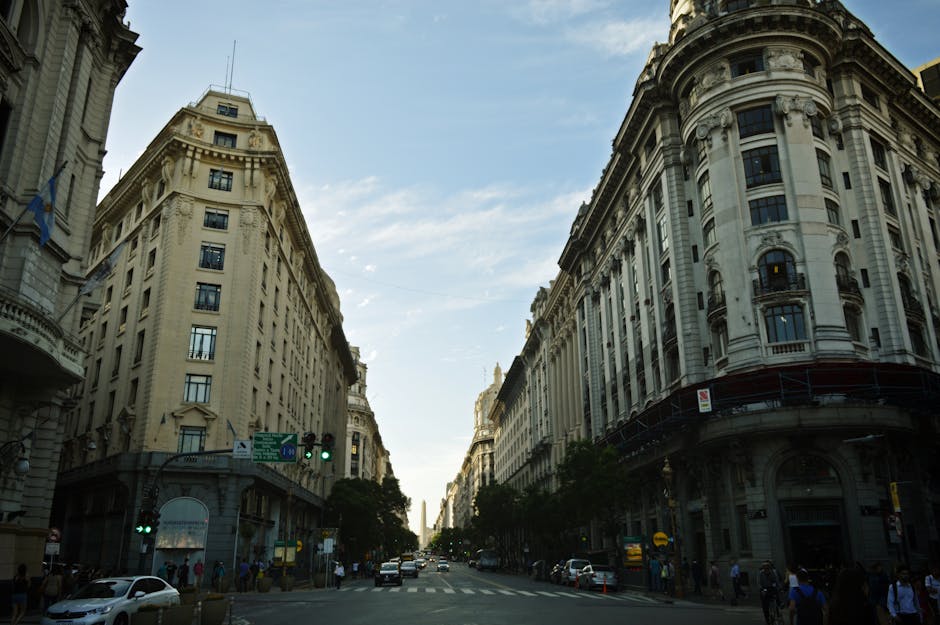
Discover a blend of aristocratic mansions, lush gardens, and vibrant Asian culture on this self-guided walk through Buenos Aires' Belgrano district.
 Moderate
Buenos Aires, Argentina
Follow the footsteps of Borges and Ocampo through the bookstores, libraries, and historic cafes of Buenos Aires' most elegant neighborhoods.
 Moderate
Buenos Aires, Argentina
Explore the soulful heart of Buenos Aires on this self-guided walk through San Telmo’s historic markets, hidden tunnels, and antique-filled plazas.
 Moderate
Nairobi, Kenya
Taste your way through Nairobi's Westlands on this self-guided walk featuring street snacks, cultural landmarks, and hidden foodie gems.
 Moderate
Gdansk, Poland
Discover the bohemian soul of Gdańsk. Explore the literary landmarks of Günter Grass, Prussian villas, and the trendy cafes of historic Wrzeszcz.
 Easy
EasyGdansk, Poland
Taste the history of the Baltic. Explore Gdansk's culinary heritage from medieval markets to gold-flecked liqueurs on this self-guided walk.
 Moderate
Gdansk, Poland
Discover Zaspa, a massive open-air gallery where grey housing blocks are transformed by over 60 monumental murals. Explore at your own pace.