Self-guided audio tour in Queenstown
Start Free on iPhone
Start free on iPhone to unlock this self-guided walking tour in Queenstown. Hear all the stories that make it amazing, walk at your own pace, and begin whenever you want.
Your Private Tour Guide
While most visitors head to Queenstown for its adrenaline-pumping activities, a quiet layer of history and architectural beauty waits to be discovered just meters away from the main streets. This self-guided walk invites you to step away from the crowds and into the narrow lanes and scenic waterfront spots that define the town's character. You will explore the evolution of this alpine village from a rugged gold-mining outpost to a sophisticated international destination, all while admiring the unique schist stone masonry that has become the hallmark of Central Otago architecture. This neighborhood stroll takes you through hidden alleyways like Searle Lane and Cow Lane, where the rustic charm of the 19th century meets modern hospitality. You will learn about the visionary settlers who established the town and see how the community honors its past at the poignant War Memorial. The route transitions from these intimate urban corridors to the expansive beauty of the Lake Wakatipu waterfront, concluding at the historic Steamer Wharf. Whether you are a photography enthusiast looking for the perfect play of light on heritage stone or a history buff eager to uncover local secrets, this walking route Queenstown provides a peaceful and enriching way to experience the heart of the city at your own pace. Discover the stories behind the street names and the maritime legacy that kept this isolated settlement connected to the world long before the arrival of modern highways. This audio walk is the perfect introduction to the architectural soul of the Southern Alps.
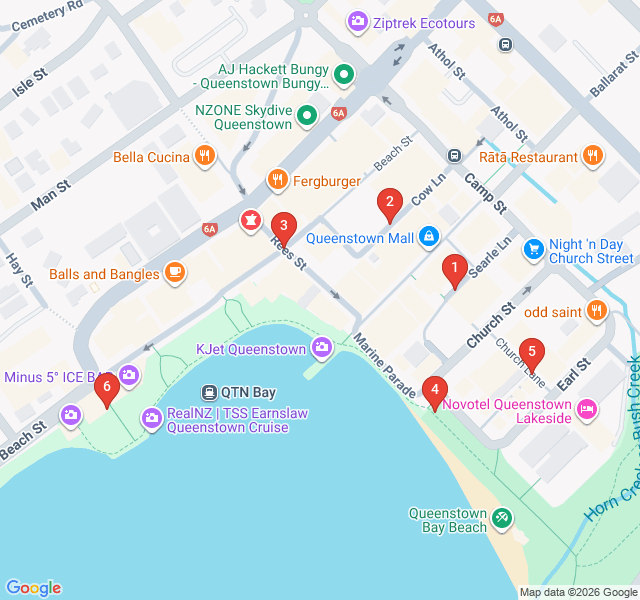
Numbers indicate the order of stops on the tour.
Welcome to the start of your neighborhood stroll. Searle Lane is a classic example of Queenstown’s 'back-alley' charm. Originally used for deliveries and stables during the 1860s gold rush, it is now a vibrant hub for dining. Pay close attention to the buildings here; they feature the iconic Central Otago schist. This flat, grey-toned local stone was the primary building material for early settlers because timber was incredibly scarce in the treeless alpine basins. The masonry you see represents a craft passed down through generations of stonemasons who shaped the visual identity of the town. This lane captures the transition from a rough mining camp to a permanent, stylish settlement.
Just a short walk away is Cow Lane, perhaps the most uniquely named street in the city. The name isn't just a quirk; it’s literal history. In the early days of Queenstown, this narrow passage was used by farmers to drive their cattle from the high country down to the lakefront for transport or market. Today, the cows are gone, replaced by tucked-away bars and boutiques, but the lane retains its original, tight proportions. The high stone walls create a sense of being in an old European village, a sharp contrast to the wide, modern roads elsewhere. It’s a perfect spot to appreciate how the town has repurposed its functional heritage into a cozy urban space.
As you emerge onto Rees Street, you are standing on the commercial spine of historic Queenstown. This street is named after William Gilbert Rees, the explorer and surveyor who is credited with founding the town in 1860. Rees originally established a sheep station here, but his life changed forever when gold was discovered in the nearby Arrow River. Look up at the upper stories of the buildings; while the ground floors have been modernized for shopping, the Victorian and Edwardian facades remain intact. These structures tell the story of a town that grew wealthy very quickly, moving from canvas tents to grand stone and brick edifices within just a few decades.
Moving toward the water, we reach the Queenstown War Memorial. Positioned with a stunning backdrop of Lake Wakatipu and the Remarkables mountain range, this site is a place of deep local significance. The memorial honors the men from the Wakatipu district who served and fell in the World Wars. Unlike many urban memorials tucked into busy squares, this one utilizes the natural beauty of the lakefront to create a space for quiet reflection. The proximity to the Queenstown Gardens entrance makes it a gateway between the town’s built environment and its natural landscapes. Take a moment here to enjoy the breeze off the water and the panoramic views that have drawn people to this shore for centuries.
Tucked just behind the main bustle is Church Lane, home to St. Peter’s Church. This is the oldest church in Queenstown, with the current stone structure dating back to 1932, though the parish itself was established in 1863. The architecture is a beautiful example of Gothic Revival style, built using local stone to ensure it harmonized with the rugged landscape. The church serves as a reminder of the social fabric of early Queenstown, where community life revolved around faith and shared hardship in the isolated mountains. The surrounding gardens and the quiet atmosphere of the lane offer a peaceful sanctuary from the tourist energy of the nearby waterfront.
Your self-guided adventure concludes at Steamer Wharf. This area was once the industrial heart of the region. Before roads were carved through the mountain passes, Lake Wakatipu was the only 'highway' connecting Queenstown to the outside world. This wharf was the primary docking point for the grand steamships that carried wool, gold, and passengers. The most famous of these, the TSS Earnslaw, often docks right here. Known as the 'Lady of the Lake,' she has been puffing across these waters since 1912. The wharf has been transformed into a dining and entertainment precinct, but the spirit of Queenstown’s maritime legacy lives on in the rhythmic lapping of the waves and the historic hulls in the harbor.
Start Free on iPhone
Explore “Hidden Lanes and Waterfront Secrets” with your very own Private Tour Guide with Zigway. Start free on iPhone, skip the large group and the fixed routes, and hear the city come alive as you go.
Your Private Tour Guide
Don't miss the good stuff
Explore Freely
 Easy
EasyQueenstown, New Zealand
Discover Queenstown’s sophisticated side on this self-guided walk through premier art galleries and creative hubs in the heart of the alpine town.
 Challenging
Queenstown, New Zealand
Ascend Te Tapunui on this self-guided walk, blending downtown art galleries with the iconic Basket of Dreams sculpture and panoramic alpine views.
 Moderate
Queenstown, New Zealand
Explore Queenstown’s cinematic landscapes and iconic film locations at your own pace with this scenic self-guided audio walk.
 Challenging
Queenstown, New Zealand
Conquer Bob's Peak on this challenging self-guided walk through alpine forests for the best panoramic views of Queenstown and Lake Wakatipu.
 Easy
EasyHelsinki, Finland
Discover Helsinki's oldest neighborhood on this self-guided audio walk through Kruununhaka’s historic streets, hidden courtyards, and scenic shores.
 Easy
EasyGothenburg, Sweden
Explore Gothenburg's elegant academic district, featuring grand 19th-century stone architecture and the iconic cultural hub of Götaplatsen.
 Easy
EasyGothenburg, Sweden
Explore Gothenburg's maritime soul on this self-guided walk from historic shipyards to sleek modern piers and iconic industrial landmarks.
 Easy
EasyGothenburg, Sweden
Discover Gothenburg’s 17th-century Dutch foundations, historic canals, and military fortifications on this self-guided architectural walk.
 Easy
EasyAuckland, New Zealand
Discover Auckland's sustainable future on this self-guided walk through the award-winning architecture and industrial history of Wynyard Quarter.
 Moderate
Auckland, New Zealand
Discover Auckland's highest volcanic peak, sacred Māori history, and stunning 360-degree views on this self-guided walking route up Maungawhau.
 Easy
EasyAuckland, New Zealand
Explore the gritty soul of Auckland on this self-guided walk through Karangahape Road’s street art, heritage, and legendary nightlife spots.
 Moderate
Auckland, New Zealand
Explore Auckland's iconic coastline, Art Deco architecture, and Maori heritage on this scenic self-guided walking route from Bastion Point to the Bay.