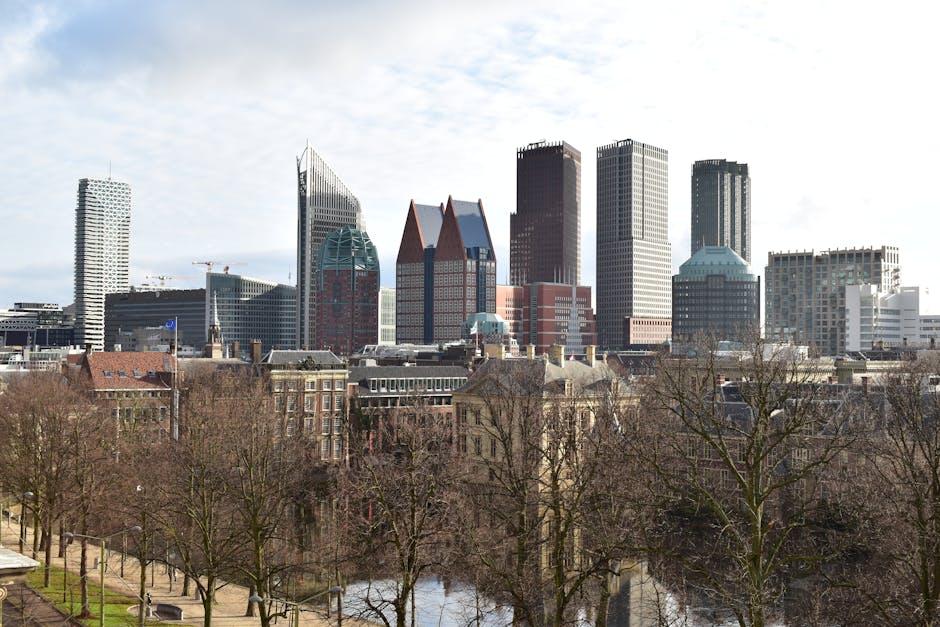
Self-guided audio tour in The Hague
Start Free on iPhone
Start free on iPhone to unlock this self-guided walking tour in The Hague. Hear all the stories that make it amazing, walk at your own pace, and begin whenever you want.
Your Private Tour Guide
Step into the heart of global diplomacy with this self-guided walk through The Hague, the world's capital of peace and justice. This route explores the International Zone, a neighborhood where history is made and international law is upheld every day. You will witness the architectural grandeur of institutions that shape our global society, from the iconic Peace Palace to the ultra-modern International Criminal Court. This walking route offers a unique perspective on how a single city became the focal point for resolving international conflicts and promoting human rights. Along the way, you'll encounter monuments to peace, headquarters of Nobel Prize-winning organizations, and museums that bridge the gap between science and culture. Unlike a standard walking tour The Hague offers elsewhere, this journey focuses on the profound legal and historical evolution of the city. As you navigate the leafy boulevards and high-security districts, you'll gain insight into the complex machinery of international relations. This self-guided adventure allows you to absorb the gravity of these sites at your own pace, whether you are a history buff, a law student, or a curious traveler. Discover the stories of visionaries like Andrew Carnegie and the modern legal battles that define the 21st century. This neighborhood stroll is more than just a sightseeing trip; it is an exploration of the ideals that bind the world together.
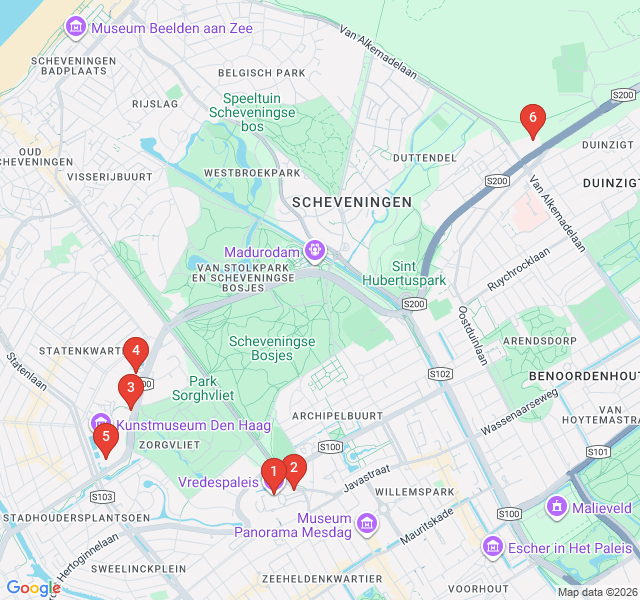
Numbers indicate the order of stops on the tour.
Standing before the Peace Palace, you are looking at what is perhaps the most photographed building in The Hague. Completed in 1913, this 'Temple of Peace' was made possible by a massive donation from American steel tycoon Andrew Carnegie. It was built to house the Permanent Court of Arbitration, but today it is most famous as the seat of the International Court of Justice—the principal judicial organ of the United Nations. The architecture is a blend of Romanesque, Byzantine, and Gothic styles, symbolizing the unity of different cultures under the rule of law. While the interior is often closed for high-level deliberations, the exterior remains a powerful symbol of the global quest for harmony and the prevention of war through legal mediation.
Just outside the gates of the Peace Palace sits a humble but significant monument: the World Peace Flame. This flame has been burning since 1999, when seven flames from five continents were flown to the Netherlands to be joined into one. Surrounding the pillar is a 'world peace path' consisting of 197 large and small stones representing nearly every country on Earth. Some stones are historically significant, such as a piece of the Berlin Wall and a stone from Robben Island where Nelson Mandela was imprisoned. It serves as a quiet place for reflection on the individual’s role in creating a more peaceful world, standing in the shadow of the massive legal institutions nearby.
The sleek, curved building before you is the headquarters of the OPCW. This organization gained worldwide recognition in 2013 when it was awarded the Nobel Peace Prize for its extensive efforts to eliminate chemical weapons. Since its establishment in 1997, the OPCW has overseen the destruction of the vast majority of the world's declared chemical weapons stockpiles. The architecture of the building, with its transparent glass facade, is intended to reflect the organization's commitment to transparency and international cooperation. It is a vital part of the Hague's identity as a city that doesn't just talk about peace, but actively works to dismantle the tools of war.
The World Forum is the premier convention center of The Hague and a key site for international diplomacy. Over the decades, it has hosted some of the most important global gatherings, including the 2014 Nuclear Security Summit, which brought together leaders from over 50 nations. The building's modernist design is a staple of the International Zone's skyline. Beyond politics, the World Forum is also a cultural hub, hosting major concerts and the famous North Sea Jazz Festival in its earlier years. It represents the city's dual role as a place for high-stakes negotiation and a vibrant center for international cultural exchange.
Museon is a museum of science and culture that plays a unique role in the Peace and Justice theme. Its permanent exhibition, 'One Planet,' is based on the United Nations' Sustainable Development Goals. It explores how we can share the Earth's resources fairly and live together peacefully. Through interactive displays, it connects the abstract concepts of international law found in the neighboring buildings to the everyday lives of people around the globe. It is a fantastic place to see how The Hague educates the next generation about global citizenship and environmental responsibility. The building itself is an example of functionalist architecture, designed by Wim Quist.
Our final stop is the International Criminal Court, or ICC. Opened in 2015, this state-of-the-art complex is located on the edge of the dunes. The ICC is the world's first permanent international criminal court, established to prosecute individuals for genocide, crimes against humanity, and war crimes. The building's design is deeply symbolic; the 'Court Tower' is the tallest element, while the surrounding 'Trench' provides security without the need for unsightly fences. The greenery integrated into the facade is meant to help the building blend into the natural landscape of the Dutch coast. It represents the modern frontier of international justice, where the world holds individuals accountable for the most serious crimes of international concern.
Start Free on iPhone
Explore “The Global Stage: Peace & Justice Route” with your very own Private Tour Guide with Zigway. Start free on iPhone, skip the large group and the fixed routes, and hear the city come alive as you go.
Your Private Tour Guide
Don't miss the good stuff
Explore Freely
 Easy
EasyThe Hague, Netherlands
Explore The Hague’s artistic soul on this self-guided walk from Golden Age treasures to the mind-bending illusions of M.C. Escher.
 Easy
EasyThe Hague, Netherlands
Discover the liquid history of The Hague on this self-guided walk through historic distilleries, vibrant markets, and iconic local pubs.
 Moderate
The Hague, Netherlands
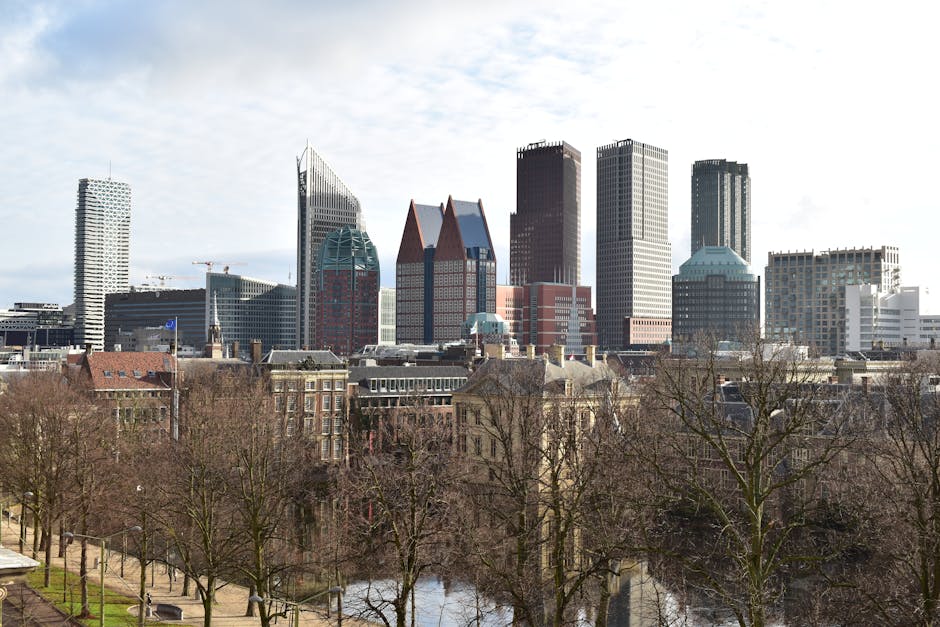
Explore the gritty, creative soul of The Hague's industrial district on this self-guided street art and architecture walk.
 Easy
EasyThe Hague, Netherlands
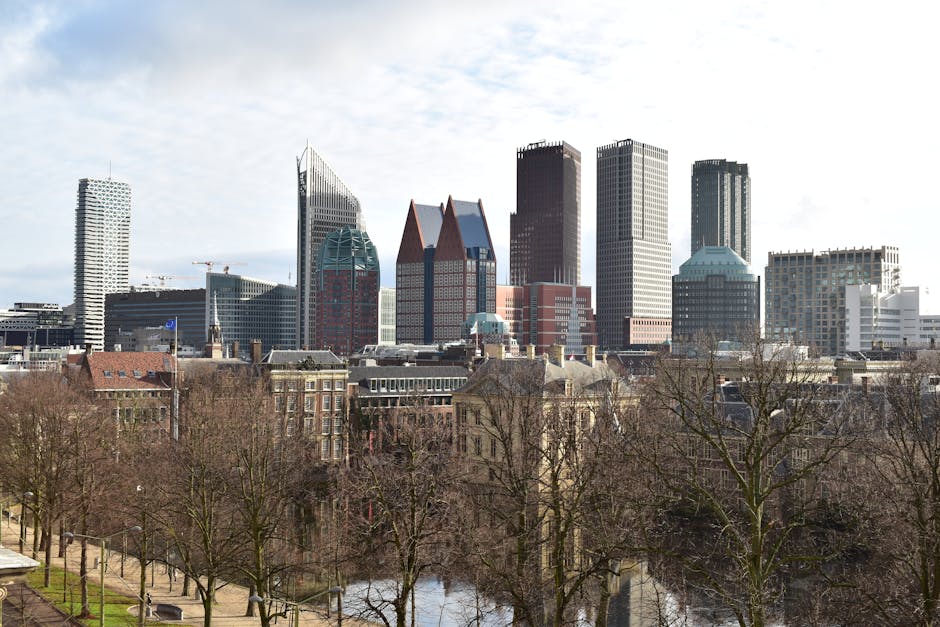
Discover secret gardens, Art Nouveau architecture, and the bohemian spirit of The Hague’s most charming local neighborhood on this self-guided walk.
 Easy
EasyWarsaw, Poland
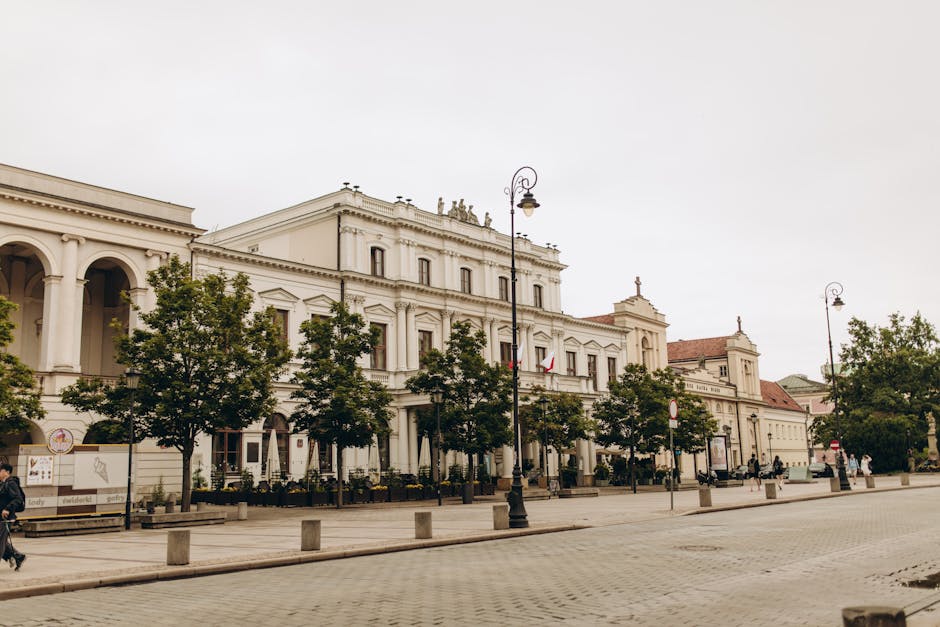
Explore the 'Polish Versailles' at your own pace. Discover Baroque architecture, royal history, and stunning gardens on this self-guided walk.
 Moderate
Warsaw, Poland
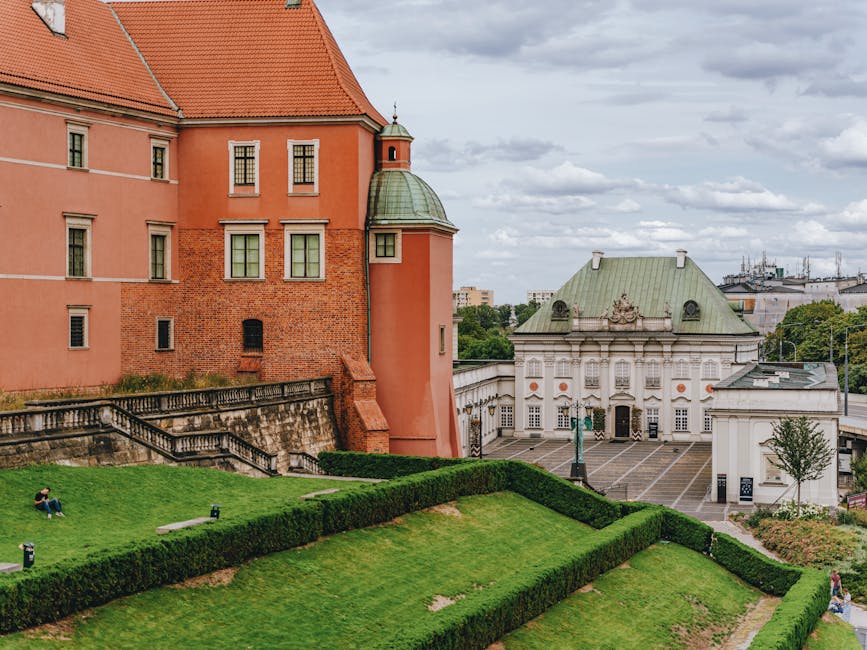
A powerful self-guided walk through Warsaw's WWII history, tracking the 1944 Uprising from ruined skyscrapers to solemn memorials.
 Easy
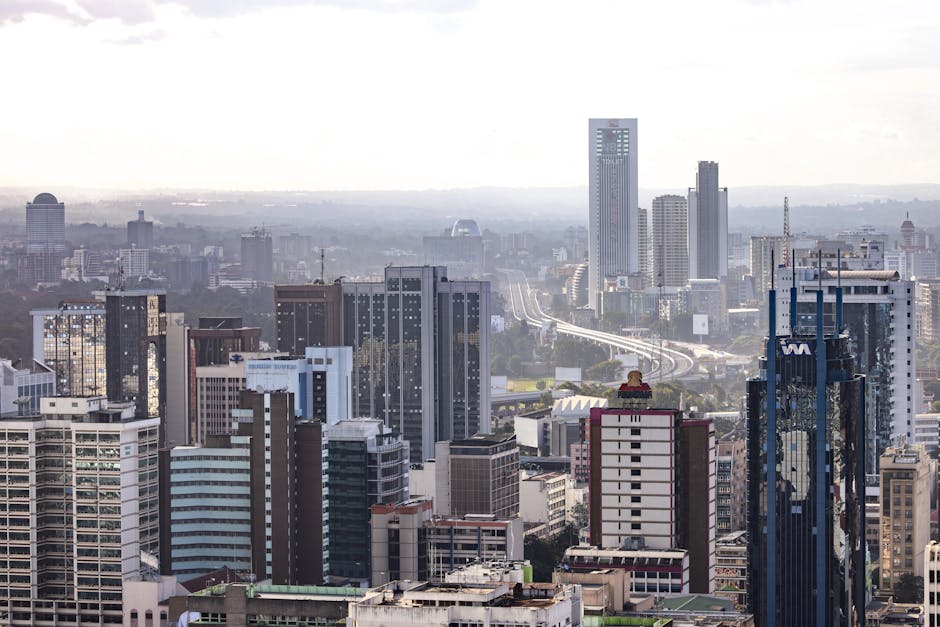
EasyNairobi, Kenya
Explore Nairobi's architectural evolution from colonial-era landmarks to iconic Brutalist skyscrapers on this historic self-guided walking route.
 Easy
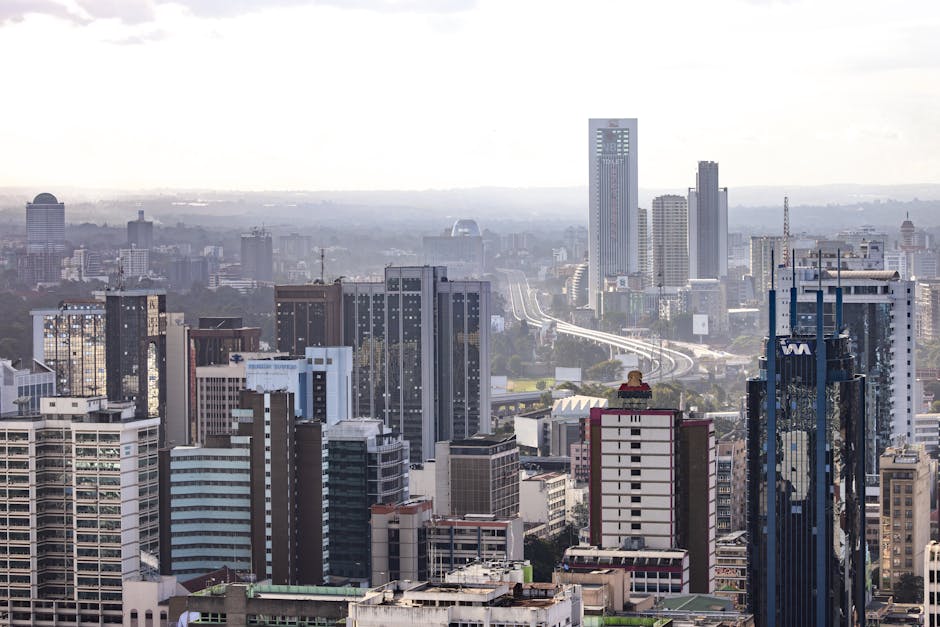
EasyNairobi, Kenya
Discover Nairobi's iconic skyline on this self-guided architecture walk through the CBD’s most famous modernist and Brutalist landmarks.
 Easy
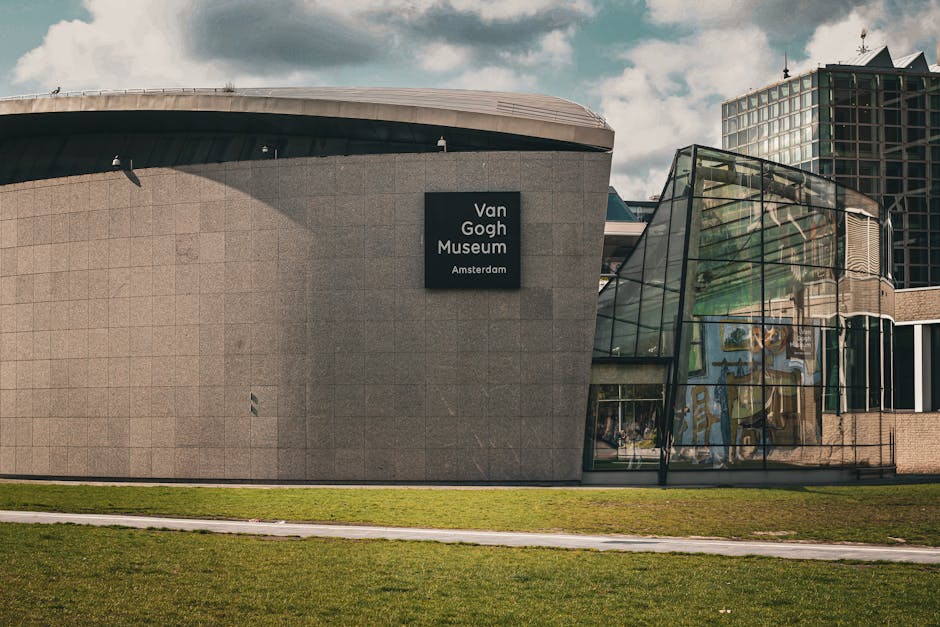
EasyAmsterdam, Netherlands
Discover Amsterdam's cultural heart on this self-guided walk from the iconic Museumplein to the serene blooming gardens of Vondelpark.
 Easy
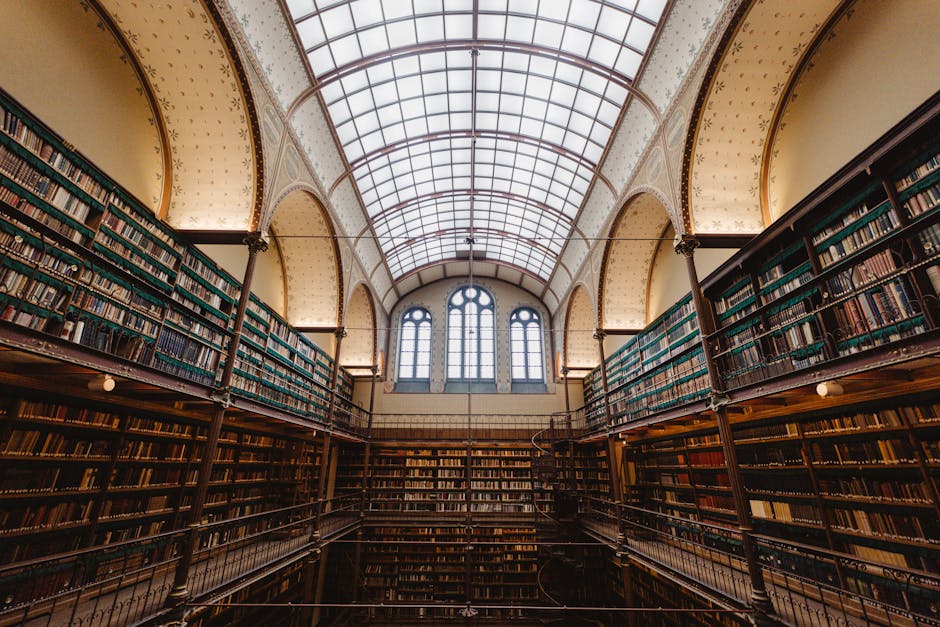
EasyAmsterdam, Netherlands
Discover Amsterdam's literary heart on this self-guided walk through historic bookshops, writers' haunts, and the homes of revolutionary thinkers.
 Easy
EasyAmsterdam, Netherlands
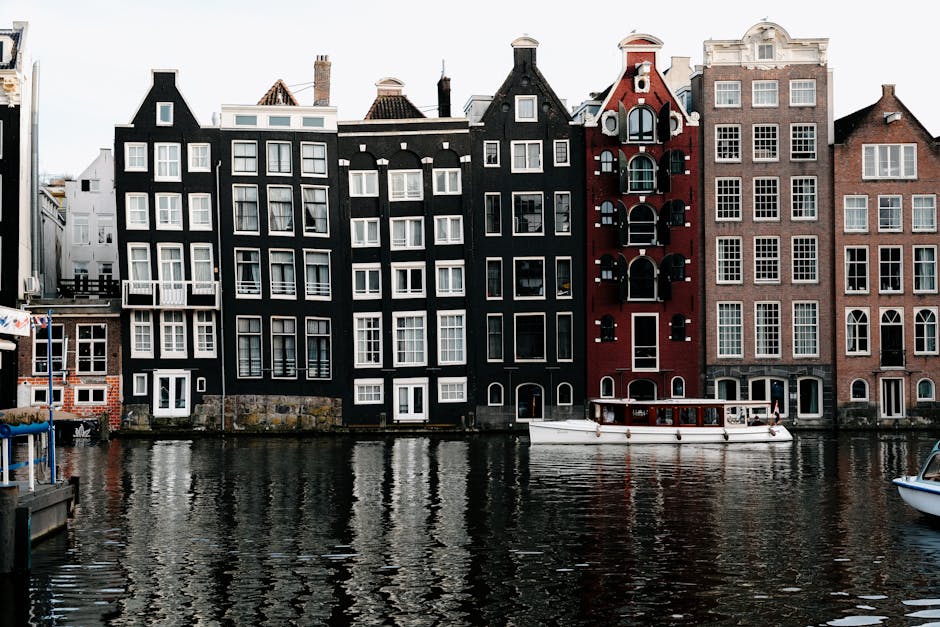
Capture the magic of Amsterdam with this self-guided photography walk across the iconic bridges and scenic banks of the Amstel River.
 Easy
EasyAmsterdam, Netherlands
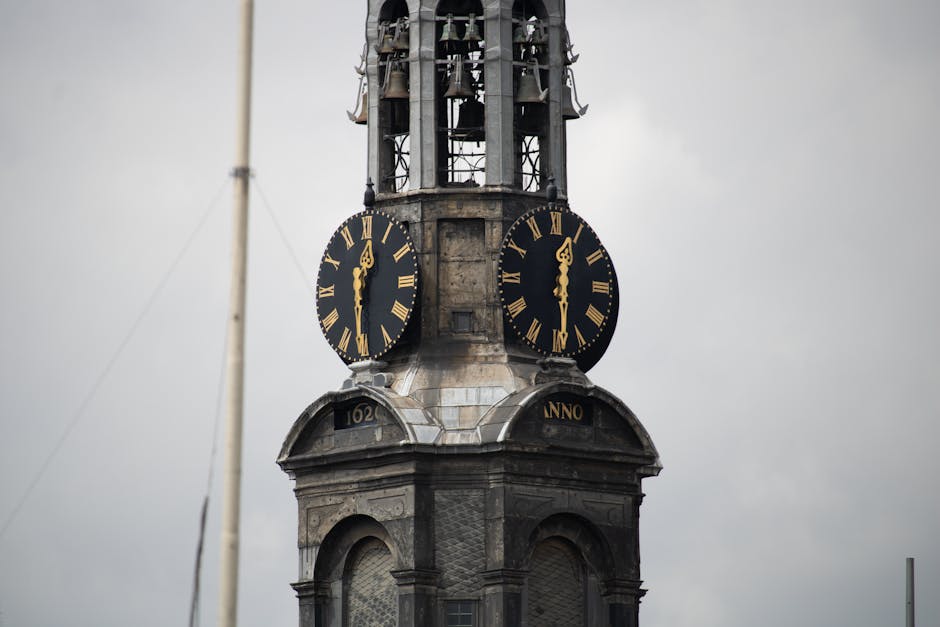
Discover the opulent 17th-century mansions and rich history of Amsterdam's famous Canal Belt on this self-guided architectural walking route.