Self-guided audio tour in Lyon
Start Free on iPhone
Start free on iPhone to unlock this self-guided walking tour in Lyon. Hear all the stories that make it amazing, walk at your own pace, and begin whenever you want.
Your Private Tour Guide
Step into the clandestine world of wartime France with this self-guided walk through Lyon, a city famously designated by General de Gaulle as the 'Capital of the Resistance.' This evocative route takes you across the city’s historic heart, from the vast squares of Bellecour to the hidden passageways of the Croix-Rousse slopes, revealing the stories of those who risked everything to defy the Nazi occupation. Unlike a traditional walking tour Lyon might offer, this independent journey allows you to absorb the gravity of these sites at your own pace, reflecting on the courage of figures like Jean Moulin and the everyday citizens who turned the city's unique architecture into a weapon of war. As you explore, you will discover how Lyon’s labyrinthine 'traboules'—secret covered alleyways—became the perfect infrastructure for a shadow army. You will visit the site of the former Gestapo headquarters, now a place of remembrance, and stand before the grim walls of Montluc Prison, where thousands of resistance fighters were held. This walking route doesn't just showcase monuments; it connects you to the visceral reality of 1940s Lyon, where the line between life and death often depended on knowing which door led to safety. Whether you are a history enthusiast or a curious traveler, this audio walk provides a deep dive into the human spirit. You'll encounter moving memorials like the 'Veilleur de Pierre' and see the actual sites where clandestine newspapers were printed and distributed under the noses of the occupiers. This experience is designed for those who want to understand the soul of Lyon beyond its culinary reputation, uncovering a legacy of defiance that still resonates in the city's streets today. By following this self-guided adventure, you gain a profound perspective on the sacrifices made for freedom in the very places where history was written.
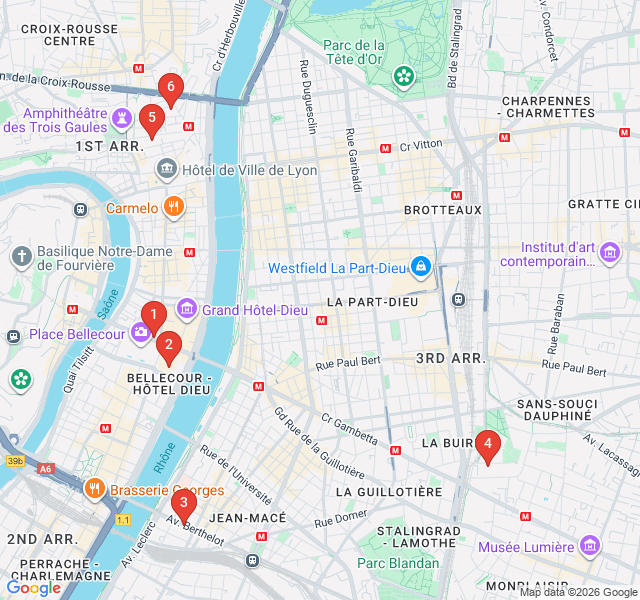
Numbers indicate the order of stops on the tour.
Our journey begins at the 'Veilleur de Pierre' or 'Stone Watcher.' This silent sentinel stands on the corner of Place Bellecour, at the exact spot where the Gestapo executed five members of the Resistance on July 27, 1944. The execution was a public reprisal for a bomb that had exploded in a nearby café frequented by German officers. Notice the names inscribed on the base; these men were taken from Montluc Prison to be killed here as a warning to the city. The statue itself, carved from a single block of stone, represents a fighter who remains vigilant even in death. It serves as a powerful reminder that while the city was occupied, its spirit was never truly conquered.
Just a short stroll from the bustle of Bellecour, Place Antonin Poncet offers a moment of reflection. During the occupation, this area was under constant surveillance. The square is dominated by the tall bell tower of the former Hôpital de la Charité, but for those interested in WWII history, the significance lies in the surrounding buildings. Many of the structures here were requisitioned by the occupying forces. As you walk through the square, imagine the tension of 1942, when the 'Free Zone' of Vichy France was finally occupied by the German army, bringing the full weight of the Gestapo to Lyon's doorstep.
You are standing before a building with a dark past. This was once the headquarters of the Sipo-SD, the Nazi security police, and the base of operations for Klaus Barbie, the notorious 'Butcher of Lyon.' It was here that resistance members were interrogated and tortured. Today, it has been transformed into a museum dedicated to the memory of those who suffered and those who fought back. The permanent exhibition uses primary documents and personal testimonies to explain how the Resistance organized itself in the shadows. It is a place of immense historical weight, turning a site of oppression into a center for education and remembrance.
This somber brick complex is Montluc Prison. Between 1943 and 1944, it served as a Nazi military prison where over 10,000 people—Resistance fighters, Jewish families, and those who defied the regime—were held in horrific conditions. Most famously, Jean Moulin, the unifier of the French Resistance, was imprisoned here following his arrest in Caluire. The cells were tiny, often holding several people at once, and for many, Montluc was the final stop before execution at an airfield or deportation to the concentration camps. Standing outside these walls, one can almost feel the weight of the thousands of individual stories of courage and tragedy that played out inside.
We have moved to the slopes of the Croix-Rousse, an area essential to the Resistance's survival. This is the Passage Thiaffait, one of the city's many 'traboules.' Originally built for the silk workers to transport their fabrics while keeping them dry, these secret corridors became the lifeblood of the underground movement. Resistance messengers used these passages to move clandestine newspapers and radio equipment across the city without ever stepping onto a main street where they might encounter a patrol. The 'traboules' created a city within a city, a labyrinth that the occupiers, despite their maps, could never truly master.
Our walk concludes at the Cour des Voraces, perhaps the most iconic traboule in Lyon. Its monumental six-story staircase is a masterpiece of 19th-century industrial architecture, but its history is defined by revolt. First used by the 'Canuts' (silk workers) during their uprisings, it was later a vital hub for the Resistance. Clandestine meetings were held in the shadows of these stone steps, and the complex network of exits allowed for quick escapes. As you look up at the towering stairs, you are seeing the physical embodiment of Lyon's rebellious heart—a place where the architecture itself served the cause of liberty.
Start Free on iPhone
Explore “Shadows of the Resistance: WWII Lyon” with your very own Private Tour Guide with Zigway. Start free on iPhone, skip the large group and the fixed routes, and hear the city come alive as you go.
Your Private Tour Guide
Don't miss the good stuff
Explore Freely
 Easy
EasyLyon, France
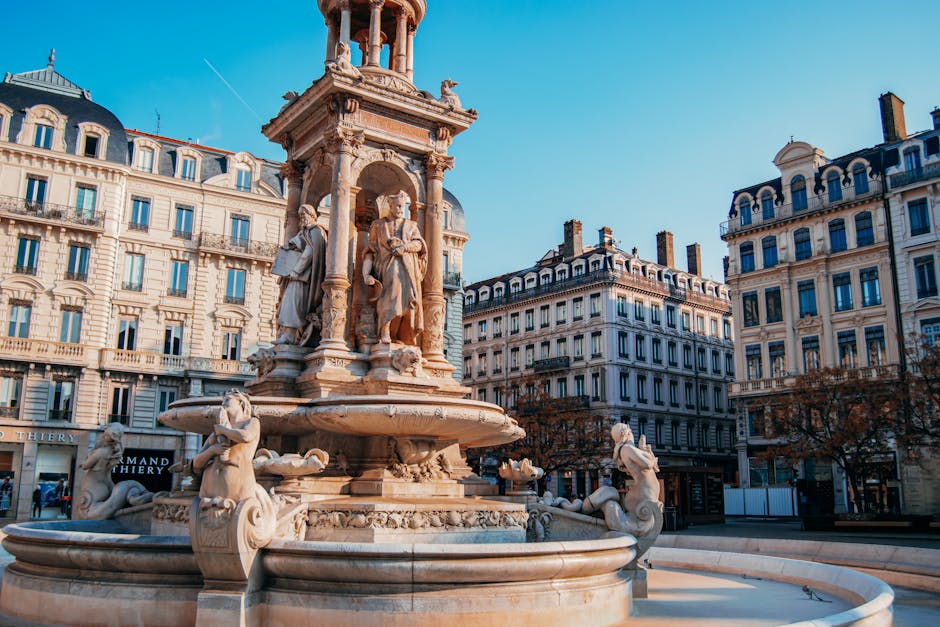
Discover Lyon's culinary soul on this self-guided walk from historic Presqu'île to the legendary Halles Paul Bocuse food market.
 Easy
EasyLyon, France
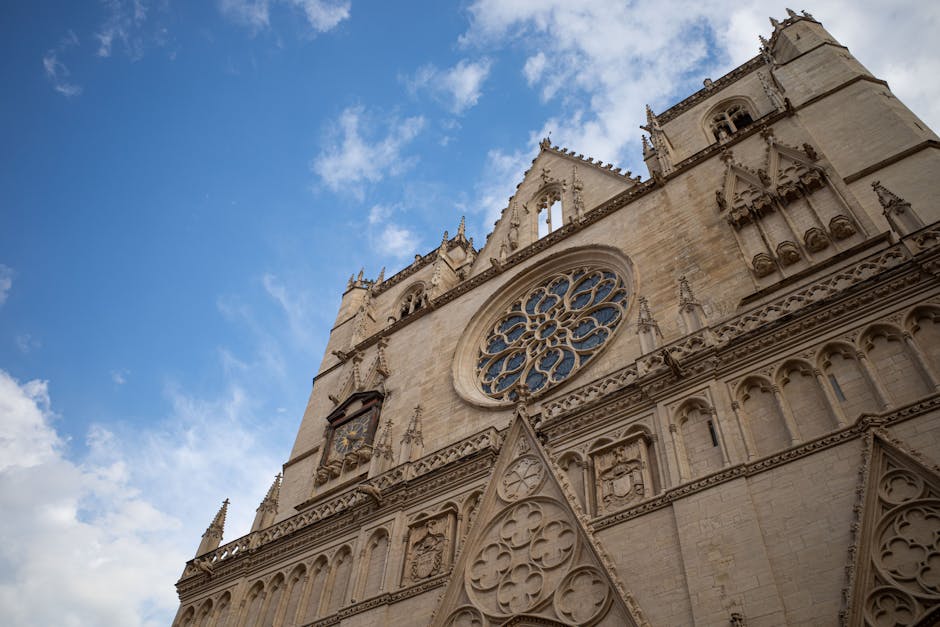
Explore Lyon’s futuristic waterfront! A self-guided walk through Confluence’s bold architecture and reclaimed industrial docks.
 Easy
EasyLyon, France
Discover the multicultural soul and industrial heritage of Lyon's 7th arrondissement on this vibrant self-guided walking route.
 Moderate
Lyon, France
Ascend the 'Hill that Prays' to explore Roman ruins, a shimmering basilica, and secret panoramic gardens on this historic self-guided walk in Lyon.
 Moderate
Warsaw, Poland
A powerful self-guided walk through Warsaw's WWII history, tracking the 1944 Uprising from ruined skyscrapers to solemn memorials.
 Moderate
Gdansk, Poland
Discover the origins of WWII in Gdansk on this self-guided walk through heroic last stands, massive museums, and strategic hilltop fortifications.
 Moderate
Warsaw, Poland
Explore the resilient spirit of Warsaw's Muranów district on this self-guided walk through the history and landmarks of the former Jewish Ghetto.
 Moderate
Gdansk, Poland
Discover Zaspa, a massive open-air gallery where grey housing blocks are transformed by over 60 monumental murals. Explore at your own pace.
 Challenging
Paris, France
Explore the secret vineyards, legendary artist studios, and hidden squares of Paris's iconic hilltop on this self-guided bohemian walking route.
 Easy
EasyParis, France
Explore the evolution of Parisian design from Art Nouveau whimsy to Le Corbusier's Modernist masterpieces on this self-guided architectural walk.
 Easy
EasyParis, France
Explore the flavors and history of Bastille on this self-guided walk through the legendary Aligre Market and the scenic Coulée Verte.
 Easy
EasyParis, France
Discover aristocratic mansions, secret medieval courtyards, and royal history on this self-guided walk through the enchanting Marais district.