
Strasbourg, France
The self-styled Capital of Christmas. Its Christkindelsmärik dates back to 1570, and markets spread across the island old town, from Place Broglie to the cathedral square and Petite France.
Strasbourg Christmas markets guide →Where to go, when markets usually open, and how to see each city on foot between the mulled wine stops.
Start Free on iPhone
Your first 15 credits are free, enough to try roughly 10 minutes of self-guided audio walks in any Christmas market city.
Your Private Tour Guide
From late November until Christmas, and in some cities into early January, Europe's old towns fill with wooden huts, light displays, mulled wine and the smell of roasted nuts. The best Christmas market cities are compact and walkable, so you can stroll from one market square to the next and see the rest of the city along the way. This guide covers the cities worth planning a trip around, when the markets usually open, and self-guided Zigway walks that work as a Christmas market walking tour at your own pace.
Each of these cities pairs a strong market tradition with an old town you can explore on foot. Follow the links for our full guides and city walks.
The self-styled Capital of Christmas. Its Christkindelsmärik dates back to 1570, and markets spread across the island old town, from Place Broglie to the cathedral square and Petite France.
Strasbourg Christmas markets guide →The big market in front of City Hall gets the crowds; the Spittelberg lanes, Schönbrunn Palace and the Karlsplatz art market give you a different side of a Viennese Advent.
Vienna Christmas markets guide →The Old Town Square market, with its giant tree framed by the Týn Church, is one of the most photographed in Europe. Wenceslas Square and Náměstí Míru are close by.
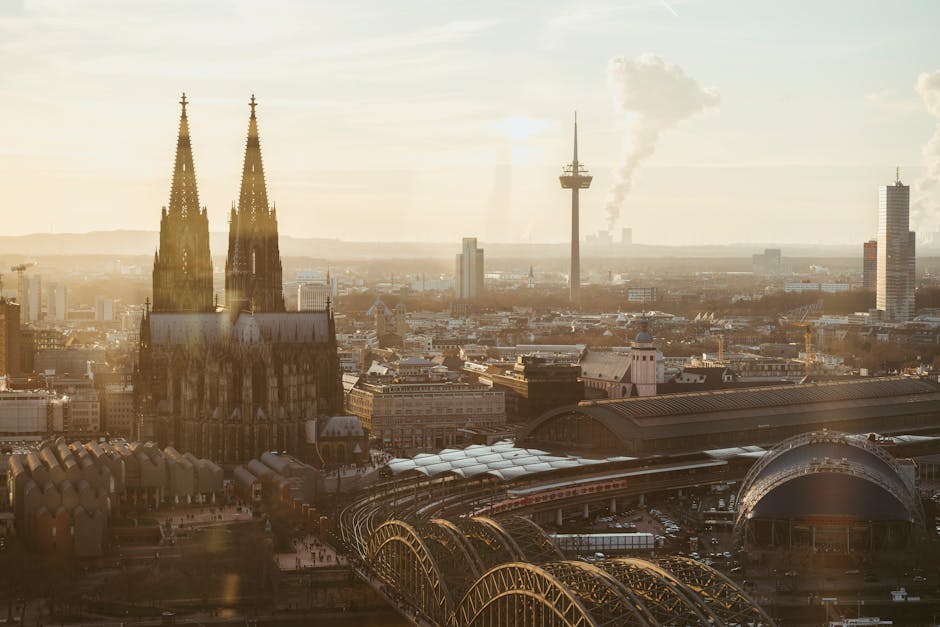
Prague Christmas markets guide →Several themed markets within walking distance of each other, from the one beneath the cathedral's twin spires to the Heumarkt with its ice rink and the Angels' market at Neumarkt.
Walks in Cologne →The Striezelmarkt is one of Germany's oldest Christmas markets, first recorded in the 15th century, and the home of Dresden Christstollen.
Walks in Dresden →Vörösmarty Square is the classic market; the one in front of St Stephen's Basilica adds an ice rink and a light show projected on the façade.
Walks in Budapest →A market on the cathedral and Residenz squares, with the castle above. Silent Night was first performed in nearby Oberndorf in 1818.
Walks in Salzburg →The Christkindlmarkt on Marienplatz is the centrepiece, with smaller markets across the old town, including a medieval market at Wittelsbacherplatz.
Walks in Munich →Tivoli Gardens turns into a Christmas village, and stalls line the harbour at Nyhavn. Look for gløgg and æbleskiver.
Walks in Copenhagen →Winter Wonders runs from the Grand-Place towards Sainte-Catherine, with a light and sound show on the Grand-Place itself.
Walks in Brussels →A market on the Main Market Square, one of Europe's largest medieval squares, between the Cloth Hall and St Mary's Basilica. Look out for the colourful szopki nativity scenes.
Kraków Christmas market guide →A fairy-tale market on Town Hall Square in the medieval Old Town. Tallinn claims the first public Christmas tree, in 1441.
Tallinn Christmas market guide →A market on Dome Square in Old Riga, a city that says it decorated the first Christmas tree in 1510, plus some of Europe's finest Art Nouveau streets.
Riga Christmas market guide →Cathedral Square's Christmas tree has a new, inventive design each year, set against one of Europe's largest Baroque old towns.
Vilnius Christmas market guide →A market on Targ Węglowy at the start of the Royal Way, with lit-up merchants' houses and amber shops on Mariacka Street.
Gdańsk Christmas market guide →One of Poland's biggest markets fills the Market Square, with bronze dwarfs to find and a lamplighter on Cathedral Island at dusk.
Wrocław Christmas market guide →A market and fairground in Princes Street Gardens below the castle, and a short wait until Hogmanay, one of Europe's biggest New Year celebrations.
Edinburgh Hogmanay guide →The lights look best at night, but that is also when the crowds peak. Walk the old town in daylight, then come back to the markets once the lights are on.
Many markets serve hot drinks in a ceramic mug with a deposit. Return it for your money back, or keep it as a cheap souvenir.
Card payment is common, but smaller stalls may still prefer cash. Carry a little local currency, especially in Prague and Budapest.
Many markets close on December 23 or 24, and a lot of shops and restaurants close on December 25 and 26. Check opening days before you build a trip around them.
Standing still at a stall is colder than walking. Wear warm, waterproof shoes and layers you can open when you step inside a church or café.
Start late morning with a walk through the old town while it is light and quiet. Stop for a long, warm lunch, take a museum, church or café break during the coldest part of the afternoon, and head to the main market as the lights come on around dusk. Finish with a smaller neighbourhood market, where it is easier to find a place to stand.
New Year
New Year's Eve in Europe
Hogmanay, the twelve grapes in Madrid, Vienna's waltz and more.
Christmas
Vienna Christmas Market
City Hall, Spittelberg, Schönbrunn and a New Year's Eve trail through the old town.
Christmas
Prague Christmas Market
Old Town Square's giant tree, Wenceslas Square and a quieter local market.
Christmas
Strasbourg Christmas Market
The Capital of Christmas, with markets across the island old town.
Christmas
Kraków Christmas Market
The Main Market Square, szopki nativity scenes and warm cellar bars.
Christmas
Tallinn Christmas Market
Town Hall Square in a medieval Old Town, and a claim to the first Christmas tree.
Christmas
Riga Christmas Market
Dome Square, Art Nouveau streets and a claim to the first Christmas tree.
Christmas
Vilnius Christmas Market
Cathedral Square's famous tree, a Baroque Old Town and Lithuanian Christmas Eve.
Christmas
Gdańsk Christmas Market
Targ Węglowy, the Royal Way and amber on Mariacka Street.
Christmas
Wrocław Christmas Market
One of Poland's biggest markets, dwarfs to find and a lamplighter at dusk.
New Year
Edinburgh Hogmanay
Scotland's New Year: street party, castle fireworks and the days around it.
Don't miss the good stuff
Explore Freely