
Walk Your Roots: Genealogy Walking Tours in Europe
DNA kits found your roots. Now walk them. Five European cities where heritage walking tours bring genealogy to life in the streets your ancestors knew.


There is a particular kind of travel that starts not with a destination, but with a question. Where did my family come from? What street did my great-grandmother live on? What does the old neighborhood look like now? For a growing number of travelers, the answer is not a museum visit or a Google search. It is a walk.
Genealogy tourism is booming in 2026. DNA testing kits, digitized immigration records, and AI-powered ancestry tools have made it easier than ever to trace your roots to a specific city, neighborhood, or even street. And once you have that information, the most powerful way to connect with it is on foot. Walking the same cobblestones, passing through the same archways, hearing the same church bells your ancestors heard.
Here are five European cities where heritage walking tours bring family history to life.
Dublin: Viking Bones and Rebellion Streets
For the 70 million people worldwide who claim Irish heritage, Dublin is not just a capital city. It is a homecoming. The Irish diaspora, scattered by famine, economics, and politics over two centuries, left traces everywhere: in the tenement buildings of the Liberties, the dockside departure points along the Liffey, and the parish churches where baptism and emigration records were kept.
Walk the streets around Christ Church Cathedral and you are standing on Viking Dublin. The foundations of the original Norse settlement are still visible in the Dublinia exhibition nearby. Move east through Temple Bar (skip the tourist pubs, walk the side streets) and you reach the old Custom House, where countless Irish families began their journey to America, Australia, and beyond.
For 20th-century heritage, walk the 1916 Rising trail. The General Post Office on O'Connell Street, where the Irish Republic was proclaimed, still bears the bullet holes. Kilmainham Gaol, a short walk west, is where the leaders were executed. These are not abstract history lessons. For many visitors, they are family stories. Zigway's audio tours add the narrative layer that makes these walks personal rather than academic.
Explore self-guided walking tours in Dublin
Krakow: Echoes of the Jewish Quarter

Kazimierz, Krakow's Jewish quarter, was once one of the largest and most vibrant Jewish communities in Europe. Today it is a place of memory, art, and careful preservation, a neighborhood that carries its history in every building.
Walk Szeroka Street, the wide main road that served as the heart of Jewish Kazimierz for centuries. The Old Synagogue (now a museum) dates to the 15th century. The Remuh Synagogue and its cemetery, with gravestones from the 1500s, are still active places of worship. Between them, restaurants serve traditional Jewish-Polish cuisine: pierogi, cholent, challah.
Cross the river to Podgorze and the heritage walk becomes heavier. The remnants of the Krakow Ghetto wall are visible on Lwowska Street, shaped in the form of Jewish headstones as a memorial. Oskar Schindler's factory, now a museum, tells the story of occupation and survival through the objects people carried. The walk from Kazimierz to Podgorze is short (fifteen minutes), but it spans an unfathomable distance in human history.
For those with Polish-Jewish ancestry, this walk is not tourism. It is an act of witness.
Explore self-guided walking tours in Krakow
Naples: Tracing Southern Italian Roots

Naples is the ancestral city for millions. Between 1880 and 1920, over four million Italians emigrated from the Mezzogiorno (southern Italy), and a huge proportion of them passed through Naples. Today, Italian-Americans, Italian-Australians, Italian-Argentinians, and others are returning to walk the streets their families left behind.
Start on Spaccanapoli, the ancient Greek street that literally splits the old city ("spacca" means "to split"). This is the Naples of narrow alleys, hanging laundry, shrine-lit corners, and vendors selling sfogliatella from carts. Walk slowly here. The architecture is a timeline: Greek foundations, Roman arches, Baroque churches, and modern street art layered on top of each other.
Head south to the port area around Via Marina, where the emigration ships departed. The neighborhood has a gritty, real energy that the tourist areas lack. Further up the hill, the Quartieri Spagnoli (Spanish Quarters) is a grid of tight streets where Neapolitan families have lived for generations. If your surname is Esposito, Russo, Romano, or Colombo, chances are high someone in these streets shares it.
Church records in Naples go back centuries, and many parishes will help visitors trace baptismal and marriage records. A walking tour of the churches where your family milestones were recorded is one of the most moving heritage experiences you can have.
Explore self-guided walking tours in Naples
Prague: Jewish Heritage in Josefov
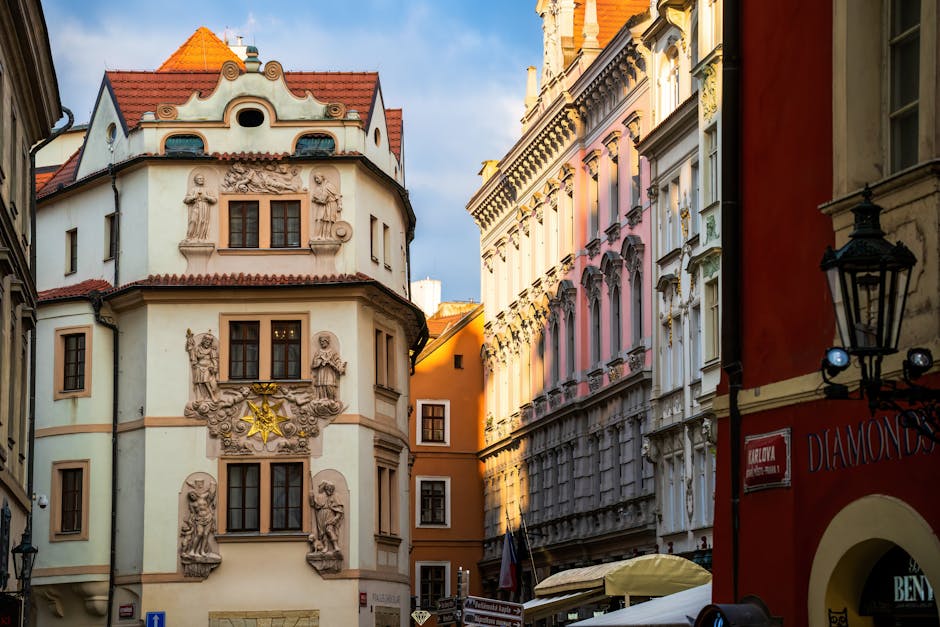
Prague's Jewish Town, Josefov, has one of the most haunting preservation stories in Europe. During World War II, the Nazis planned to turn it into a "museum of an extinct race," which is why the synagogues, the cemetery, and tens of thousands of artifacts were preserved rather than destroyed. The community they memorialized was not extinct. But the neighborhood carries that weight.
Walk through the Old Jewish Cemetery, where 12,000 tombstones are packed into a space meant for far fewer. The layers of graves go twelve deep in places, spanning four centuries. The Pinkas Synagogue, next door, has the names of 77,297 Czech and Moravian Holocaust victims inscribed on its walls. Reading them takes hours. That is the point.
For heritage travelers with Central European Jewish roots, Josefov offers both the historical record and the physical space to process it. The walk is short (the quarter is compact), but most visitors spend half a day here. Take your time.
Explore self-guided walking tours in Prague
Amsterdam: Resistance, Refuge, and Memory
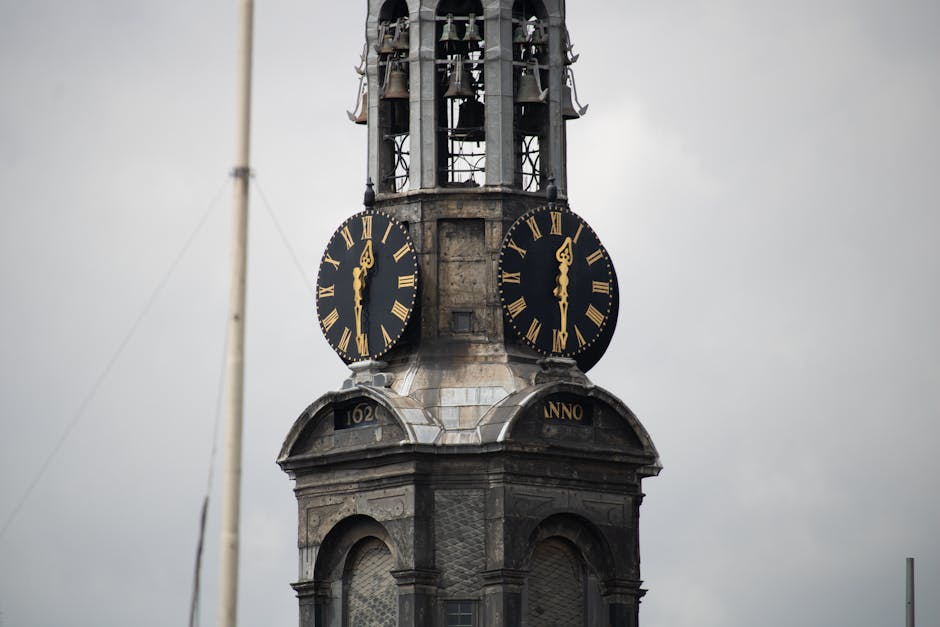
Amsterdam's Jewish heritage runs deep. The city was a haven for Sephardic Jews fleeing the Spanish and Portuguese Inquisitions in the 16th and 17th centuries, and later for Ashkenazi Jews from Eastern Europe. The Jodenbuurt (Jewish quarter) around Waterlooplein was the center of this community, and its architecture, monuments, and stories remain.
Walk from the Portuguese Synagogue (built in 1675 and still lit entirely by candlelight) to the Jewish Historical Museum, housed in a complex of four former Ashkenazi synagogues. Between them, the Homomonument and the Auschwitz Monument mark different aspects of Amsterdam's war history. The Anne Frank House, further west on Prinsengracht, is the most visited site, but the surrounding Jordaan neighborhood tells a broader story of resistance, hiding, and survival.
Amsterdam's heritage walks are not only about Jewish history. The city's colonial past, its role in the global spice trade, and the waves of immigration that shaped its current multiculturalism are all walkable stories. But for genealogy travelers tracing Sephardic or Dutch-Jewish roots, the Jodenbuurt walk is a pilgrimage.
Explore self-guided walking tours in Amsterdam
How to Prepare for a Heritage Walking Tour
A little preparation goes a long way when you are walking in your ancestors' footsteps:
- Digitize before you go. Sites like FamilySearch, Ancestry, and MyHeritage can pinpoint the parish, street, or port your family was connected to. Bring screenshots or printed notes.
- Visit local archives. Many European cities have municipal archives that are free to visit. Church records, birth registers, and emigration manifests are often accessible with a little patience.
- Walk the neighborhood first. Before diving into records, just walk the area. Get a feel for the streets, the scale, the light. Your ancestors did not experience their city through documents. They experienced it through daily life.
- Use a self-guided audio tour. Zigway offers tours in many of these heritage neighborhoods, providing historical context that turns a walk into a story.
- Take your time. Heritage travel is emotional. Give yourself space to sit, reflect, and process what you are seeing. Not every moment needs to be productive.
- Talk to locals. In many European neighborhoods, long-time residents love sharing stories. A cafe owner or a church warden might know more about your family's street than any database.
Walk Where They Walked
Genealogy travel is not about finding definitive answers. It is about standing in the place and feeling the connection. The street your grandmother grew up on might be a cafe now, or a parking lot, or exactly the same. Either way, being there, on foot, in the air she breathed, is something no website can replicate.
Start exploring heritage neighborhoods on foot. Browse Zigway's city guides across Europe.