
Walking Tours: Why Exploring on Foot Transforms Travel
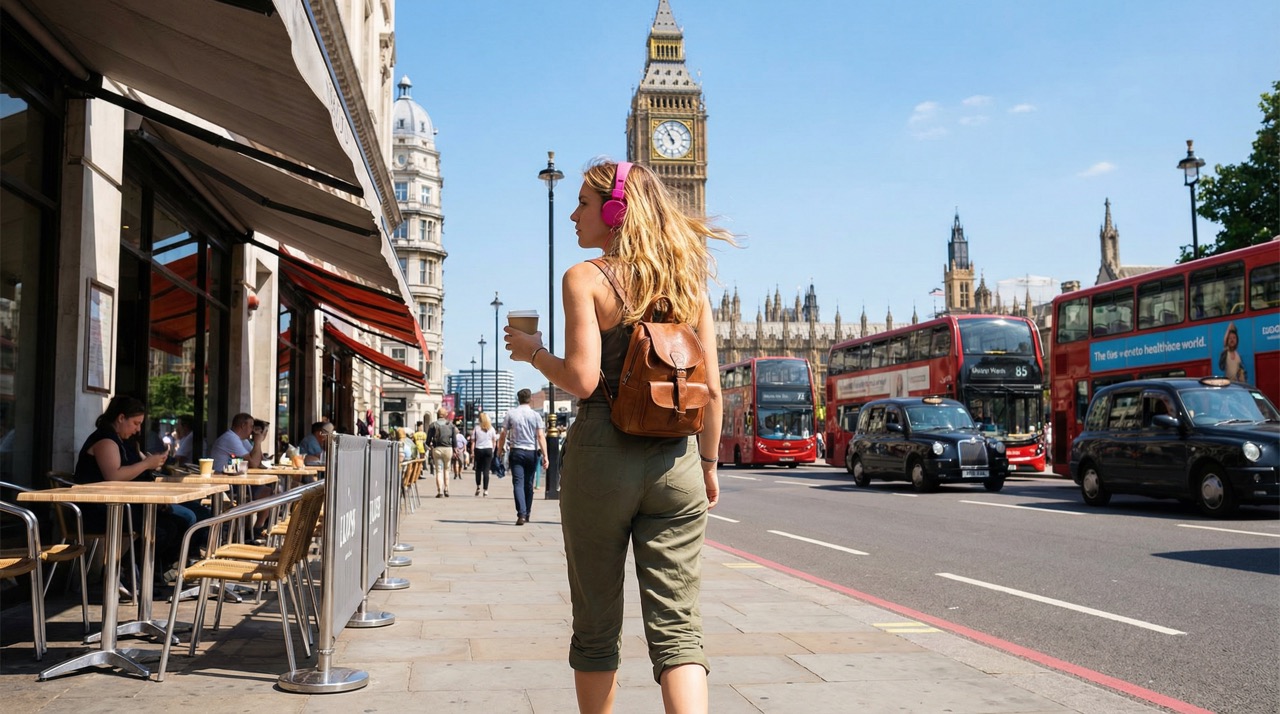
There is a moment on every trip when the city stops being a list of attractions and starts being a place. It almost never happens on a bus, or in a taxi, or scrolling through a map on your phone. It happens when you are walking.
Maybe you turn off the main road because something catches your eye: a narrow alley, a hand-painted sign, the smell of bread from an open doorway. You follow it. Ten minutes later you are sitting in a courtyard you will never find on TripAdvisor, eating something a local just recommended, watching the light fall on a wall that has been standing since before your country existed. That is the moment. That is when travel actually starts.
Walking tours, whether guided or self-guided, are built around this idea: that the best way to understand a city is to move through it slowly, on foot, at a pace that lets you see, hear, smell, and feel the place. In this post, we want to make the case for why walking is the single best thing you can do in any city, why understanding what you are passing makes the experience dramatically better, and how self-guided walking tours have changed the way we think about exploring.
Why Walking Is Different from Every Other Way to Travel

Every form of transportation creates a filter between you and the city. A car windshield. An air-conditioned bus window. Even a bicycle moves too fast to notice the details. Walking removes the filter entirely.
When you walk, you experience a city with your whole body. You feel the cobblestones shift underfoot in Lisbon's Alfama district and suddenly understand why the locals wear flat shoes. You smell the charcoal smoke and star anise before you see the street food stall in Bangkok's Yaowarat. You hear the church bells in Rome and realize that the city still marks time the same way it has for centuries.
These sensory details are not decorative. They are the actual texture of a place. And they are only available at walking speed.
There is also the element of surprise. When you walk, you are exposed to the unplanned: the street performer who stops you for three minutes, the shop window that pulls you inside, the local who notices you looking lost and points you toward their favorite lunch spot. These accidental encounters are often the moments that define a trip, and they cannot happen when you are sealed inside a vehicle moving between scheduled stops.
The Difference Between Seeing a City and Understanding It
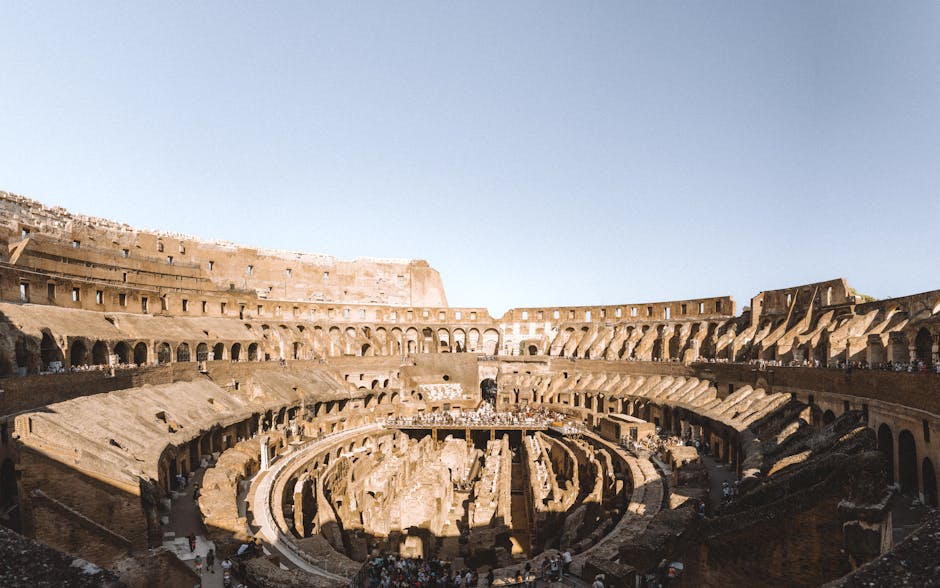
Here is the problem with walking a city on your own, with no context: you see everything but understand very little.
You walk past a building with a crumbling facade and think it is just old. With context, you learn it survived a fire that destroyed half the city in 1788, and the scorch marks are still visible if you know where to look. You pass a narrow alley and assume it is a shortcut. With context, you learn it was the boundary of a medieval Jewish quarter, and the width was deliberately restricted. You eat at a restaurant because it looks good. With context, you learn it has been in the same family for four generations and the recipe on the menu was brought from Sicily in 1906.
Context transforms seeing into understanding. It turns a walk into a story. And stories are what we actually remember from travel, not the list of places we visited, but the narratives that connected them.
This is what walking tours do, in all their forms. They provide the layer of meaning that turns a beautiful street into a meaningful one.
Guided Walking Tours vs. Self-Guided Walking Tours
Traditional guided walking tours have been around for decades, and they work. A knowledgeable local leads a group through a neighborhood, tells stories, answers questions, and points out things you would never notice on your own. For many travelers, this is the perfect introduction to a city.
But guided tours come with tradeoffs. You are on someone else's schedule. You move at the group's pace, not yours. You cannot linger at the spot that fascinates you or skip the one that does not. And when you find yourself standing in front of something extraordinary at 4 PM on a random Wednesday, there is no guided tour starting right now, right here.
Self-guided walking tours solve these problems. With a route on your phone and narration in your ear, you get the stories and the context of a guided tour with the freedom of exploring alone. You start when you want. You pause when you want. You take a 45-minute detour into a market and come back to the route without missing anything. And if the weather turns or your energy dips, you simply stop and pick it up later.
The best self-guided walking tours are not just maps with pins. They are curated experiences: carefully sequenced routes through a neighborhood, with narration that unfolds at each stop, connecting the history, architecture, food, and culture into a coherent story. The difference between a good self-guided tour and a bad one is the difference between reading a novel and reading a phone book. Both contain information. Only one makes you care.
How Real-Time Audio Changes the Walking Tour
Most self-guided walking tours are static: a fixed route with fixed stops. You walk to a pin on the map, read a description or press play on a clip, and move on. It works, but it has gaps. What about the interesting building between stop 3 and stop 4? What about the street you are walking down right now, the one with the beautiful tile work or the suspiciously narrow entrance?
This is the problem we built Zigway to solve. Zigway's self-guided walking tours use real-time audio narration that responds to where you actually are, not just where you are supposed to be. As you walk, the app detects nearby points of interest and tells you about them in the moment. You do not need to look at your phone or check a map. You just walk, and the city explains itself.
The effect is closer to having a friend who knows the city walking beside you than to following a pre-set route. You hear about the Art Nouveau pharmacy on the corner as you pass it, not three blocks later when you read about it in a guidebook. You learn why the buildings on this side of the canal are taller than the ones across the water while you are standing in the exact spot where it is visible. The narration meets you where you are, physically and contextually.
This matters because walking is inherently non-linear. You take a wrong turn (which is often a right turn, in terms of discovery). You stop for coffee. You follow a sound. A real-time audio tour adapts to this. A static tour does not.
What Changes When You Walk With Stories

We have watched thousands of people use walking tours across dozens of cities, and the pattern is always the same. The walk starts as sightseeing and ends as something closer to empathy.
In Amsterdam's Jordaan district, you begin by admiring the canal houses and end by understanding why the hofjes (hidden almshouse courtyards) exist, what they meant to the communities that built them, and why the Dutch tradition of social housing is visible in the architecture to this day.
In Seville's Santa Cruz, you start by photographing the whitewashed alleys and end by standing in a quiet plaza where a 15th-century tragedy unfolded, feeling the weight of it.
In New Orleans' Treme, you start by looking at a park and end by understanding that Congo Square is the single most important site in the history of American music, the place where enslaved people kept African rhythms alive and where jazz was born.
This is what context does. It transforms a tourist into a traveler. Not by making you an expert, but by making you care about the place you are visiting. When you care, you notice more. You ask better questions. You eat at the restaurant the locals actually eat at, not the one with the English menu out front. You come home with stories, not just photos.
The Best Cities for Self-Guided Walking Tours

Not every city is equally walkable, but the ones that are tend to share a few characteristics: a compact historic center, distinct neighborhoods with their own character, layers of visible history, and a street-level culture (food stalls, markets, cafes, public squares) that rewards slow exploration.
Some of the cities we think are most rewarding for self-guided walking tours:
- Lisbon — Seven hills, each with a different personality. The viewpoints alone justify the climb.
- Rome — Three thousand years of history layered on top of each other. Every street is an archaeological dig.
- Barcelona — Gaudi, Gothic, and a food market that could be a full-day tour on its own.
- Tokyo — The contrast between ultra-modern and ancient, block by block, is unlike anything else.
- Porto — Steep, atmospheric, and every building is covered in hand-painted tiles.
- Edinburgh — A medieval city stacked on top of a Georgian one. Literally two cities in one.
- Bangkok — The density of temples, markets, and street food per square kilometer is unmatched.
You can explore all the cities and routes we cover at zigway.app/countries.
How to Get the Most from Any Walking Tour
Walk in the morning. Cities are quieter, cooler, and more photogenic before 10 AM. You see locals on their way to work, markets setting up, and the light at its most beautiful. Save the afternoon for indoor museums or a long lunch.
Wear the right shoes. This sounds obvious but it is the single biggest factor in how much you enjoy a walking tour. Comfortable, broken-in shoes with grip. Not new sneakers, not sandals, not fashion shoes. Your feet determine your mood.
Leave the itinerary loose. The best walking tours have room for surprise. If a side street looks interesting, take it. If a cafe smells incredible, stop. The route will still be there when you come back. The point is not to check every stop off a list. The point is to be present in the city.
Download your audio tours offline. Mobile signal can be patchy in medieval quarters, underground passages, and dense market streets. Having your tour downloaded means the narration never cuts out at the worst possible moment.
Go alone sometimes. Walking with friends is wonderful, but solo walking tours have a different quality. You move at your own pace, you notice different things, and you are more likely to interact with locals. Some of the best travel memories come from being alone in a crowd, fully absorbed in a new place.
Walk the same neighborhood twice. Once with the audio tour, once without. The first time gives you the stories. The second time lets you wander freely with all that context loaded in your head. The experience is surprisingly different.
Start Walking
Travel has become so fast and so optimized that it is easy to forget the simplest truth: the best way to know a place is to walk through it slowly, with your eyes open and your ears tuned in.
Walking tours, especially self-guided ones, give you the best of both worlds: the freedom to explore at your own pace and the stories that turn a walk into an experience. They are free (or close to it), available anywhere, and require nothing more than a pair of comfortable shoes and a sense of curiosity.
We built Zigway because we believe that every street has a story worth hearing. Browse our free self-guided audio tours across 100+ cities, put your headphones in, and start walking. The city will do the rest.