Seville Walking Tours: Best Self-Guided Routes

Seville is a city that operates on all five senses at once. The scent of orange blossoms drifting through a whitewashed alley. The clatter of flamenco heels from behind a half-open door. Sunlight hitting the gold mosaics of the Alcazar so hard the courtyard seems to glow. The taste of cold manzanilla sherry and a plate of fried boquerones at a bar that has not changed its menu since 1670.
It is also one of the most walkable cities in Spain. The historic center is compact and mostly flat, the neighborhoods are distinct and richly layered, and the best discoveries are always tucked behind unmarked doors and down narrow passages that no bus or boat could ever reach. Seville was made for exploring on foot.
A self-guided audio tour (we use Zigway for free narrated walks) is the ideal companion here. Seville's architecture is a palimpsest: Roman foundations, Islamic arches, Baroque churches, and modern parasols stacked on top of each other. Without context, you are just looking at beautiful buildings. With a guide in your ear, every wall tells a story.
Here are the best self-guided walking routes in Seville, from the medieval shadows of the Jewish quarter to the flamenco heartland across the river.
Santa Cruz: Shadows of the Juderia
The Barrio de Santa Cruz is where Seville keeps its oldest secrets. This labyrinth of whitewashed walls, wrought-iron balconies, and hidden plazas was the city's medieval Jewish quarter, and walking through it feels like stepping into a novel. The alleys twist without logic, opening suddenly into sun-drenched courtyards filled with the scent of jasmine and the sound of a distant guitar.
The self-guided route takes you through the legend-soaked heart of the neighborhood. You will walk down the Calle de la Muerte (Street of Death), where the story of Susona, a Jewish woman who betrayed her family for a Christian lover, ended in heartbreak and a skull nailed above a doorway. You will find the statue of Don Juan Tenorio, the literary seducer born in these streets. You will pass former synagogues that were transformed into ornate Baroque churches after the expulsion of 1492, and stand at the burial site of Murillo, Seville's most celebrated painter.
The highlight for many is simply getting lost. The plaza of Dona Elvira, with its tiled benches and orange trees, is one of the most peaceful spots in the city. The Callejon del Agua runs along the ancient city walls with views into the Alcazar gardens. Come in the late afternoon, when the light turns amber and the shadows stretch long against the white walls.
Triana: Flamenco, Ceramics, and the Other Side
Cross the Puente de Isabel II and you enter a neighborhood that considers itself a separate world. Triana sits on the west bank of the Guadalquivir, and its residents, the Trianeros, have a fierce pride in their distinct identity. This is where flamenco was forged: in the forjas (forges) and corrales (courtyards) of the Roma community, where rhythm, song, and dance were inseparable from daily life.
The self-guided walk starts on Calle Betis, the most photographed street in Seville, where colorful facades reflect in the river and the entire city skyline unfolds across the water. From there you head into the heart of the neighborhood: the 13th-century church of Santa Ana (known as the Cathedral of Triana), the Callejon de la Inquisicion (the alley where the Spanish Inquisition once operated from the Castle of San Jorge), and the Mercado de Triana, a vibrant food market built directly on top of those Inquisition ruins.
The ceramics heritage is everywhere. Triana has been producing azulejo tiles for centuries, and the Centro Ceramica Triana (housed in a former tile factory) tells the story of how these hand-painted patterns came to decorate palaces, plazas, and churches across Spain and Latin America. This is an easy, flat walk that pairs perfectly with a long lunch at the market and a slow cerveza on Calle Betis at sunset.
The Mudejar Route: Seville's Islamic Legacy
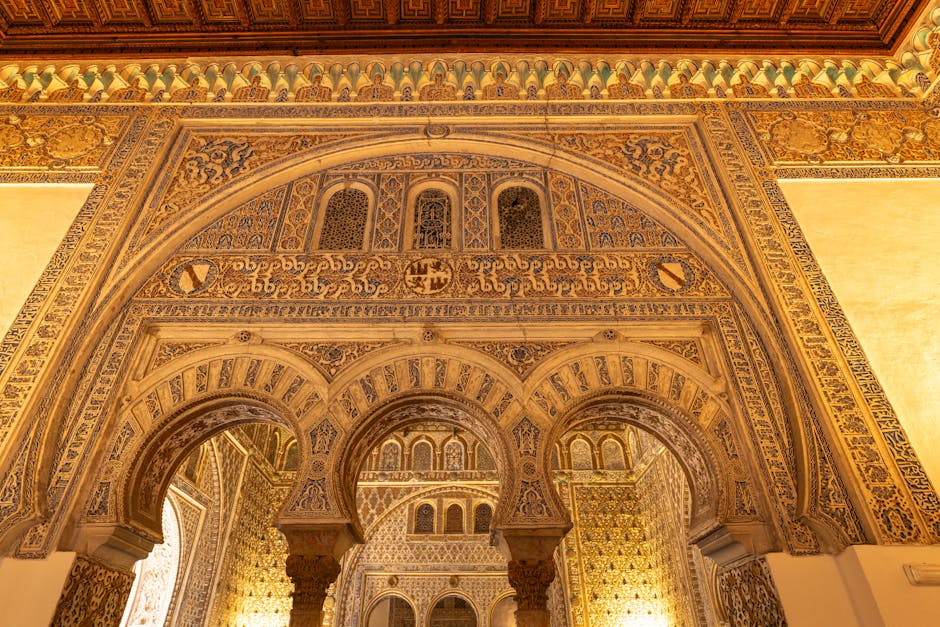
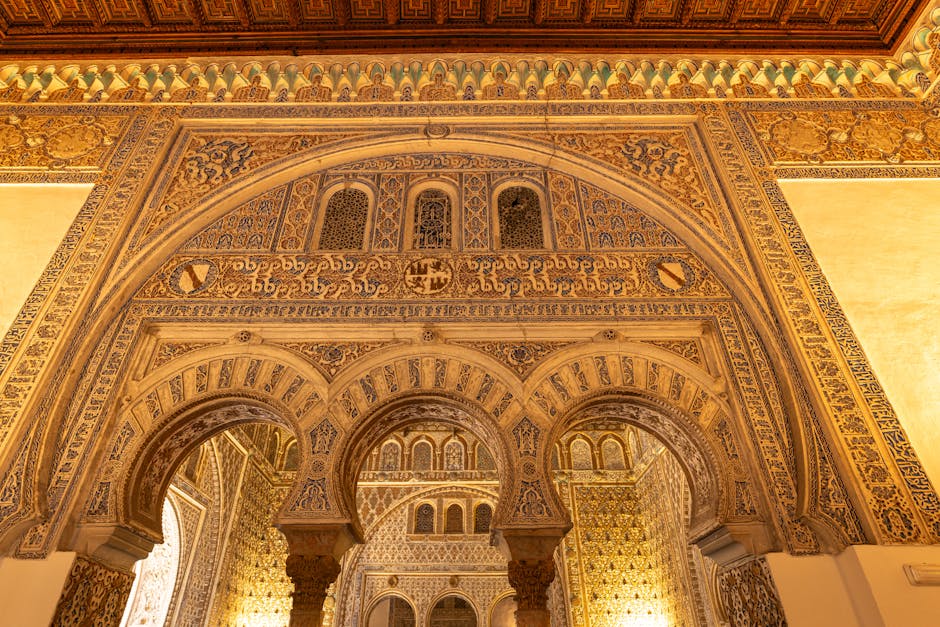
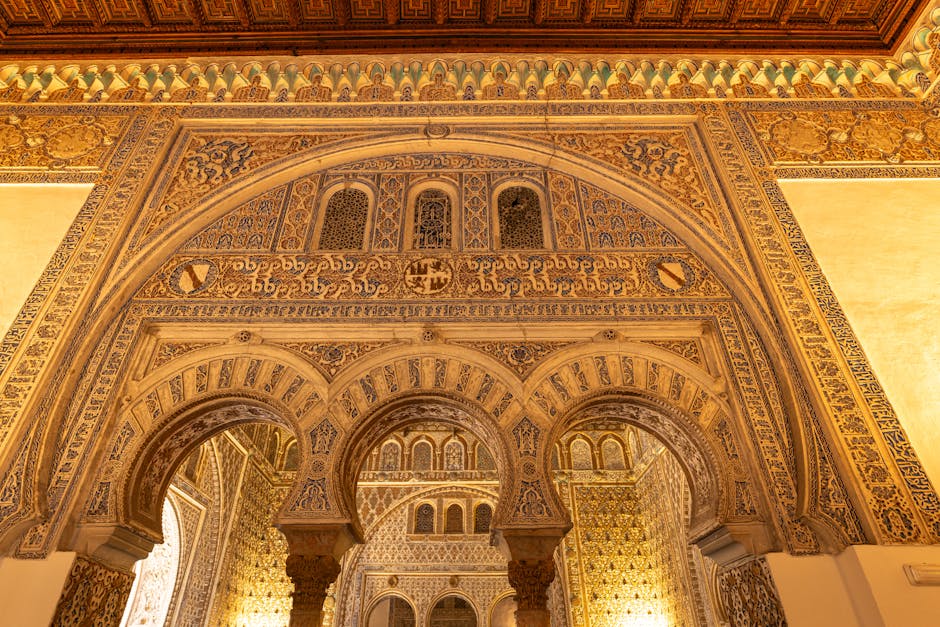
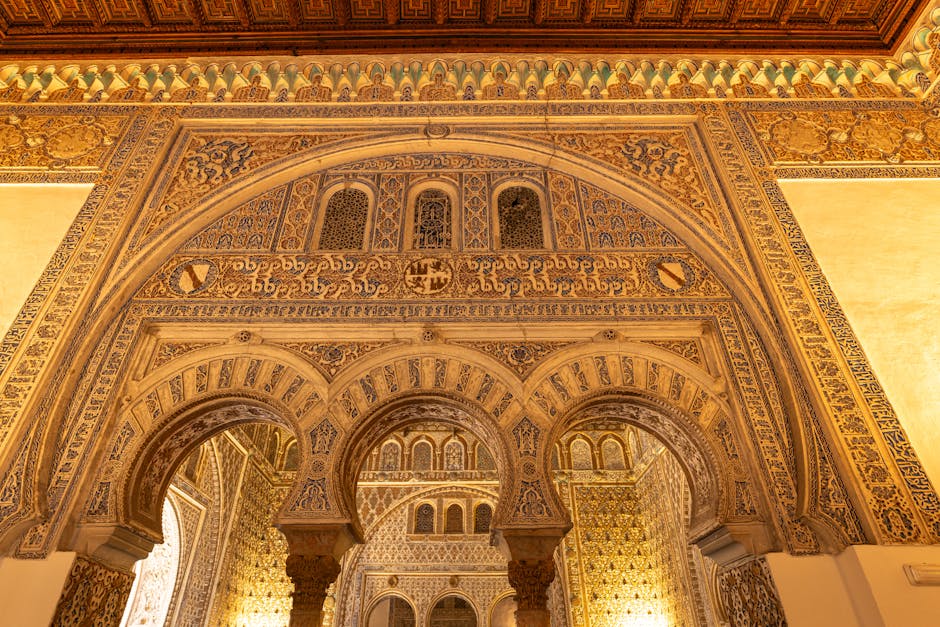
Seville was under Islamic rule for over 500 years, and that legacy is written into the bones of the city. The Mudejar style, born from the collaboration of Islamic craftsmen and Christian patrons after the Reconquista, produced some of the most stunning architecture in Europe. This self-guided walk connects the major Mudejar landmarks, from intimate palaces to the city's most iconic monuments.
The route begins at the Casa de Pilatos, a palace so beautiful that it was once believed to be a replica of Pontius Pilate's house in Jerusalem. In reality, it is a dazzling fusion of Mudejar tilework, Renaissance sculpture, and lush Andalusian gardens. From there, you walk through the Centro district past the churches of San Marcos and Santa Marina, whose bell towers are actually converted Almohad minarets, complete with the original Islamic brickwork patterns still visible beneath the later additions.
The walk builds toward the two monuments that define Seville's skyline: the Giralda (the 12th-century Almohad minaret that now serves as the Cathedral's bell tower, and which you ascend by ramp, not stairs) and the Royal Alcazar, where the plasterwork and garden design rival the Alhambra in Granada. With an audio guide, you understand how each horseshoe arch, each geometric tile pattern, each muqarnas ceiling carries centuries of cultural conversation.
The Golden Age Tapas Crawl
Seville invented tapas culture. The city's Golden Age, when treasure from the Americas poured through the Guadalquivir, created a tavern scene that has barely changed in four centuries. The self-guided tapas walk takes you through the narrow streets of Santa Cruz and the Centro, stopping at some of the oldest and most atmospheric bars in Spain.
Start at El Rinconcillo, which has been serving customers since 1670. The bartenders still chalk your tab on the wooden counter, and the house specialty (espinacas con garbanzos, spinach with chickpeas) tastes like it has been perfected over all those centuries. From there, the route leads to Bar Casa Morales, where massive 19th-century clay wine jars line the walls, and to Bodega Santa Cruz, where locals crowd the bar for montaditos (small sandwiches) and cheap manzanilla. At Las Teresas, cured jamon hangs from dark wooden rafters above tile-covered walls, and the atmosphere has not changed since the mid-1800s.
This is an evening walk. Sevillanos eat late (tapas from 9 PM onward), and the bars come alive after dark. The trick is to order one or two dishes at each stop and keep moving. A tapa of boquerones en adobo (marinated fried anchovies) here, a glass of fino sherry there, a plate of salmorejo (Seville's thicker, richer cousin of gazpacho) at the next place. By the end, you have eaten like a local and covered half the historic center.
Metropol and Markets: Modern Seville
Seville is not just a museum. The Metropol Parasol, known locally as Las Setas (the Mushrooms), is one of the most audacious pieces of architecture built in Europe this century: a massive undulating wooden canopy that rises above the Plaza de la Encarnacion, with a rooftop walkway offering panoramic views of the entire city. Beneath it, the Antiquarium holds Roman mosaics and Visigothic ruins discovered during construction.
The self-guided modern Seville walk connects Las Setas with the surrounding streets where the city's contemporary creative scene thrives. Calle Regina is lined with independent artisan workshops and design studios. The Plaza de la Alfalfa, which has been a gathering spot since Roman times, buzzes with neighborhood cafes and weekend antique stalls. The walk finishes on Calle Sierpes, Seville's legendary shopping street: a snaking pedestrian corridor that has been the commercial spine of the city for centuries, where traditional fan makers and tile shops sit beside modern boutiques.
The Guadalquivir: Seville's Maritime Soul
The Guadalquivir River made Seville rich. For centuries, it was the only inland port in Spain with direct access to the Atlantic, and the treasure fleets returning from the Americas docked here, turning the city into the wealthiest in the Spanish Empire. The riverside walk through the Arenal district follows the water and the history that flows with it.
The route passes the Hospital de la Caridad (whose Baroque interiors contain masterpieces by Murillo and Valdes Leal), the skeletal stone arches of the Atarazanas Reales (the medieval royal shipyards), and the Torre del Oro, the 13th-century watchtower whose honey-colored stone catches the light so beautifully that the Moors named it the Tower of Gold. Further along, you will see the Palacio de San Telmo, once a school for navigators, and the Plaza de Toros de la Real Maestranza, one of the oldest and most elegant bullrings in Spain. The walk finishes at the Muelle de la Sal, where you can sit on the riverbank and watch the sun set over Triana.
Explore all self-guided walking tours in Seville
Tips for Walking in Seville
Respect the heat. Seville is the hottest city in continental Europe. Summer afternoons regularly exceed 40 degrees Celsius. From June to September, walk in the early morning (before 11 AM) or in the evening (after 7 PM). The siesta exists for a reason: many shops and sites close between 2 and 5 PM. Use that time to rest, eat, and plan your evening route.
Spring is the sweet spot. March through May is ideal for walking, with temperatures in the low to mid 20s and the city in full bloom. Autumn (October to November) is equally pleasant and less crowded. If you visit during Semana Santa (Holy Week) or the Feria de Abril, expect extraordinary spectacles but dense crowds in the center.
Dress for tiles and cobblestones. Seville's streets are mostly flat but the surfaces vary: polished marble, worn cobblestones, and decorative tiles can all be slippery when wet. Comfortable flat shoes with good grip are essential.
Download your tours offline. Wi-Fi is solid in Seville's hotels and cafes, but mobile signal can be spotty in the deepest alleys of Santa Cruz and Triana. Download your Zigway audio tours before heading out so the narration keeps flowing in every narrow passage.
Eat on the local schedule. Lunch is 2 to 4 PM. Tapas start at 9 PM. Dinner rarely begins before 10. If you eat at 7 PM, you will be alone in tourist restaurants. Adjust your walking schedule around meals and you will have a much better experience.
Carry a water bottle. Seville has public drinking fountains throughout the center. Refill often, especially in warm months. A frozen bottle of water from a corner shop is a reliable mid-walk rescue.
Start Walking Seville
Seville is a city where every neighborhood has its own rhythm, its own flavor, its own way of catching the light. From the legend-haunted alleys of Santa Cruz to the flamenco soul of Triana, from the Mudejar splendor of the Alcazar to the modern audacity of Las Setas, the best way to experience it all is at your own pace, with the stories behind every wall playing in your ear.
Browse all of our free self-guided audio tours in Seville and beyond, and start exploring.